Jul 29, 2013

A Night of VHS at the Prince Charles Cinema

I grew up in the era of VHS and of independent video stores (Upfront Video was especially important as a kid, I went there a lot and discovered a lot of movies through their shelves.  They also used to give away all their promo posters.  I wish I still had those.)

I haven't an instinctive nostalgia for VHS (I'll take the jump in quality and diminished perishability of disc based media over any rose tinted memories of the 90s), but I do still have about 400 tapes and a couple of VCRs because it's an easy and cheap way to check out movies I might not otherwise want to blind buy and because there are still tapes in my collection that aren't available on DVD or Blu Ray.

This was they key reason that, on Saturday night, I - along with my friend and podcast co-host Mike - went to my favourite cinema, the Prince Charles Cinema in London for an all night screening of six VHS exclusive films, all shown from the original tapes.  Three of the films were chosen by Viva VHS, a collector I've known for a while on Twitter, the other three by The Good Bad Movie Club, which holds monthly screenings at the Prince Charles.

We trooped through the rain to the Prince Charles only to find a massive queue (which turned out to be for the other allnighter, a Studio Ghibli marathon), and tweeted Dale (VivaVHS) to let him know we were hanging around and would like to say hello before the screening started.  We had a good chat with Dale and his wife about the movies that were showing that night, exploitation films and video tapes, before heading in to take our seats.

NOTE:  Film titles in Bold are clickable for a trailer.

First up was Enemy Territory, which, like most of the other films on the programme, I'd never heard of, let alone seen.  It turned out to be a 1987 actioner which drew on John Carpenter (Assault on Precinct 13 came to mind) and anticipated the likes of Die Hard and The Raid, while, to be fair, not being as good as any of those films.

Enemy Territory made a great start for the night.  The setup is simple: a white insurance agent is sent into a dangerous building in the ghetto and has to escape when the gang that controls it decides to kill him for a minor insult.  Gary Frank makes for a pathetically weedy lead, but Ray Paker Jr (yes, the Ghostbusters guy) is fun and much more proactive as the phone company worker and (of course) 'Nam vet who tries to help him escape.  In supporting parts we also see a very young Stacey Dash, eight years pre-Clueless and the ever charismatic Tony Todd, menacing as the leader of ridiculous gang The Vampires.

The action is solid, the tension consistent, and everything is drawn together by a fantastic synth laden score that Carpenter himself would be proud of.  It was a great lead off for the night, and a film I'd love to see polished up for DVD or Blu Ray.


Next up was The Taking of Beverly Hills.  I know this is something of a personal favourite of Dale's, and he promised we were going to really enjoy it.  I wish I could have agreed with him.  This action movie has a nice central idea (ex-cops fake a disaster as a cover for a massive heist) but bemulleted lead Ken Wahl simply doesn't have the presence or the appeal of, say, The Rock and the fact that the grating Matt Frewer is second lead really didn't help.

The action is competent, but never really stands out, especially given that this film post dates (and nods to) Die Hard.  Overall I found it very middling and not even particularly interesting as a cheesefest.


After two action films, Dale's final choice was quite a change of pace.  The film was Naked Vengeance, screened from an American tape because the BBFC approved 18 rated cut was 'trimmed' by a mere 24 minutes.


Naked Vengeance is essentially a digest of scenes ripped off from other rape/revenge films (and a few other things for good measure).  The most notable influence (I say notable influence, I mean blatant beat by beat rip off target) is I Spit On Your Grave.  In this film a housewife (Dallas cast member Denorah Tranelli, who in all fairness isn't bad here) goes to stay in her parents house for the first time in years, in an attempt to get away from the fact that her husband has been murdered and the Police can't catch the criminal because witnesses are unwilling to testify.  When she gets back home almost every man in the town responds to her like a rabid, leg humping dog.  Begin rape/revenge movie.

The degree to which I Spit On Your Gave is ripped off is staggering.  An early gas station scene may just be a rewrite of the original, and a later scene in a lake manages to rip off the lake scene, bathroom scene and boat scene from I Spit in barely 3 minutes, admittedly, this is almost impressive.

Naked Vengeance is unpleasant; the massive gang rape scene (which basically combines elements of Straw Dogs with the I Spit homage) is long and brutal, but the idea that 24 minutes had to be cut is ludicrous.  What did the BBFC cut consist of,  a badly acted film about a woman who goes on holiday?

As a fan of exploitation films, and as someone who thinks the rape/revenge genre is extremely interesting, Naked Vengeance is both good and bad.  As a film, it's bad, really quite bad.  The script is ludicrous, with every man in it a slavering dog who immediately sexually harasses Tranelli (and this is a whole town, not the four people we see in I Spit), and the acting (Tranelli, who does what she can, aside) is pretty awful all round.  On the other hand if you know your exploitation and don't treat it seriously then it's pretty good fun playing rip off bingo (Taxi Driver... BINGO!).  I enjoyed it in that respect, but wouldn't recommend it outside that context.


By this time it was about 3am, and I confess I nodded off for much of the running time of The Good Bad Movie Club's first choice, Cellar Dweller.  This is a terrible shame because the premise of a comic book artist drawing a monster that comes to life was extremely cool, as were the bookending scenes that I did see.  I suspect this might have been my favourite film of the night, and I will be finding and watching it ASAP.


Refreshed (somewhat) by a snooze and doses of sugar and caffeine, I stayed awake for the next film, Double Trouble, and was very pleased I did.

Double Trouble is the flat out stupidest film I've seen in ages.  It stars bodybuilding twins David and Peter Paul, one's a cop, the other's a criminal and they have to work together to bring down the criminal's boss.  It's incredibly formulaic, mind-alteringly idiotic, and incredibly entertaining.  The Pauls, better known as the Barbarian Brothers, can not act.  At all.  The ineptitude, the lack of connection to human emotion or the way people talk, is so profound that it almost seems like a studied technique.  The line readings are so terrible, the comic timing so inept and so consistently a beat (or three) off that they enter into a sort of parallel universe of sublime badness, becoming hilarious once again.

The chief problem/asset of the film is the Barbarian Brothers, who are both ludicrously unbelieveable in their roles.  From the moment that one of them (I forget which plays which part, but it really doesn't matter much) appears in a tight, cropped, Raiders T-Shirt with an extravagant mullet and announces that he's a cop it's clear this film doesn't exist in the real world.  The other ridiculously bulky bodybuilder plays a cat burglar, which is perhaps even less credible, given that the chance of him sneaking anywhere is the single funniest joke in the film.  However, this frees you to see Double Trouble as an alternate world filled with hilariously overblown villains, and forget any notion of sense.

A stupid, stupid movie, Double Trouble was perfect for a night of VHS exclusive cheese, and if you're a connoisseur of crap you must seek it out.


The last film of the 'night' (it was 6:30 am by now) was He's My Girl.  A lighthearted ending to the marathon seemed like a good idea, but this choice - a 1987 farce in which a young musician wins a trip to California  from an MTV style TV show, but can only take a girl with him so, 'hilariously', his manager drags up to go with him - really didn't work for me.

The drag comedy was a tired and laboured genre long before this but, despite an energetic turn from T. K. Carter, He's My Girl brings nothing new to the table.  The jokes are older than time, and not executed especially well, and the music plot is both obvious and terrible, thanks to the combination of a wet performance from David Hallyday and the (flaccid) cock rock they have his character play.  The closing number is called Rock Revival, it  made me want to bury the entire genre in a very deep hole, rather than risk its revival (click above to hear for yourselves).

The only really interesting part of He's My Girl was seeing a young Jennifer Tilly, who plays Hallyday's love interest and whose voice is so high here the film makes a joke about it in the end credits.  Overall, even for what it is, He's My Girl was pretty bloody awful.


One extremely crappy movie aside, the night was great fun.  I found a new cheesy favourite, an underrated actioner I'll be sure to show people, and a cool looking horror movie I need to track down.  I also noted some titles from the various trailer reels that I need to see (Wild Thing is top of the list).  It was great to meet and chat with Mr and Mrs Viva VHS (who sat with us for the screenings).  I really hope that, despite the relatively sparse attendance Dale, The Good Bad Movie Club and The Prince Charles will do this again some time soon.

Jul 22, 2013

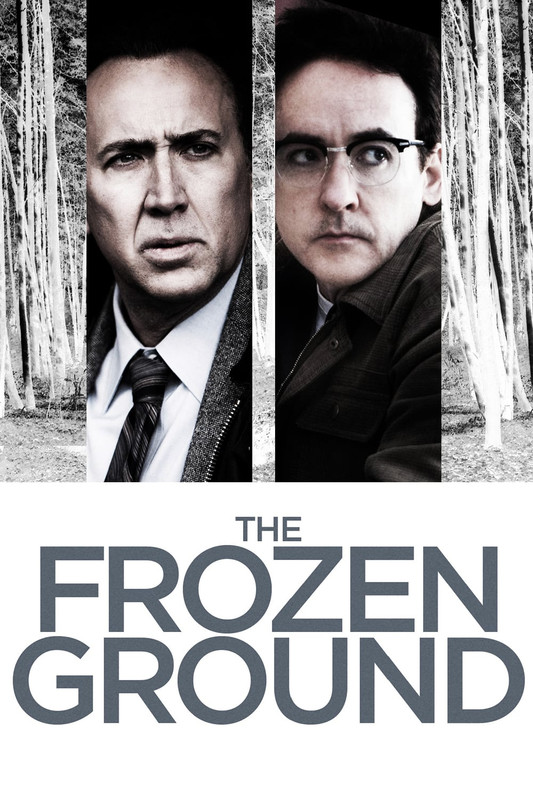
The Frozen Ground [15]

Dir: Scott Walker
There have been many films made about serial killers. Some are pure fiction, others factually based. Some are brilliant, others godawful. The Frozen Ground takes the true story of the hunt for evidence to arrest serial murderer Robert C. Hansen (John Cusack), who raped and killed at least 17 women, killing them out in the woods in the same manner that he hunted animals, and gives it the blandest, most down the line, most completely average telling that it can muster.

This is a pity, because The Frozen Ground initially seems to have rather a lot going for it, not least an extremely eclectic cast. Director Scott Walker and his casting team have made some interesting choices with their leads, casting the two main figures – Cusack as Robert Hansen and Nicolas Cage as the Alaska State Trooper who believes that Hansen is his man as more and more missing girls fit the victim profile – very much against type. Among a cast that sometimes seems to have been assembled by throwing darts at a list are Vanessa Hudgens, as a young woman who escapes Hansen and helps the troopers, character actors like Kevin Dunn, Kurt Fuller and Radha Mitchell and Curtis ’50 Cent’ Jackson, who is also a producer here.

This eclectic cast isn't used to the film’s best advantage. Among a quality supporting cast, the talented Radha Mitchell is – again – completely wasted on a nothing role as Cage’s wife, but the major problems stem from the leads. Nicolas Cage is one of the oddest people in cinema, but he can rein that in and give intensely serious, emotional performances when that’s what the film demands. That’s certainly what this role demands, but Cage is incredibly subdued. There’s no real personality, not even really much of the intense drive that would have been needed to overcome the seeming bias that many had in believing Hansen when he denied the links being made between him and the crimes. Cage seems disengaged throughout, which is the exact reverse of what we should be seeing from him here.

Cusack is better, and there is a cleverness in his casting, or there would be if the film didn’t make it obvious from the off that Hansen is the killer. Cusack is a trustworthy presence, and that was also why Hansen, despite a nasty criminal history, was not initially taken more seriously as a suspect. He was a baker, a family man, seen as a pillar of the community, but the film only ever plays on the irony of this. Cusack does what is asked of him well, but the portrayal of Hansen is altogether too shifty too soon. Playing off the character against Cusack’s likeable persona would have been appropriate to the facts and would have added a sense of uncertainty and suspense to a film that fatally lacks those ingredients.

Vanessa Hudgens is a reasonably interesting young actress, and once again she does decent work in a rather stereotypical role. The portrayal of Hansen’s escaped victim Cindy Paulson may be very accurate, but it still feels like just one more typical hooker character, and the connection she develops with Cage is never that convincing. Hudgens does what she can with the broad characterisation and familiar situations, but it’s clear she’s better than the role. In another stereotypical role, which sticks out like a sore thumb in the film, Curtis ’50 Cent’ Jackson appears as Hudgens’ long haired pimp. He’s hilarious, entirely by accident. Jackson has absolutely no inflection, and looks like a very uncomfortable man in a bad wig throughout his thankfully limited screentime.

Ultimately this feels like a very surface treatment of Hansen’s crimes and capture. We never get deep into any of the characters and never really get much beyond the clichés of the serial killer film. After Zodiac, this simply isn’t good enough. It’s never incompetent; the story is communicated clearly, the performances are okay for the most part and it doesn’t entirely shy away from the nastier moments, but it feels perfunctory. Walker doesn’t bring any personality to the direction. There’s not a single image here that feels original, nor any stylistic choice that stamps an identity on the film. Without its classy cast The Frozen Ground would likely have landed directly on DVD, and it probably should have anyway.

Jul 13, 2013

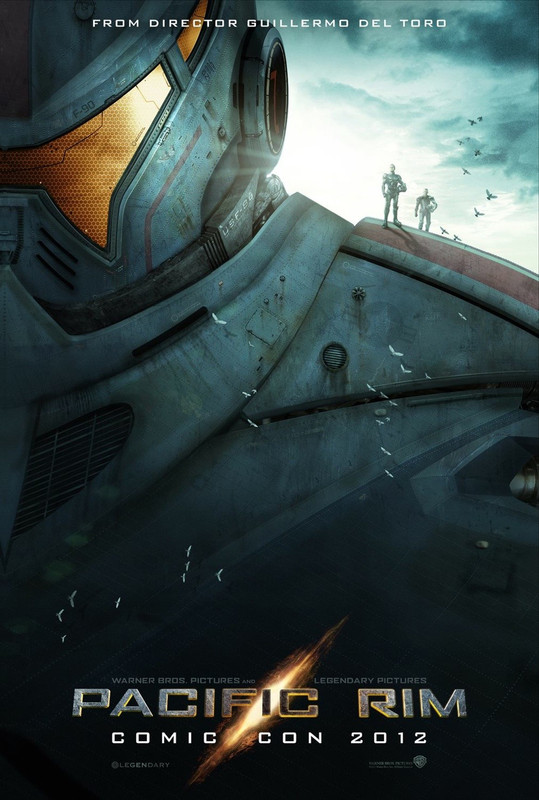
Pacific Rim [12A]

Dir: Guillermo DelToro
Guillermo Del Toro loves monsters, but more than that he’s interested in monsters. He sees them not simply as things that lurk in the dark to scare or kill humans but as individual beings with their own motivations and their own personalities. Until now Del Toro has used this interest, this curiosity about things that go bump in the night to tell stories that give monsters as much richness as humans. That ends here.

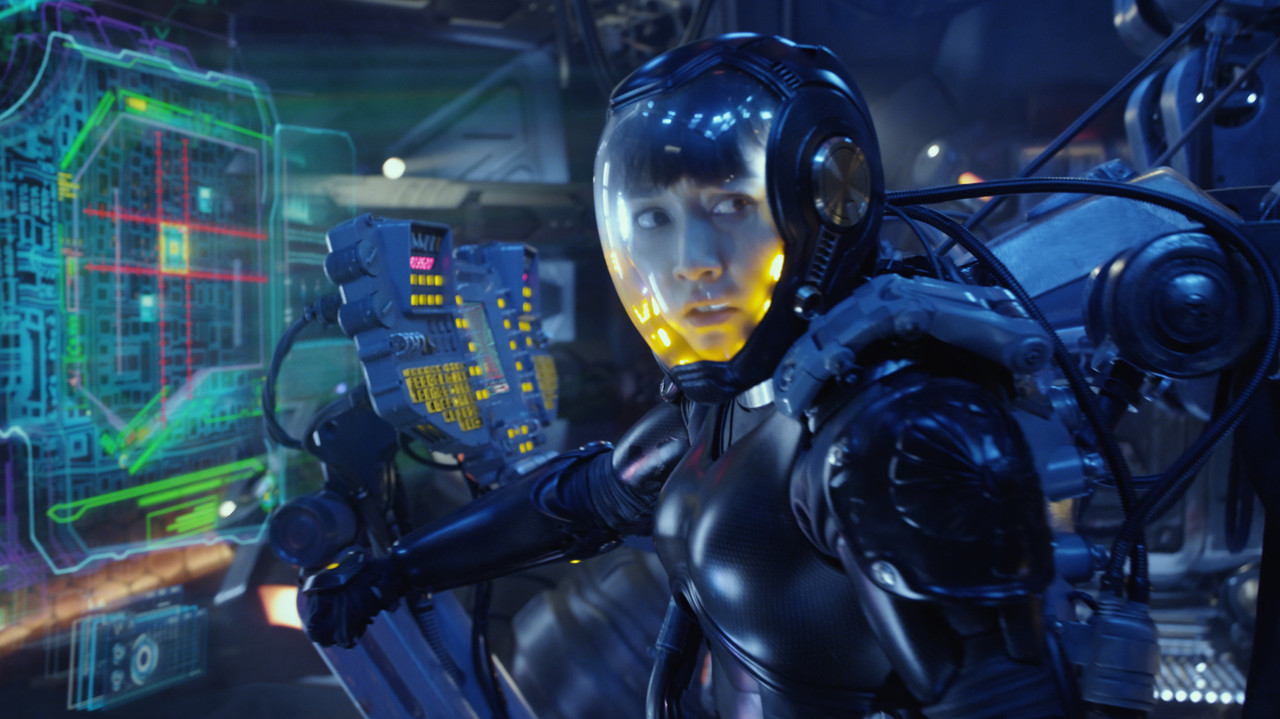
Pacific Rim is set about 15 years in the future. Under the Pacific ocean a fissure has opened up; a portal between two dimensions. Out of the portal have come Kaiju; giant monsters who attack the world’s cities with ever-increasing frequency. To combat the Kaiju, humans have built Jaegers; huge battle suits controlled by two human pilots whose minds are linked and in perfect sync. As the kaiju attacks ramp up the humans begin to lose the battle but head of the Jaeger programme Stacker Pentecost (Idris Elba) has a plan for one final assault on ‘the breach’. To help undertake it he recruits Raleigh (Charlie Hunnam); a great Jaeger pilot who retired when his brother was killed as they fought a Kaiju.

Precedent matters. For instance, I hated Man of Steel, but given that Zack Snyder’s previous film was Sucker Punch, it represents a significant step up.  By the same token, Transformers: Dark of the Moon may be rampagingly awful, but looks like a masterpiece next to its immediate predecessor Revenge of the Fallen. Precedent is much, much kinder to Guillermo Del Toro than it is to either Snyder or Michael Bay, and that means I expect more of him, especially given that it has been five years since his last film. That last film was Hellboy II: The Golden Army; the moment he truly integrated the depth of his Spanish language films with the spectacle and fun of his Hollywood work. It remains a high watermark among superhero movies as a whole. This probably goes some way to explaining why I hated Pacific Rim so much. From a Bay, a Snyder or A.N. Other blockbuster director it would simply have been a quite bad and laughably derivative bog standard blockbuster, but from Del Toro; an engaged, intelligent filmmaker who has previously brought great artistry to this kind of cinema it’s not merely a disappointment, it’s a travesty.

The first major complaint is one that seems to dog just about every film that costs north of $100 million: the script is terrible. I said precedent was important, and that holds true here as well. Of course the script is terrible, main writer Travis Beacham (whose initial draft seems to have had a barely detectable rewrite from Del Toro) was last credited on 2010′s insultingly poor Clash of the Titans remake. The characterisation though the film invests time in it, is feeble. Characters are sketched in broad and cliche terms; the hero haunted by loss (Hunnam); the cocky rival with daddy issues (Robert Kazinsky as Chuck Hansen); the unlikely choice who turns out to be the perfect partner for the hero (Rinko Kikuchi); the stoical leader with a line in cheesy inspirational speeches (Elba) and the ‘comic’ ‘relief’ double act (in this case scientists played by Charlie Day and Burn Gorman). Beacham and Del Toro then cram these characters mouths full of unspeakable words that sound exactly like dialogue from a cheesy blockbuster movie, never more so than in Elba’s big speech, which even Independence Day‘s President Whitmore would have asked his staff to rewrite.

The dialogue is truly abysmal, so it’s tough to blame the actors for their uniformly awful performances. Tough, but not impossible. On the plus side, Rinko Kikuchi escapes with a smidgen of her dignity, she has the excuse that English is not her first language, and also an undeniable onscreen charisma. Her fight scene with Hunnam is easily the film’s best, and says more about the characters and their connection than anything they say to one another. If Kikuchi is the best performer here, the rest continually compete to be the worst, taking a variety of approaches to the competition. Charlie Hunnam, for instance, goes for trying to be so wooden he might transmogrify into a tree. In the event, he does nothing so impressive, instead confining himself to looking a bit sad when his character thinks about his brother, and otherwise exhibiting no real expression. It would be one thing if we felt this was because he was repressing his emotions, but that never comes through in script or performance.

Idris Elba goes for another type of terrible performance; he simply seems disengaged. This can work for the right character. Harrison Ford’s almost disdainful performance as Han Solo works for Star Wars, because it establishes a personality that feels appropriate to his role in proceedings. This is not the case here. Elba's character isn’t some hired hand, he’s supposed to have spent years fighting Kaiju, rising from pilot to head of the programme, he’s supposed to have significant and different emotional investment in Mako (Kikuchi) and Raleigh and he’s supposed to be an inspirational leader. Elba is none of these things as Stacker Pentecost (seriously, STACKER PENTECOST). Terrible as the writing is, he makes his big speech even worse by delivering it with all the passion of a man being forced to speak at a corporate away day. It’s hard to assign the kind of bad performance given by Robert Kazinsky to a particular category, it’s just simply not very good. He comes across as a pouting child with daddy issues, which IS the character, but it all feels like he’s acting.

Worst of all is the desperate mugging of Charlie Day (manic) and Burn Gorman (oozy). Their every appearance lands with a mirthless thud. They seem more like a bizarre punishment from the movie gods for even attempting to enjoy this film when it’s not about big things punching each other. Del Toro can do funny – the Hellboy movies are full of humour – but this is the first time that I can recall him having pure comic relief characters, and it shows. Having the scientists treated in such an unserious manner also creates a problem, how can you then take them seriously as scientists? They are punchlines at the start of the film, then blunder their way to answers rather than discover things. Why take them seriously when they propose something?

I could discount much of this if the film were fun. I’ve done this before with Del Toro; Blade II is hardly deep, and Hellboy has clear budget problems and some weak storytelling, but both are rollickingly good entertainments and both give their monsters some appreciable level of development, motivation and personality. This cannot be said of Pacific Rim, and it’s the one of the most dispriting things about the film. The Kaiju and Jaeger battles come up surprisingly infrequently, but make no mistake they are the centrepieces of the film. I feel like I say the same thing every time films of this scale come along, but Hollywood will keep forcing me to say it: if I have no emotional investment in what is behind the big special effects sequence, then why should I care about the big special effects sequence? The idea behind the mechanism of the Jeagers is somewhat cool and novel, but the film makes nothing of it beyond vague allusions to human connection. It becomes little more than a vehicle for one flashback which should give Stacker and Mako’s stories more weight, but doesn’t because of the aforementioned script and acting issues. This means that each Jaeger is piloted by very thin characters, who I barely gave a crap about and, because the larger world is seldom and perfunctorily addressed, there is little sense of the fight for mankind as a whole.

Worse is that the Kaiju simply aren’t that interesting. Any individuality they might have is broken down, top trumps like, into what category of monster they are ("it’s a category 5, the first one we’ve seen"), but even that doesn’t distinguish them much when we actually see them. Yes, the category 5 is bigger, but by much and it doesn’t seem more intrinsically threatening than the category 1 seen in the film’s pre-title sequence. Because most of the battles take place in the dark or underwater everything feels rather murky, and we get much less sense of the Kaiju than the troll in Hellboy II or the Reapers in Blade II. What isn’t very different from sequence to sequence is the way that the Kaiju fight. The Jaegers change things up a bit more, but eventually it does all boil down to, all told, a good half hour of some CGI punching some more CGI, most of it grey. This simply isn't inherently cool or exciting anymore. Spectacle in itself doesn’t thrill me, the meaning behind it does, and that’s where Pacific Rim comes up desperately lacking.

Of course the film tries to inject some meaning in the final battle, raising the stakes in the most obvious ways you can imagine. For a while it at least seems that the film will take an extremely downbeat turn, but Del Toro largely pulls away from this, in a way that feels like a series of massive, cheap, cheats. The part of the downbeat ending he does deliver on is little more than an extremely manufactured bit of sentiment, pulled directly from an even worse blockbuster, directed by one of the people I mentioned earlier.

Pacific Rim never looked like a great movie, or even a good one. Stil, I walked in wanting and expecting to like – perhaps to love – it, because it was directed by Guillermo Del Toro. I assumed it had to be sold on the fights and typical blockbusting beats, but assumed it would have more substance, after all, it’s Del Toro, there’s always more to his monsters. Pacific Rim doesn't have that. This is a disastrous patchwork of dull fights between CG puppets, unsayable dialogue, abysmal performances and bog standard (if technically impressive) visuals. That last is the final, crushing, blow. This is a Guillermo Del Toro film, say the credits, but I can hardly tell that from watching it. Yes there’s a Ron Perlman cameo, yes there are the occasional monster bits in jars, but the film as a whole barely seems to reflect its maker. It’s a sad, dreadful, disappointment from one of modern genre cinema’s great auteurs.

Jul 8, 2013

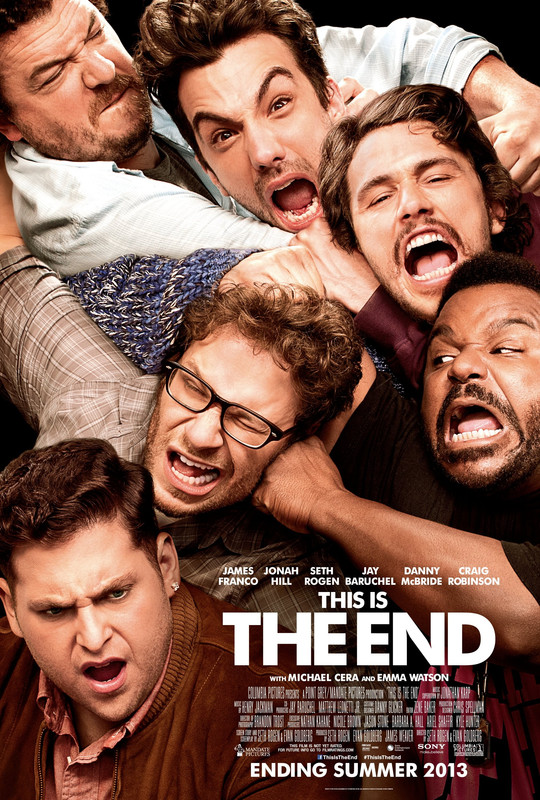
This is the End [15]

Dir: Seth Rogen / Evan Goldberg
There are good and bad points to a group of friends getting together to make a film especially, it seems, a comedy. On the one hand there tends to be an easy and natural chemistry and a sense everyone is having a good time, which ideally translates over into the audience. On the other hand there is the risk that nobody knows when to quietly say that something isn’t working, or that this bit is going on too long, or that this scene we all like serves no purpose. Ladies and gentlemen: This Is The End.

The film takes place at a Hollywood party held by James Franco. Much of the current Frat Pack / Apatow stable of comedians is in attendance, notably Seth Rogen, who goes with old friend Jay Baruchel, who doesn’t like this new group of friends Seth has. Half way through the night something happens, it initially appears to be an earthquake and most people at the party are sucked into a sinkhole leaving Franco, Rogen, Baruchel, Craig Robinson, Jonah Hill and Danny McBride to face what increasingly appears to be the apocalypse together.

Ironically, the chief problem with This Is The End is that it never seems to end, and this is almost certainly down to the problem of a group of friends working together and encouraging each other to keep trying things, and keep pushing jokes. One of the chief enemies of Hollywood comedy now is improvisation, or rather the unwillingness to cut away from it. Here the indulgence and over extension of improv hammers more than a few funny moments into the ground. Most notable is James Franco and Danny McBride’s riff about ejaculation, it starts off pretty funny, but two minutes later, when the gag has been pushed ridiculously over the top, the two have more than blown their comedic load, they’re firing blanks. The film is about 50% ad libbed, and I’d be willing to bet that most of the moments that outstay their welcome fall into that category (except the Backstreet Boys cameo, though I'd hardly define them as ‘welcome’ to begin with).

These are funny people, and the film works in fits and starts, especially in the opening half hour, in which it is packed with little moments with all the people attending the party, most notably Michael Cera, here playing himself as a coke hoovering, groupie banging asshole to fine effect. Once the cast are reduced in number the film becomes much patchier, there are still some great laughs be they tiny little moments (a possessed Jonah Hill being told ‘The power of Christ compels you’ and replying ‘it’s not that compelling’) or well trailed cameo set pieces (Emma Watson is great, and should be in more of the film). Overall though, the trend is a downward spiral, and by the time that the group is making a camcordered sequel to the staggeringly overrated Pineapple Express there is the sense that they have, at least for this film, run short of ideas.

The third act, when the apocalypse sets in, is where the film falls completely apart. We’re nearly 90 minutes in by this point, and for me it felt more like two and a half hours as so few of the jokes being flung at the wall were sticking. Of the more notable third act gags one was signposted so clearly it lost any real comic potential for me and another – the return of a person who departed the film about half an hour before – is disappointing because, frankly, I thought it would have been much funnier to have someone else in the role, because it would have been so far against type. As for the final sequence, I’ve asked this before but still had no satisfactory answer; WHY do so many underwhelming comedies close out with a completely unmotivated singalong/dance number? Here it’s Backstreet’s Back, and I’m not sure I’ve wished so fervently that a group of people had not returned.

This Is The End has the inescapable feeling of being a good concept for a short which has then been brutally overstretched to fill a feature length runtime, and come the closing credits I discovered that that is exactly what it is. There are perhaps fifteen minutes of hilarity here, but that’s far from enough in a 107 minute comedy. Unfortunately that statistic does make This Is The End funnier in percentage terms than most recent Hollywood comedies, which suggests the genre is in dire need of a rethink.

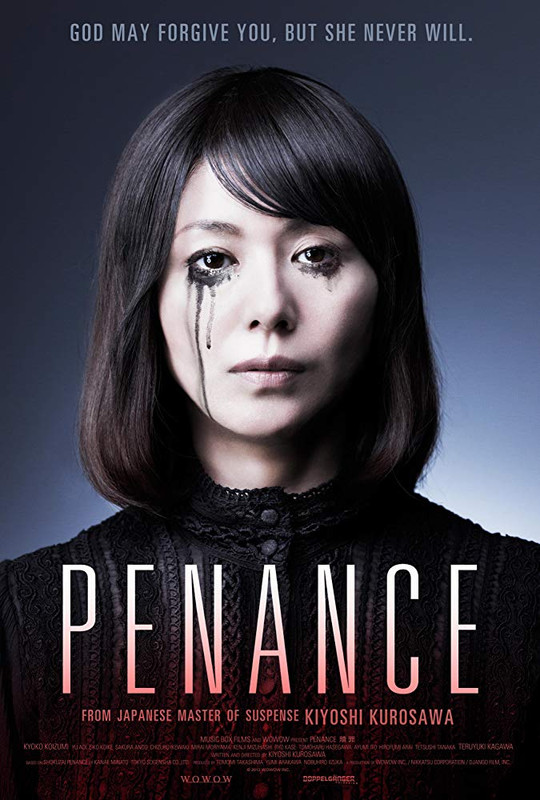
East End Film Festival 2013: Penance

Dir: Kiyoshi Kurosawa
Four and a half hours is a long time to spend in a cinema, but Penance – actually a five part Japanese TV series that is also being distributed as a film – made that time pass very quickly with a gripping, tense and varied story that managed to surprise right up until the end.

The story opens in the mid 90′s, when Emiri, one of a group of five ten-year-old friends is taken away from the others by a man and murdered in her school gymnasium. The other girls; Sae, Maki, Akiko and Yuka all say that they can’t remember anything about the man who took Emiri, and six months later there are no leads. Emiri’s mother Asako (Kyoko Koizumi) holds a birthday party for her, six months on from the murder, where she informs the four other girls that she can’t forgive them for not helping catch the killer, and that in the future they will have to perform an act of penance to earn her forgiveness. The series then picks up fifteen years later, unfolding in five parts, following the four girls and then Asako in turn.

While the fact of Emiri’s murder lies underneath the whole series as a motivating factor in how each of the girls grows up, and how that affects each of their stories, the focus of most of the series is not on finding the killer or even why the girls may have held back and not spoken up about things they did remember at the time of the investigation. Writer and Director Kurosawa (working from a novel by Kanae Minato) doesn’t attempt to draw the one mystery out over 270 minutes but instead gives each part of the film its own feel, drawing from a wide range of influences, while still keeping the underlying thread tight.

The first chapter sets out the strange, dark, stall that much of the film will follow (though in differing ways and tones) with a Hitchcockian – Vertigo being the obvious influence – chiller in which Sae (Yu Aoi) is set up with Takahiro (Mirai Moriyama) who was a couple of years ahead of her in school when Emiri was killed. They eventually marry, at which point Takahiro makes many rules for Sae, including requiring her to dress as a doll every night. It’s a strong psychological chiller, with great performances from its leads, and an interesting link back to the murder in terms of why Sae accepts this as her lot.

There is a jarring tonal shift between this and the broader second chapter, in which we see that Maki (Eiko Koike) has responded to the murder by becoming a teacher and being very hard on her students. Her reaction to an intruder who attempts a mass stabbing when the children are swimming is to attack back, but the way the series treats the school politics around this doesn’t quite work, as it sometimes has a slightly overblown comic tone that undercuts the drama (never more so than in the last scene, which provokes a few accidental chuckles).

Chapter three righted the series for me, with a(nother) great performance from Sakura Ando as Akiko. On the day Emiri is killed Akiko gets blood on her pretty dress, and she takes this as a sign that she mustn’t try to move ‘above her station’. Fifteen years later she sees herself hardly as a person but as a Bear. Ando is fantastic in the part; you get a true sense of her separateness simply from the way she holds herself. She also shows the - possibly fatal - shift in Akiko’s perception of herself in a purely physical manner with the way she begins to open up when her brother returns home with his new wife and his step-daughter Wabaka (Nanaka Fujii). The third chapter also features some of the best writing in the series, combining the cold and forbidding undertone with a much more natural sense of offbeat comedy.

The fourth chapter takes a very different approach, by showing us that, unlike the others, Yuka (Chuzuru Ikewaki) is untroubled by any kind of guilt, and this twists into a black comedy of manners as Yuka reconnects with her older sister (Ayumi Ito) and immediately, brazenly, sets about trying to steal her husband (Tomoharu Hasegawa), eventually becoming pregnant. When Asako comes into these stories (as she does in each) she is usually the cold presence, so it’s a well-timed change when Yuka meets her, and offers up one of the most coldly calculated suggestions in a film that has many. Chuzuru Ikewaki walks a fine line; bright and perky on the surface, with a flinty heart beneath, but she does it extremely well, and again this is where the film gets the blackness of its comedy right.

The final chapter wraps up the mystery, and owes much to Park Chan-Wook both in feel and in specifics. It’s a convoluted tale, and one detail stretches credibility near breaking point, but the series had been compelling viewing for long enough and the other twists were unexpected, more credible, and kept unfolding and unfolding in such a way that I could forgive the small lapse. Kyoko Koizumi really carries this last chapter, and she conveys a sense of sadness and resolve that put me in mind of Lee Young-Ae’s Lady Vengeance performance.

Penance commands the attention for its whole four and a half hours, moving much faster than you’d expect given the mammoth running time. I suspect the second chapter will feel more a part of the whole on a subsequent watch; it jars because it’s the first real tonal shift. Ultimately it’s a great showcase for five clearly talented actresses (Koyzumi and Ando the standouts). It’s a consistently high quality thriller that will keep you on your toes, whether you end up seeing it as series or a film, it’s well worth a watch.

Jul 1, 2013

The Month in Movies: June 2013

Film of the Month
Tuesday, After Christmas
The best older film that I’ve seen this year; a searingly sad film about how a man’s affair with a younger woman tears his family apart. It’s a brilliantly acted and surprisingly low key drama, with a staggering centrepiece in the 15 minute break up scene in the middle of the film.


Worst of the Month
The Last Exorcism Part 2
An idiotic sequel to a film that seemed to commit suicide by illogical ending. The frights are pathetically generic, the writing abysmally poor and even Ashley Bell, so good in the first film, is lost.


Awards

I nicked these awards categories from my friend AJ, who has been asking people to fill them out each month for several years at the joblo.com message boards.

Best Actor: Ethan Hawke – Before Midnight
Best Actress: Julie Delpy – Before Midnight / Mirela Oprisor – Tuesday, After Christmas
Best Supporting Actor: Nathan Fillon – Much Ado About Nothing
Best Supporting Actress: Maria Popistasu – Tuesday, After Christmas
Best Director: Radu Mentuan – Tuesday, After Christmas / Richard Linklater – Before Midnight
Best Original Screenplay: Radu Muntean, Alexandru Baciu, Răzvan Rădulescu – Tuesday After Christmas
Best Adapted Screenplay: Joss Whedon – Much Ado About Nothing / Richard Linklater, Ethan Hawke, Julie Delpy – Before Midnight
Biggest Surprise: Tourist Trap
Biggest Disappointment: Maniac Cop
Most Fucked-Up Movie: Maniac Cop
“I’m Pretty Damn Sure No One Else Has Seen This”: (and they should) In the Dark Half
“Why Is He/She Still in Movies?”: Zack Snyder – Director: Man of Steel
Best Scene: The hotel room – Before Midnight
Movie I Finally Got to Friggin’ See: Tourist Trap
Coolest Title: In the Dark Half
Hottest Lady: Maria Popistasu: Tuesday, After Christmas