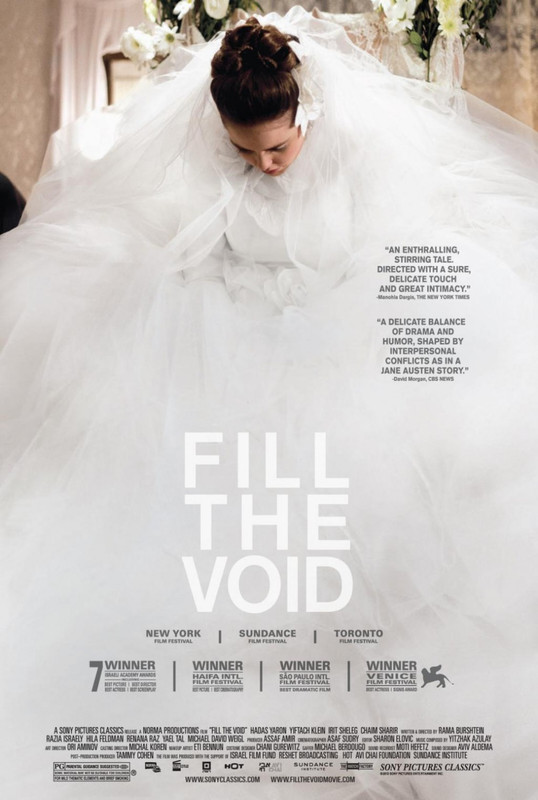
Fill
the Void
Dir:
Rama Burshtein
Cinema
is a great way, I find, to gain insight into cultures you don't know
anything about, and certainly for me that's true of the
ultra-orthodox Jewish community in Israel. Fill the Void doesn't,
unlike many films from this part of the world, concern itself with
the larger politics of Israel, rather it's a film that concentrates
hard on a single family.
When
18 year old Shira's (Hadas Yaron) older sister Esther dies in
childbirth she leaves a young widower in husband Yochay (Yiftach
Klein) and a new baby behind. The whole family is grief stricken,
but soon Yochay is looking to remarry, to a woman in Belgium.
Distraught at the idea of losing her daughter and her grandson in
quick succession, Shira's Mother hits on the idea of arranging for
Shira and Yochay to be married, but Shira already has her heart set
on another match which her parents have been working on for some
time.
Fill
the Void is an interesting film in the stance it takes on the things
it shows and implicitly discusses. I'm generally in agreement with
the opinion that fundamentalist religion is not a good thing, but
it's interesting to see a film look at a strictly religious community
and present them in a sympathetic light, which is something few
movies have done of late. One of the great strengths of the film is
that while director Rama Burshtein provokes many moral questions she
doesn't seem interested in dictating the answers to us, nor in giving
us 'heroes' and 'villains' to cheer and boo. I walked in expecting a
grim film about a girl being bullied into an arranged marriage (we've
seen a few of those over the past few years), but the even-handedness
of the film, the fact that it allows both Shira's parents and Yochay
to be rounded and sympathetic characters, is its most interesting
facet.
Hadas Yaron is excellent as Shira, and she's well-matched by Yiftach Klein as Yochay, both of them quietly trying to
negotiate their grief at the loss of Esther and to figure out how
they feel about each other and the idea of marriage. Fill the Void
is less a title about feelings than it is about duty, but the
performances remain subtle enough to allow that idea to be advanced
with rather more subtlety than you might expect.
The
film's downfall is that, even at only 90 minutes, it can feel a touch
padded, as we get several iterations of many scenes, a few scenes
that run rather longer than they need to (a Godfather like scene of
people coming to Shira's Rabbi father for help) and a few detours
that, while they are good scenes in and of themselves, don't add a
lot to the film (a sub-plot about an unmarried friend of
Shira's, for example). That's not to say that first time director
Rama Burshtein doesn't do many things right. There's an intimacy to
the film, particularly in the tight framing of the most fraught
scenes between Shira and Yochay, which is very effective, and there
are many memorable images, especially the closing frames, which are
haunting in the questions they pose.
Ultimately
Fill the Void might have made a great short, but it's a very solid
feature film, and held my interest with its interesting and well told
central storyline.
★★★
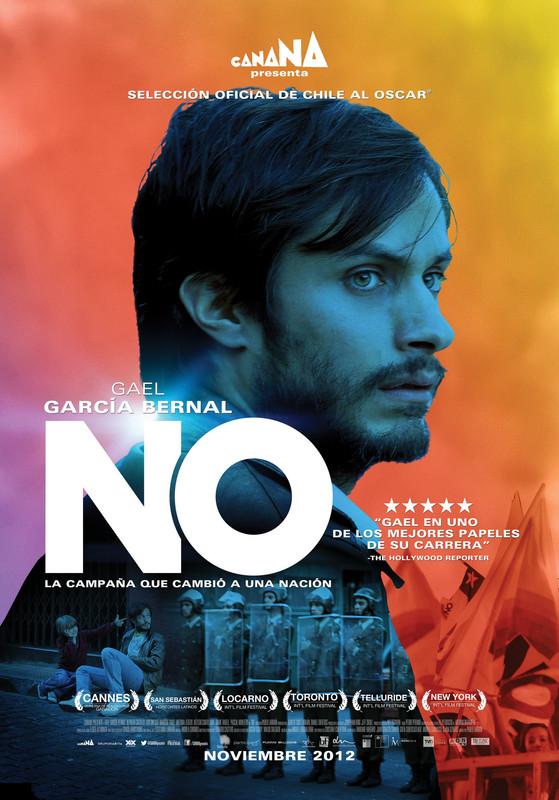
No
Dir:
Pablo Larrain
The
final entry in Pablo Larrain's trilogy chronicling Chile under
Pinochet is much easier for an outsider to engage with in political
terms than Tony Manero was (I've not seen the middle entry, Post
Mortem). It's the story of the 1988 referendum in which Pinochet was
forced by outside pressure to offer his people a simple choice; Yes
or No on eight more years under his rule. Larrain focuses on the
advertising efforts, with Gael Garcia Bernal playing the head
creative on the No campaign, and his regular collaborator Alfredo
Castro as the man tasked with heading the advertising effort for the
Yes campaign.
For
someone like myself, who knows almost nothing about Pinochet and his
rule, No is both fascinating and thrilling. I wasn't aware of how
and when Pinochet was ousted from power, and so the film also worked
as a thriller of sorts, gripping tighter as the date of the
referendum looms over the film. There are a few well told personal
stories here, notably of Bernal's relationship with his ex-wife (Antonia Zegers)
and young son, and of the strain on his working relationship with
Castro's character, who, in day to day life, is his boss at an
advertising agency. A scene late in the film in which Bernal and
Castro, days out from the vote, come back together to pitch a
campaign for a soap opera, bristles with tension.
The
performances are excellent all round. Castro is barely recognisable
from his Tony Manero character, and Bernal, for all his much remarked
upon movie star good looks, has a terrific everyman quality about him which
pays dividends. There is a simplicity and directness to the acting
which allows the film to convince almost entirely as something which
we're watching as flies on the wall at the time.
The
authenticity of the film is added to immeasurably by the way that
Larrain has shot it; in 4:3 ratio, with TV cameras of the time. He's
clearly cutting in a lot of genuine footage from the time as well,
and while this all adds up to create verisimilitude, I'm not entirely
convinced by the choice Larrrain has made here. First of all this
carefully crafted verisimilitude is more than a little undermined by
casting people like Bernal, Castro and his Tony Manero co-star Amparo
Noguera (in a small part). In this context they can't help but
remind you that you're watching a film. There's also a bigger issue
of the fact that the choice of vintage cameras means that Larrain's
frames are lacking in visual detail; they're hazy and heavily
pixellated at times, and frankly it's just not pleasurable to watch,
and audiences who don't know how the film was made may well complain
because it looks so low quality compared to what they are used to. I
understand what Larrain is doing here, and in terms of plunging us
into the time and place it works, I just think I'm a sophisticated
enough cinemagoer, as are most people, not to allow the fact that
something doesn't look like it was shot on bad equipment in 1988
shake me out of the period.
Ultimately
though, this is a minor caveat about an excellent and engrossing
film, which tells us a lot about a time, a place, and a set of ideas
without feeling like a history lesson. No is engaging, sometimes
blackly funny, always fascinating, and well worth seeing.
★★★★
Clip
Dir:
Maja Milos
A
few years ago at the festival I saw a great, bleak, coming of age
film from Russia called Everybody Dies But Me, and since then I've
seen many good teen and coming of age films from all over the world
at LFF. I was hoping that Clip would be this year's addition to this
catalogue of films.
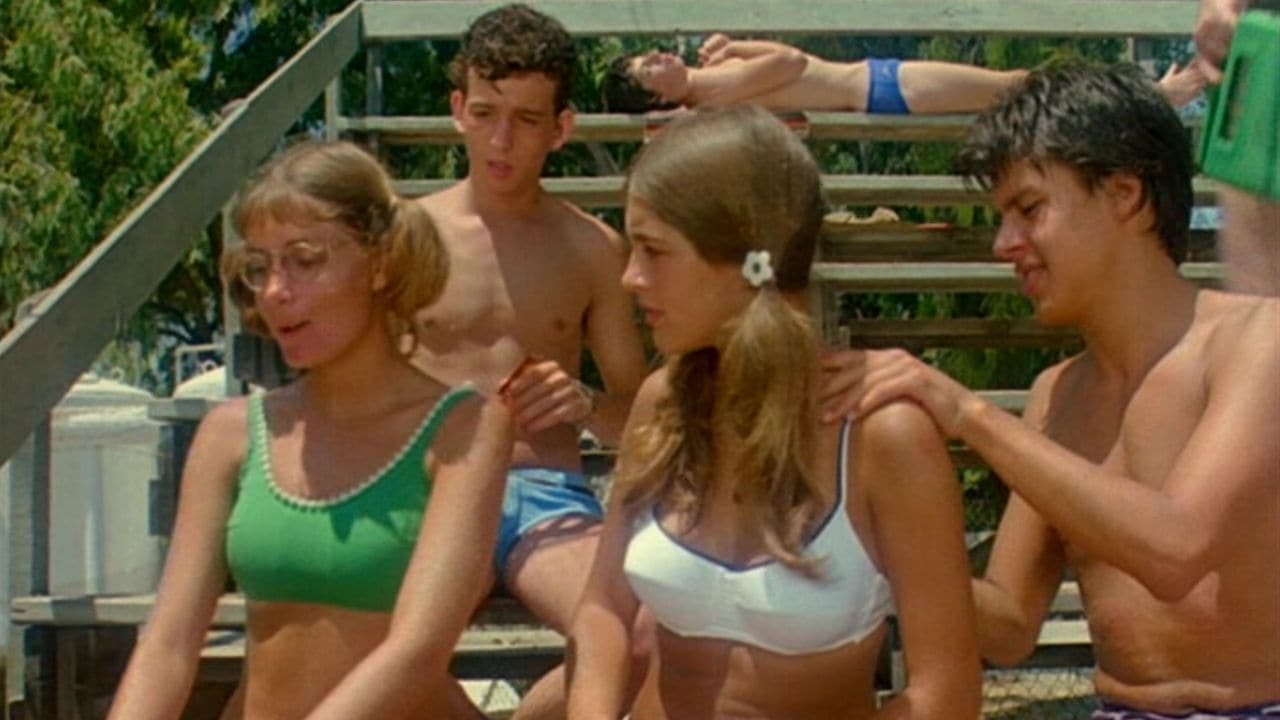
Jasna
(Isidora Simijonovic) is about fifteen; a rebellious girl discovering boys, especially
schoolmate Djole (Vukasin Jasnic) and railing against her home life with her
long-suffering Mother and dying Father. She films many of her
escapades, sexual and otherwise, on her mobile phone. That is about
it as far as story goes in this film, it's really little more than a
series of depressing and often explicit vignettes, and struggles to
add up to a real story. Even plotlines that feel as though they
might pay off, like the impending operation that Jasna's father has
to have, end up being cul de sacs and are left dangling at the end of
the film.
I'm
used to teen movies from outside the US being bleak and harsh –
it's one of the things I admire about them, because my own impression
of being a teenager was that it was horrible, and I never really saw
that reflected in the teen movies I saw when I was that age – but
it just feels like Maja Milos, Clip's young director, has gone so
hell for leather for 'depressing' that her film no longer feels
honest.
I
understand, of course, how important sex is when you're a teenager
and just discovering it, but even then, people have conversations and
thoughts that don't revolve around it, not that you'd believe that
from watching Clip. The sex is oddly treated in the film. In her
quest to shock, Milos has decided to show some sex acts in
hardcore detail. A dssclaimer at the end of the film assures us that
'No underage actors were involved in the filming of explicit sex
scenes', it's a redundant disclaimer, because the hardcore shots are
clumsily edited in, and never look like anything other than cutaways.
This also applies to the film's nudity, which creates an odd double
standard, as Jasna is shown repeatedly in explicit sex acts, but
never seen nude. It looks as though Milos can't decide whether to be
confrontational or coy.
Quite
apart from this the film is simply boring. About three quarters of
it consists of either Jasna being a bitch to her Mother or Jasna
fucking Djole. The rest is made up largely of party scenes. Only in
the last half hour is there any attempt to soften or develop Jasna as
a character, first a scene where she looks after some kids at a
foster home, then a scene where she talks to Djole about her father.
It's far too little, far too late, and even if it did convince the
film soon reverts to its familiar tantrum/fucking/party
structure. This structure also means that Milos lets a few
potentially interesting things serve no narrative purpose. Most
egregious is the fact that she never makes any use of Jasna's
cameraphone footage except as a source of cutaways. You keep
expecting it to have a role in the plot and it never, ever does.
Clip
is desperate to seem real, raw, relevant and hard hitting, but it
misses those targets, largely by trying far too hard to hit them.
Ultimately it comes off as little more than a tedious, directionless,
wallow in the seedy side of life, and says nothing of import or
interest in the process.
★