Jan 29, 2009

Top 5: Making of Documentaries

In alphabetical order by title

The Making of documentary has, with the advent of DVD, become something of an abused term, often used to describe an EPK – basically a trailer interspersed with five minutes of mutual backslapping. These films are not like that, most are feature length, and all explore the process of making a film, rather than acting as a mere promotional tool.

The Hamster Factor and Other Tales of 12 Monkeys (1997)
Dir: Keith Fulton / Louis Pepe


The Hamster Factor was the first proper making of I ever saw, and I saw it just by chance, it happened to be included on the VHS copy of 12 Monkeys I rented. Keith Fulton and Louis Pepe follow Terry Gilliam from his very first meetings about the project, right through to its acclaimed and successful release, covering every point in between.

To their credit, even on a successful film, Fulton and Pepe never neglect to show the more difficult and contentious aspects of the process. We see Gilliam having a blazing row with his producer, we watch him completely lose the thread of his film, while attempting to direct after a serious riding accident, we’re on set as he explodes because a key prop doesn’t work, and we’re privy to his reaction to test audiences who just don’t get his movie.

Irascible as he can be Gilliam is a filmmaker whose obsessive nature (from which The Hamster Factor draws its title) ultimately makes his work the unique thing it is. As an up close insight into the process of making a studio film, but trying to make a work of art at the same time, The Hamster Factor is peerless.

GET IT: 12 Monkeys DVD


Hearts of Darkness: A Filmmaker’s Apocalypse (1991)
Dir: Fax Bahr / George Hickenlooper


There are several films on this list about nightmarish productions, but none compares to the utter chaos that was the process of making Apocalypse Now. With the script going through daily rewrites, the comings and goings of the military vehicles that Francis Ford Coppola had managed to draft in to fill out his war scenes making scheduling a constant challenge, the leading man (Harvey Keitel) being replaced, another star (Brando) being completely unprepared and hugely overweight, another (Dennis Hopper) being out of his face on drugs, and Keitel’s replacement (Martin Sheen) suffering a near-fatal heart attack.

Bahr and Hickenlooper’s film mixes on set footage with contemporary interviews, and reveals many intriguing truths about the film, but it doesn’t dig quite so deeply into some of the most interesting issues (Keitel) as you might like. Still, this long out of circulation film is something that any Apocalypse Now fan, any Coppola fan, needs to see.

GET IT: This film is not available on DVD, I found a VHS copy in a charity shop.


Lost in La Mancha (2002)
Dir: Keith Fulton / Louis Pepe


Lost in La Mancha is not a traditional document of filmmaking, because rather than a making of this is an unmaking of Terry Gilliam’s long in the planning passion project The Man Who Killed Don Quixote. A combination of the weather washing away much of his first location and the ongoing ill health of leading man Jean Rochefort meant that, despite capturing some truly striking footage both in tests and on set, and having some breathtaking sets and props produced, the film had to be abandoned.

This film was initially supposed to be a DVD extra, but, saying that ‘somebody should get a film out of it’, Gilliam allowed Fulton and Pepe to finish and release their film. Again the filmmaker doesn’t always come off well, his obsession with detail seems to lead him to neglect the big picture on several key occasions, which can’t have helped when the misfortune began, but his passion is clear.

Fulton and Pepe again have access to everything. We are privy to production meetings, screen tests, and location scouts, as well as the shoot and the attempts to save it. What really comes through this film, though, is how great a tragedy it is that The Man Who Killed Don Quixote still remains unfinished.

GET IT: Lost in La Mancha DVD


Making The Shining (1980)
Dir: Vivian Kubrick


Making The Shining is just half an hour long, but it is packed with insight. That’s probably largely down to the fact that director Vivian Kubrick, being just 19, and Stanley’s daughter, is able to catch people, even her father, off their guard. The interviews are fun (Jack Nicholson is on great tongue in cheek form, while a clearly harried Shelly Duvall gives a great insight into why she’s so good in the film, but it’s the on set footage that is the real prize here.

It’s fascinating watching Kubrick set up his shots, seeing Nicholson trying to find constant variations for each take. It also defuses Kubrick’s reputation as a hard taskmaster; he certainly did a lot of takes, but the set we see here is one that seems fun to be on, even if it can be frustrating. It may be short, but Making The Shining is a true insight into a famously reclusive filmmaker.

GET IT: The Shining DVD


Overnight (2003)
Dir: Tony Montana / Mark Brian Smith

Overnight is not just a making of (though it does cover the process of making the cult film The Boondock Saints), it as more a character study of one of the worst men I’ve ever seen on screen; aspiring auteur Troy Duffy. Duffy was a bartender whose script was picked up by Miramax, and he immediately let his (limited) success go to his head. He begins the pre-production process and, within weeks, has alienated almost everyone around him.

Duffy’s disrespectful nature to all about him results in the collapse of both the deal with Harvey Weinstein and a mooted record deal with Madonna’s label for his band. He gets both the film and the album made, but for a much reduced budget, and with a much more limited release than would have otherwise been granted with him. Overnight is a fine film about both trying to survive in the low rent areas of the film business, and how a man who had the world handed to him on plate managed to destroy his opportunities, just by being a prick.

GET IT: Overnight DVD

See Also: Dangerous Days: Making Blade Runner; Full Tilt Boogie; Magnolia Diary; The Making of Alien 3; The Making of The Frighteners; The Plan 9 Companion; This Film is Not Yet Rated; Visions of Light.

Jan 25, 2009

Why haven't you seen... 6

This is the last Sunday post for Why haven't you seen... It will be moving to Tuesdays, which means a bonus post this coming week.

Regarde La Mer
[See the Sea] (1997)
Dir: Francois Ozon

What’s it all about?


An English woman (Sasha Hails), staying alone with her young baby in the south of France, allows a young woman (Marina De Van) to pitch camp in her garden for a few days. The two women become friendly, but after a few days events take a dark turn.

Why haven’t you seen it?
Short films often don’t get the attention they are due. See the Sea is more problematic than most, first because it is an hour long, meaning that it fits in to neither ‘short’ nor ‘feature’ categories, secondly because it is in French, and from a director who is not playing to the mainstream, and thirdly because its haunting ending may alienate many viewers.

Why should you see it?
For starters because its director, Francois Ozon, is quite possibly the world’s best and most consistent working filmmaker. Ozon has recently released Ricky; his tenth feature in 11 years. f his other nine films the first four are highly recommended, while his five subsequent features are all solid gold classics. See the Sea was made just before Ozon embarked on his first feature, and already it sees this great auteur exploring many of his filmic obsessions and working with a confidence that belies his youth.

Ozon is rightly renowned as a director of actresses, and here two of his early muses, English actress Hails, who appeared in his short A Rose Between Us and Marina DeVan, who would go on to appear in Sitcom, share the screen in what is, essentially a two hander. Even this early in his career Ozon show himself to be capable of drawing extraordinarily natural performances from his actresses, even when some of their actions are unnatural. DeVan particularly impresses, giving an increasingly unnerving performance as the stranger who insinuates her way into Hails’ life.

See the Sea is a peculiarly French type of thriller, the kind that doesn’t give much clue that that is the genre it falls in to until the midpoint of the film, by which time Ozon has built up a couple of complex characters for us to invest in, and only then does it begin to turn the screws, the atmosphere becoming ever more tense up until the final, shocking, minutes of the film.


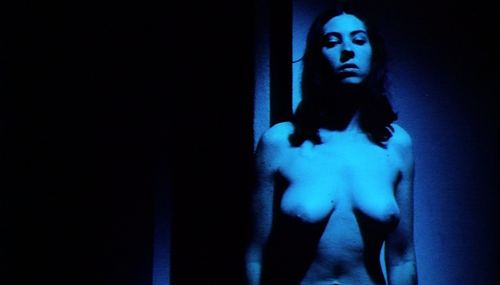
Ozon has always used sex brilliantly in his films, and here the frisson between Hails and DeVan adds another dimension to the film, and a sexual sequence, in which Hails, walking in the woods, stumbles on a male stranger who seduces her, is one of the most striking moments, both in terms of the film’s story and its visuals.

See the Sea is not an expensive looking film, but unlike many directors, whose early films reveal a refining of the look of their work, Ozon seems to have arrived fully formed. The obsessions are all here; the lingering on bodies, the depiction of characters at the beach, the explicit sex, the implication of a same-sex attraction, all captured in Ozon’s typically beautifully lush compositions.

You have to bear with See the Sea, it takes its time, but when it gets where it is going the pay off is so shocking and so satisfying you’ll be chomping at the bit to see more from this extraordinary filmmaker.

How can you see it?
There are several compilations of Ozon’s short films available. The most comprehensive is the BFI’s UK release, titled Regarde la Mer and Other Short Films, which collects seven films from 1994’s Action Verite [Truth or Dare] to the 2006 TV film Un Lever de Rideau [A Curtain Raiser]. The Region 1 collection A Curtain Raiser and Other Shorts also includes seven films, two of which; Un Rose Entre Nous [A Rose Between Us] and Victor are exclusives. The BFI is highly recommended, but a big fan will want both.

Jan 24, 2009

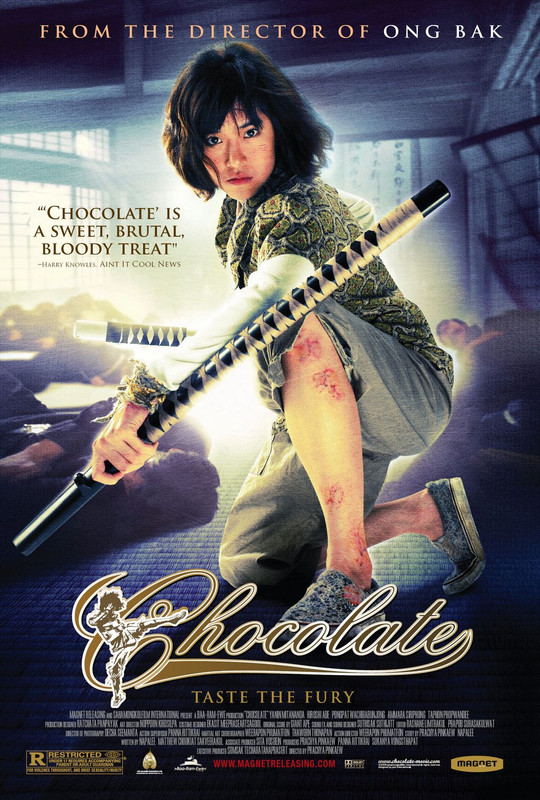
Chocolate [18]

Dir: Prachya Pinkaew
All martial arts films have the same story. Character wants something, other characters won’t hand it over, kicking ensues. Chocolate doesn’t break the mould, it doesn’t even dent it, but it’s one of the best martial arts movies to have come along in a very long time. The story has young Zin (Jeeja Yanin) trying to collect on debts owed her former gangster mother (Ammara Siripong), who is now in hospital with an unspecified cancer and has bills piling up. The twist is that Zin is autistic, but has learned martial arts through an amazing aptitude for mimicking the action stars she’s seen on TV.

Chocolate, like director Pinkaew’s other films (Ong BakWarrior King) has a sentimental streak, and takes a little while to really ramp up into the action sequences, but like Ong Bak, once the action does arrive it is absolutely awe inspiring. As usual, the first fight scene, which comes 18 minutes in, is more a preview than anything, it lasts barely a couple of minutes, and the choreography is pretty simple, but even this early there are moments and moves that will find you picking your jaw up from the floor. Jeeja Yanin trained for two years before shooting, which then took another two years (the film is just 93 minutes long), and you can see the result of those endless hours of work as you watch Chocolate, there’s not a missed step, not a move that looks sloppy, you can feel the blood, sweat and tears in every frame.

Jeeja Yanin, like Tony Jaa before her, is an extraordinary discovery. A tiny young woman of just 22, she looks as if the wind might blow her away, at times watching her fight is like watching a pixie try to beat up a giant. If, of course, the pixie was unspeakably hard. The speed of Yanin’s moves is just astounding, but you’d expect that from a whippet thin girl, what’s more surprising is the sheer amount of power she seems to have. At first the idea of a tiny autistic girl being able to take on armies of fighters seems outlandish, but as soon as that first fight is over you immediately buy into the idea.

About half of the film's brief running time is given over totally to fight sequences. There are several major set pieces and Pinkaew and his team make sure each is inventive and distinctive. There is the brief street fight, a warehouse set fight which sees Yanin dodging through railings and shelves, an ice factory set homage to The Big Boss, in which Yanin even echoes Bruce Lee’s whooping vocalizations. There’s a blistering fight in a meat market, involving knives and staves, there’s a rooftop fight, half of which is fought crouched, there’s the 12 against 1 hand to hand fight, and Yanin fending off samurai swords with the aid of two sheaths. Then there’s the unbelievable final fight, which begins on the side of a railway bridge, and ends up being fought across street signs and the side of a building. Through all of these, the choreography stays highly inventive, and every single fight throws up at least a few moments you’ll have to rewind, just to believe they happened (Yanin kicking another girl into a pipe)

Aside from her physical prowess, and her girl next door beauty, Jeeja Yanin stands out in Chocolate because she also gives a decent dramatic performance, she’s actually fairly convincing as an autistic young adult, and that helps keep the film engaging between fights. Chocolate is a martial arts fan’s dream, and a film you must see if you even remotely enjoy the genre.
★★★★

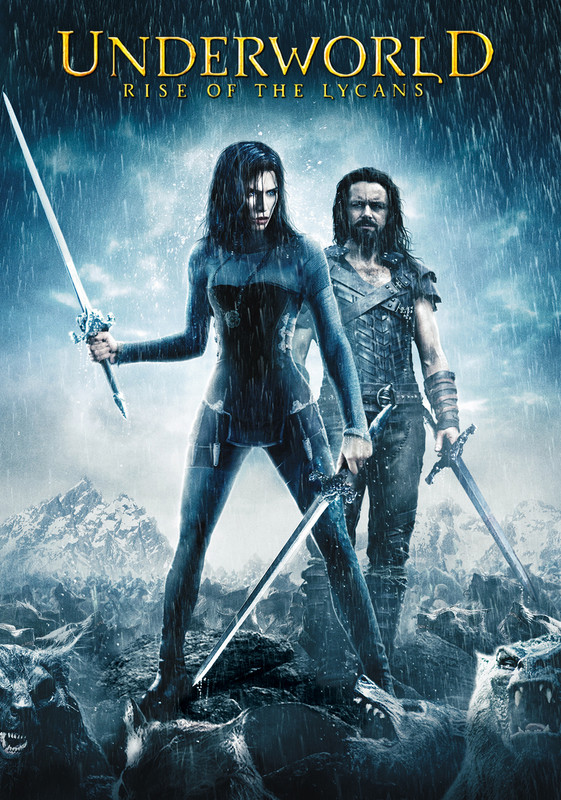
Underworld: Rise of the Lycans [18]

Dir: Patrick Tatopoulos
The first two Underworld films were ludicrous but rather entertaining things. The central premise was irresistible; a war between clans of vampires and werewolves and the gloomy but stylish visuals, decent effects and bone-crunching violence made for a couple of amusing pieces of complete nonsense.

Original director Len Wiseman and star Kate Beckinsale have moved on to greener pastures, so a further sequel was clearly out, but the cash cow is milked once more in the form of a prequel to the original film, attempting to tell the tale of how the war between Vampires and ‘Lycans’ began. The story is simplistic almost to the point of non-existence. Original Lycan Lucian (Michael Sheen) leads a revolt among his enslaved people, while at the same time attempting to run away with his lover Sonya (Rhona Mitra), who just happens to be the daughter of vampire king Victor (Bill Nighy).

Patrick Tatopuolos ascends the throne of director, having spent many years as an effects artist and creature designer, and the film plays much as you’d expect given its helmer’s previous job. Even on what must have been a relatively low budget the special effects largely live up to their name, and Tatopoulos marshals the mayhem quite well. The fights, if over cut, are pretty well choreographed, easy to follow, and enjoyably intense. On the downside, Tatopoulos’ shot selection is pretty dull, and his colour palette consists entirely of grey and crimson (though that only appears in the form of spurting blood). The combination of these things means that, particularly outside of the action sequences, Rise of the Lycans is often rather boring to look at, and seriously lacking in detail in its visuals.

Tatopoulos is also clearly not much of an actor’s director. From Nighy, never cinema’s most restrained actor, he draws a performance so unendingly hammy that you could slice it up and put it in a sandwich. Kate Beckinsale is no great shakes as an actress, and Rhona Mitra is no Kate Beckinsale, her range consisting of pout 1, pout 2 and scowl 1.  It’s not as though she has a demanding part, but when the female lead in your film can’t even make saying "yah" to make a horse start moving believable you clearly need to do more auditions, however pretty she may be. Michael Sheen, as Lucian, rises above the awful performances of his peers and the risible screenplay to give a performance far better than the film needs or deserves. Behind his beard and lank hair, and with his sharp features, Sheen is convincingly feral, and even manages to give the relationship with Mitra some weight.

Underworld: Rise of the Lycans is, of course, total nonsense, and no, it’s not especially good. However it doesn’t, at 92 minutes, outstay its welcome. There’s plenty of action, and plenty of amusingly rubbish dialogue to keep you entertained. As Friday night distractions go, you could do worse.
★★

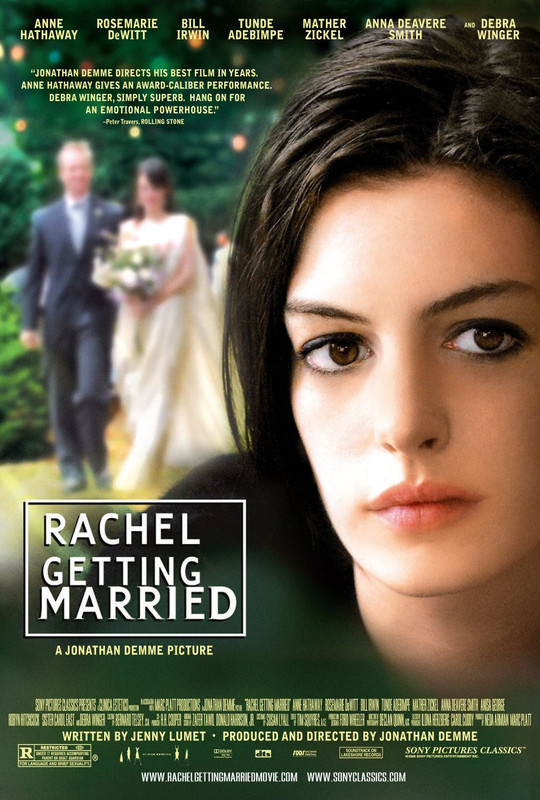
Rachel Getting Married [15]

Dir: Jonathan Demme
I’m so torn on this film, there’s a lot that I respect about it. The acting, Jenny Lumet’s amazing screenplay, the music… and then there’s a huge problem right at the centre of the film. I have previously mentioned my antipathy for the current ‘shaky-cam’ fad, a device that filmmakers seem to feel lends immediacy and intimacy, but which I feel makes their work look like a 12 year old with ADD shot it. There is absolutely no need for Rachel Getting Married to be shot this way, and the fact that it often makes the film, despite its undoubted quality, a real trial to watch. More than once, in scenes where there is just a single character on screen speaking or on one occasion singing, I had to restrain myself from standing up and yelling “Keep the fucking camera still”.

This is a particular irritant because everything else about Rachel Getting Married is absolutely top notch. The cast is composed mainly of little known actors (and some non-actors) all of whom acquit themselves beautifully, but it’s the known quantity, Anne Hathaway, who has been attracting most of the awards attention. It’s not unwarranted attention either, Hathaway is completely transformed, utterly mesmerising as Kym. The role is deeply unsympathetic and though Kym constantly asks for sympathy, and craves attention, Hathaway never tries to manipulate the audience into caring for her. Nor do Hathaway or Jenny Lumet give Kym a sudden character shift over the weekend over which the film takes place. She arrives a screwed up young woman straight out of rehab, and that’s how she leaves too. People are complex, they don’t change overnight and both Lumet’s script and Hathaway’s finely wrought and extremely moving performance recognise that.

Like most of the performers, Hathaway manages to make what must have been scripted dialogue sound like it’s coming straight from her. Not a line, not an inflection feels rehearsed, particularly in her show-stopping speech at the wedding rehearsal dinner. The supporting cast is destined to be overlooked in the rush to praise Hathaway, but if anything Rosemarie DeWitt is even better as Rachel. She’s got the tougher job, there are no real extremes to Rachel (while Kym is all extremes) but DeWitt hits every emotional beat with absolute truth and conviction. She’s got several great scenes with Hathaway, in which she’s extraordinary, but DeWitt’s best work is opposite Tunde Adebimpe, who plays her new husband. The chemistry between the two of them is electric and unforced, and the way she listens as he sings to her at their wedding is one of the most beautiful moments I’ve seen in a cinema for some time.

It would be easy to write reams on the brilliance of all the film’s performances, but a couple more do need to be singled out. Stage actor Bill Irwin is new to me, but he makes what could have been an annoyingly weak character deeply touching, with a riveting performance as the permanently flustered father juggling one daughter’s wedding, the other’s return from rehab and the constant worry that goes with both. Then, of course, there’s Debra Winger, returning to the screen the best part of 15 years since her last major role. She’s well cast as Hathaway and DeWitt’s mother, and gives a nicely low-key performance, never demanding the limelight, but softly threatening to steal a few scenes.

As much as I love most of Rachel Getting Married it does make a few missteps, there are a couple of moments that, in a film this realistic, feel a bit overly contrived, a slightly stock involvement between Hathaway and the best man, and a melodramatic moment that we just don’t need. Despite the fact that his stylistic choices annoyed me, you have to hand it to Jonathan Demme; he draws a large and often inexperienced cast together into a completely believable group of family and friends, while getting individually excellent performances from every one of them. I’d love to recommend Rachel Getting Married unreservedly, but the distracting camerawork does jolt you out of the film so frequently that it undermines what is otherwise a brilliant piece of work all round.
★★★★

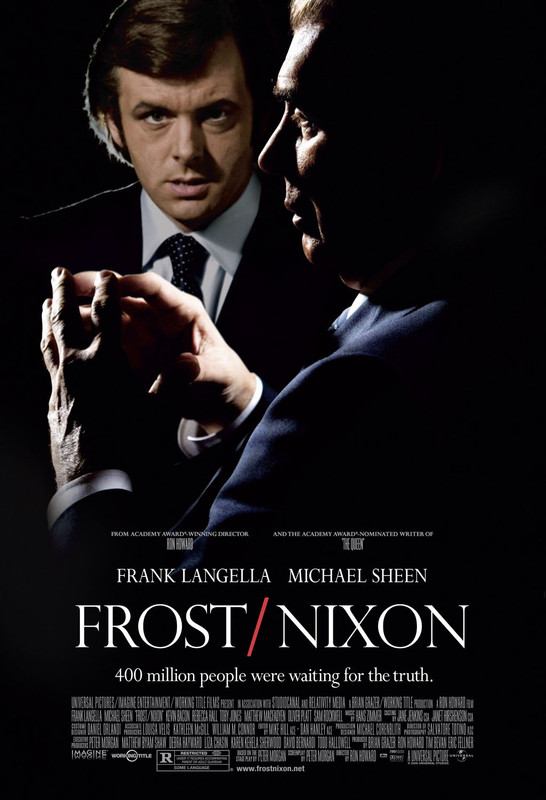
Frost/Nixon [15]

Dir: Ron Howard
Frost/Nixon is an odd fit for the cinema, a story about television, based on a play, the movies wouldn’t seem to be its natural home. However, under the unobtrusive direction of Ron Howard, the story makes a surprisingly natural transition to the big screen. The story is that of a series of interviews with disgraced ex-president Richard Nixon (Frank Langella) conducted by British talk show host and comedy performer David Frost (Michael Sheen). Writer Peter Morgan (who also scripted The Queen) fictionalises the build up to the interviews, and the relationships between the major players on both sides.

As the title implies much of Frost/Nixon rests on the shoulders of its stars. Langella is picking up most of the accolades, including an Oscar nomination, for his Nixon. He looks nothing like tricky Dick, but the gruff voice, and the demeanor of the man, come across brilliantly. Where Langella really excels, particularly given how often Nixon has been portrayed on screen before, is in giving more than just an impersonation of the man, more than a caricature, he manages to make Nixon human, even to make him sympathetic at times, giving a fresh perspective on a man about whom much has been said.

Michael Sheen doesn’t, sadly, come off as well. Sheen has made playing real-life characters something of a stock in trade. He’s done an uncanny Tony Blair, Kenneth Williams and is appearing as Brian Clough soon. Frost seems a bit undefined. He gets the impersonation down in the first few scenes, but then he lets it slide, and ends up slipping into his Blair for a lot of the film, with the notable exception of the last interview, in which the Frost impression returns to full force. The problem is that, unlike with Langella, I could never really shake the feeling that, however good he is technically, what I was watching was Michael Sheen doing impressions.

There is a similar mix among the supporting performances. Former Spooks star Matthew MacFadyen lets his wig do most of the work for him as John Birt, and the talented Rebecca Hall is largely reduced to sitting next to Sheen and looking pretty, while Oliver Platt does his patented comic relief part as well as ever. There are standouts though; Kevin Bacon is excellent as Nixon’s closest aide, particularly in a conversation with Sheen just before the first interview session, Sam Rockwell makes more of his part as a researcher than was likely on the page and Toby Jones, in just a handful of scenes as Nixon’s agent ‘Swifty’ Lazar, very nearly steals the film out from under Langella’s nose.

Stylistically Ron Howard indulges in few flourishes, the use of ‘documentary’ footage of some of the leading players is odd and out of place, and it feels truncated, as if there is an abandoned framing device sitting on the cutting room floor but otherwise his major choice is to make extensive use of tight close ups in the interview sequences, the one thing that theatre can’t do, and a decision that really hammers home what the film is really about; the power of television.

Frost/Nixon is certainly talky, but it’s never dull, screenwriter Peter Morgan combines fact and fiction literately, putting believable dialogue into the mouths of all of his characters, even when some, like Hall’s are left a touch underdeveloped. The major problem with the film is that not all of the performances come up to the high mark set by some of the cast, but the film is still worth checking out, especially if you have an interest in the era, or in politics in general.

★★★

Jan 22, 2009

Oscar Nominations

Yep, it’s that time again, the culmination of cinema’s yearly round of mutual backslapping, The Oscars. I’m not going to post a full list of nominees, just the major categories, and any others that I have something to say about. For a full list of nominations, hit oscar.com


Best Picture
The Curious Case of Benjamin Button
Frost/Nixon
Milk
The Reader
Slumdog Millionaire

First off, thank GOD The Dark Knight isn’t nominated. I was sure that AMPAS was going to buy into the hype for that ridiculously overpraised movie, just in order to connect with the public again. Good on them for not doing so. However they did nominate The Reader, which is just as unworthy of the honour. I haven’t yet seen the rest of the shortlist, but I should be catching Milk and Frost/Nixon this weekend.

UPDATE: I've seen three of the nominees now, and none even deserves a mention, but if Benjamin Button wins I'll be sick.

Predicted Winner

A tough call, because I've seen just one, but I get a feeling Slumdog Millionaire takes it.

UPDATE: Slumdog, with nothing in second

Best Director
David Fincher: The Curious Case of Benjamin Button
Ron Howard: Frost/Nixon
Gus Van Sant: Milk
Stephen Daldry: The Reader
Danny Boyle: Slumdog Millionaire

What about Loveleen Tandan? Who she? I hear you cry, well, she’s the credited co-director of Slumdog Millionaire, the one who has had to watch as Danny Boyle has reaped praise and awards for the film, while she hasn’t even been named in any of the nominations. If you nominate a film for its direction and two people are credited then both should be nominated.

Predicted Winner

David Fincher. Reviews may be mixed, but I think it’s agreed that it’s about time this great filmmaker got his just reward for one of the best careers of the past 2 decades.

UPDATE: Holy crap Benjamin Button is awful, which actually makes me feel a little more secure about Fincher's win, which will be the most egregious make up Oscar since Pacino's for Scent of a Woman

Best Actor
Richard Jenkins: The Visitor
Frank Langella: Frost/Nixon
Sean Penn: Milk
Brad Pitt: The Curious Case of Benjamin Button
Mickey Rourke: The Wrestler

Rourke is excellent in The Wrestler, and the reliably brilliant Penn is likely to be strong competition for him. The story here though is AMPAS remembering a well-regarded performance from a film that came out a long time ago; Richard Jenkins in The Visitor. I haven’t to my regret, seen the film yet, but Jenkins is always good value and it’s nice to see him shortlisted.

Predicted Winner

Mickey Rourke, but only because Sean Penn is recently Oscared.

Best Actress
Anne Hathaway: Rachel Getting Married
Angelina Jolie: Changeling
Melissa Leo: Frozen River
Meryl Streep: Doubt
Kate Winslet: The Reader

This is good, a supporting campaign was run for Winslet in this part, and her nomination as a lead suggests that the Academy are growing tired of category fraud. Otherwise there’s a mix of the expected (Meryl Streep with her customary nomination for existing), apologies (Angelina Jolie and her ‘we’re sorry for not noticing you doing a much better job in A Mighty Heart’ nomination) and pleasant surprises (Melissa Leo picking up a nod for a great performance in a far from release indie).

Predicted Winner

Kate Winslet. It’s not the film she deserves an Oscar for, but she’s 33 and has six nominations, it’s time.

Best Supporting Actor
Josh Brolin: Milk
Robert Downey, Jr: Tropic Thunder
Phillip Seymour Hoffman: Doubt
Heath Ledger: The Dark Knight
Michael Shannon: Revolutionary Road

Downey? Really? Don’t get me wrong, I love Downey, but this was a one joke performance in a bad movie. It’s a pretty good joke, but still. Ledger has the same problem for me, it’s as one-note a performance as you could hope for, but somehow it seems to have swayed even those who didn’t like The Dark Knight. On the plus side it’s nice to see Michael Shannon, so good in Bug, pick up a nod.

UPDATE: I'd love to see the worthy performances of Hoffman or Shannon take this, but lets face it, they won't

Predicted Winner

Ledger, but, and I’m sorry to have to say so, only because he’s no longer with us.

Best Supporting Actress
Amy Adams: Doubt
Penelope Cruz: Vicky Cristina Barcelona
Viola Davis: Doubt
Taraji P Henson: The Curious Case of Benjamin Button
Marisa Tomei: The Wrestler

It’s a shame the wrong supporting actress is nominated from The Wrestler. Good as Tomei is Evan Rachel Wood’s seismic shifts of emotion, in just three scenes, are even more impressive. I’m looking forward to seeing Doubt, given its four acting nods, including one here for Amy Adams, who seems to be becoming something of an academy darling (and why not).

UPDATE: Amy Adams is just brilliant in Doubt, and really ought to win here, but it's not about merit.

Predicted Winner

A genuinely tough call. Probably Penelope Cruz.

UPDATE: No longer a tough calle. Penelope Cruz, for Woody Allen's massively overrated flick.

Best Foreign Language Film
The Baader Meinhof Complex
The Class
Departures
Revanche
Waltz With Bashir

The system for selecting the nominees in this category needs some serious shaking up. Why the hell does a country have to select one film to represent itself? EVERY foreign language feature released in cinemas in the eligible period should, indeed must, be considered for this award. Because when they aren’t we get this list. The Baader Meinhof Complex? Please, a 150-minute lecture with occasional explosions and breasts, and that’s one of the best foreign films of the year? Where the hell are the likes of XXY, Water Lilies, I’ve Loved You So Long? This system is broken.

Predicted Winner

Waltz With Bashir, an apology for overlooking it in the next category.

Best Animated Feature
Bolt
Kung-Fu Panda
WALL-E

I wish all of WALL-E had been as good as it first 40 minutes are, but this is another weak field in the animation ghetto and among the company it stands out.

Predicted Winner

WALL-E, with nothing in second place.


I don’t really have much to say about the rest, other than PRESTO for Best Animated short!

Jan 18, 2009

Why haven't you seen... 5

Fucking Åmål
[Show Me Love]
Dir: Lukas Moodysson (1998)


What’s it all about?
In Åmål, a small Swedish town, bored 16-year-old Agnes (Rebecka Liljeberg) is a reclusive schoolgirl with few friends, nursing a crush on 14-year-old Elin (Alexandra Dahlström). When Elin gets wind of this she crashes Agnes birthday party, and they share a kiss. Though Elin means this as a cruel joke the two develop a tentative friendship, and perhaps more.

Why haven’t you seen it?
I honestly don’t know, I mean, it’s about gay Swedish schoolgirls… but seriously… Lukas Moodysson’s first film was an arthouse release back in 1998, from a debuting filmmaker, and it never received a DVD release, at least in the UK, until 2006, and then only in a boxset of Moodysson’s first four films.

Why should you see it?
For many reasons, but let’s begin with the kiss. Agnes and Elin only kiss twice in the movie, the first is a peck, initiated by Elin on a dare but the second, in the back of a cab, is one of my favourite kisses in cinema. It’s, brilliantly, scored by Foreigner’s I Want to Know What Love Is, and the girls fall into it with such genuine hunger that you can almost feel it as they get lost in the moment, which is swiftly broken by the cab driver. It’s just one of those cinematic moments that you can find yourself swept up in every time you see it.

Besides that moment there are many other things to recommend the film. Chief among these are the fine performances that Lukas Moodysson drew from his young leads (for once, a film with teenage main characters who look and behave like teenagers). Liljeberg and Dahlstrom both give incredibly natural performances, and make their dialogue sound observed rather than spoken. This is also a testament to Moodysson’s low-key direction and his excellent screenplay, which presents a picture of teenagers closer to reality than you’ll usually see in a coming of age movie. He presents what could be a cliché story – Girl meets Girl, Girl appears to get Girl, Girl loses Girl, Girl attempts to get Girl back – in a fashion so realistic that not only do you get drawn in to the characters and their situation, you forget how often you’ve heard this story before.

Fucking Åmål feels true to life in that it mixes tones freely. There are scenes that are moving, but just as often there are funny moments. These don’t, though, arise out of gags; they come from the characters, particularly Elin, whose extreme outward confidence is often very funny (as when she says “We’re so fucking cool” before diving in to that second kiss). The last scene at Agnes and Elin’s school could have been horrible, sentimental and too neat, but it overcomes the potential pitfalls because Liljeberg (whose quieter performance is the film’s highlight, good as Dahlstrom is) plays it pitch perfectly, and because you are completely with her, and invested in the relationship.


Fucking Åmål is a wonderful film. It’s not always easy, there are a lot of raw scenes that make you feel Agnes’ pain, but it’s so very rare that a film has any visceral effect that films like this should be treasured and shared.

How can you see it?
In the UK the only way is in the aforementioned boxset Four Films by Lukas Moodysson. It’s a good set, also including Together, the brilliant Lilya 4 Ever and the caustic A Hole in my Heart. All three of those come with all the extras from the individual releases, while Show Me Love boasts Moodysson’s fantastic short film Talk as a supplement. The US edition is Region free, but only has trailers as an extra, while the Swedish edition has a commentary with Moodysson, but no English subs. If you can stretch to the box the UK edition is the way to go. That, or just click the title at the top of this post and enjoy.

Jan 17, 2009

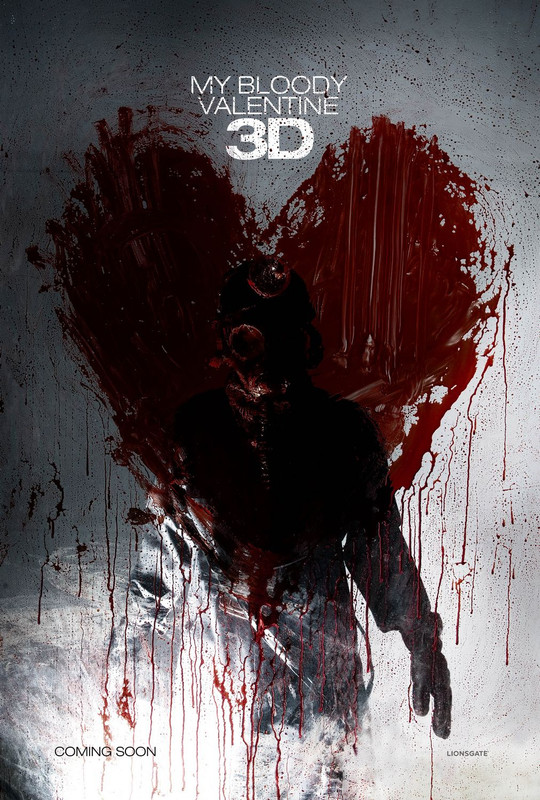
My Bloody Valentine [3D] [18]

Dir: Patrick Lussier
The original My Bloody Valentine isn’t a very well regarded slasher film, though a recently released DVD, which restores all the previously snipped gore scenes, may, among genre fans, do something to address that. This film may also help its cause because, even among unspeakably awful horror remakes, this one is a special kind of terrible.

I haven’t seen the original film, so I can’t really comment on how closely this one follows its blueprint, but by all accounts, the remake portion of the film is really just the first 10 minutes, which consist of a series of murders at a Valentine's night party in a mine  - because, really, where else would you go for a party? - while the rest of the (colossally overlong) running time is more a sequel than a true remake. That may go some way to explaining why the film’s title makes so little sense. Besides the opening sequence and the way the killer leaves victims hearts in heart-shaped candy boxes the connection to Valentine's Day is all but absent. For all the import the date has, all the effect it has on either the characters or the crimes this may just as well be My Bloody Chinese New Year.  The bulk of the film takes place 10 years later, when the heir to the mine (Jensen Ackles) comes back to town for the first time since the massacre, to find his fellow survivors being murdered and himself the prime suspect for his former friend (Kerr Smith) who is now the town’s Sheriff. Rumours, of course, also abound that the original killer has returned from the dead.

I like slasher movies, they’re fun despite their formulaic nature, and in the opening chapter of a franchise it’s often entertaining to see if you can spot the killer. You certainly will here, mere minutes in. It’s all so ludicrously obvious and telegraphed that you expect your suspect to be the red herring, only he’s not, this movie is just that stupid and obvious. It’s also nice to have some characters with personalities as the victims. Wes Craven has a particularly good record here, with both Scream and the original Nightmare on Elm Street boasting casts of young pretty bodies in waiting that you could actually identify with and root for, and who even, on odd occasions, said something you could imagine coming out of a real person’s mouth. Not so here. Writers Todd Farmer and Zane Smith prove unable to invest any of their, for lack of a better word, characters with anything even passingly resembling a personality, or to write dialogue that doesn’t feel like it was written by a 12-year-old misremembering dialogue from a slasher he thought was cool.

You don’t really go into a slasher film expecting Academy Award winning performances, but even so, the standard of… oh, let’s be kind and call it acting, even though reading would be a more accurate description, on display in My Bloody Valentine 3D is absolutely inexcusable. Jensen Ackles, of TV’s Supernatural, is shockingly wooden as Tom Hanniger, not only does his performance fail to deliver anything one could even charitably call an emotion, it makes you wonder whether he even knows what the word means. Don’t go thinking the rest of the cast are any better though, because the jaw-dropping non-performances of Jaime King and Kerr Smith and the pantomimic awfulness of Kevin Tighe and genre vet Tom Atkins will disabuse you of that notion fast.  It’s enough to make you want to reach into the screen just so you can slap the entire cast and yell “do it better” at them.

A glance at Patrick Lussier’s filmography reveals him as a director of straight to video crap, and My Bloody Valentine 3D bears that out with every single shot. Despite the 3D process this film is as flat and uninteresting to look at as they come. Every setup looks utterly generic, and at times (particularly one inexplicable moment in the opening sequence) the geography of Lussier’s shots flies completely out the window. Worse is that he’s got only two ideas for the murder sequences, the helmet lamp searching in the darkness and looking over the audience in a 3D effect, wheeled out four or five times, which doesn’t work once, and people getting stabbed with a pickaxe, sending, more often than not, bad CGI viscera flying at the audience. That’s it, the film never deviates from the formula (even using the shot with the lamp in a lit area, well done there) and when you’ve seen the first kill in this movie you really have seen them all.

Technically the 3D largely works. There are fewer problems with ghosting (which were prominent on the first three films I saw in the REAL-D process) and though there remains a softness to the picture and focus the previous problems with detail in long shots and on movement are reduced. What this film proves to me though, and what really makes me fear for the future of cinema, should the predictions of 3D’s dominance in the future come true, is that it’s no more than a gimmick. Far from being immersive, sucking you into the world of the film and thus scaring you more, the picture’s added depth merely accentuates the films utter lack of it. What absolutely doesn’t work is the endless array of things coming out of the screen at you. On a flat screen CG can now be photo-real, but the renderings of pickaxes, eyes, and branches, to name but a few things, that shoot out at us here are so patently fake that the 2D version is more likely to make an audience recoil from the screen. If there is any reason for My Bloody Valentine 3D to exist it is this; it offers definitive proof that a shitty movie in 3D is still a shitty movie. The process adds nothing.

Quite apart from being a remake My Bloody Valentine 3D steals liberally from other, better films. There are shots here that you’ll recognise from The DescentLeon and Haute Tension, none of which deserve to be even tangentially associated with this retrograde piece of crap, which should be consigned to the dustbin of shitty movie history, never to be spoken of again.

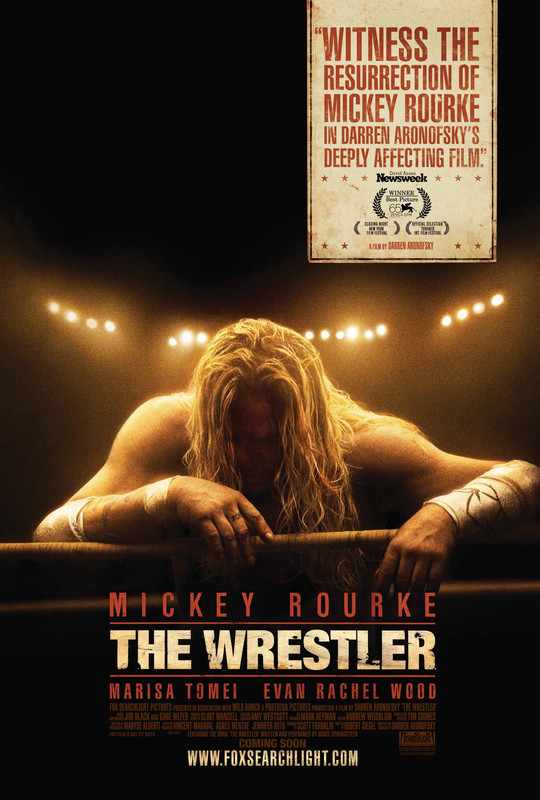
The Wrestler [15]

Dir: Darren Aronofsky
“I’m an old broken down piece of meat.” Surprisingly, that's not a quote from an interview with time and plastic surgery ravaged Mickey Rourke, but from his character Randy ‘The Ram’ Robinson, the eponymous Wrestler in Darren Aronofsky’s latest film. The film follows The Ram 20 years after his heyday. He’s deaf, fighting in tiny, extreme matches. His only friend is his favourite stripper (Marisa Tomei). His daughter (Evan Rachel Wood) doesn’t want to know him and he’s suffered a heart attack mere weeks before a 20th anniversary rematch with his most famous opponent.

For the most part The Wrestler doesn’t just embrace cliché, it sees cliché coming, rushes toward it and gives it a great big kiss. It does, commendably, do a few unexpected things (or, rather, not do several things you expect it to) in its final scenes, but until we get there it’s familiar almost beat for beat. The reason that this tremendous familiarity doesn’t sink the movie is that the actors simply won’t allow it.

Mickey Rourke was due to be the next James Dean, or the next Brando. He was impossibly handsome, had an instinct for good scripts and turned in an array of memorable and unforced performances in films as varied as Diner, Body Heat and Angel Heart, and then it all went wrong. Rourke returned to boxing and a combination of spending years getting hit in the face and plastic surgery reduced the former pinup to what we see in The Wrestler, which resembles Paul McCrane’s character in Robocop after he’s been doused in toxic waste more than it does Mickey Rourke. His voice has changed too; sounding like Rourke has spent the last decade on a diet of cigarettes, sandpaper and granite, and yet all this makes him perfect to play The Ram. Even before Rourke opens his mouth we have a sense of him as a broken down former legend. His performance is a subtle thing, which works beautifully in showing the way The Ram comes to life in front of an audience, be it in the ring or (in the film’s best scene) serving customers at a supermarket deli counter.

Rourke’s best moments are shared with his co-stars, his sad but sweet wooing of Tomei's Cassidey, the aging stripper he’s become friendly with as her only remaining regular for private dances, and his desperate attempt to mend his relationship with his teenage daughter. He’s completely invisible in the character in these scenes, and Tomei and Wood match him. Both the film’s major female characters are terribly underwritten and, particularly in Wood’s case, underutilised, but they both make the most of their screen time. Tomei finds humanity in what should be a cliché and exploitative part (though the exploitative element is very much there in the frequent and extensive nudity), making Cassidey, or Pam, refreshingly real and complex in just a few short exchanges. Evan Rachel Wood has even less time, and an even more stock character, but even with the ludicrously exaggerated speed of character arc you can’t fault her for a second. Her final scene is out and out painful to watch, both because you care for The Ram and because you empathise with her.

What, sadly, doesn’t work as well as the acting is the technical side of the film. Shaky-cam is becoming a disease in cinema, and Darren Aronofsky has come down with a bad case on this film. I don’t know when it became some sort of sin for a camera to make smooth moves when following a character, but the constant wobble in Aronofsky’s frames (even in many of his static shots) started to be irritating early on. Note to filmmakers… unless you do it very well, and for a purpose, shaky-cam doesn’t make your film feel ‘real’, it makes it feel amateurish. The Wrestler also falters somewhat at a screenplay level, because as well as many of the machinations of the plot a great deal of the dialogue feels second hand, however well delivered it is.

The one great thing about this film, besides the acting, is its ending. Most films these days are too long, driven by a desire to tie up every last loose end for an audience. The Wrestler ends exactly where it should, with a brilliant and moving shot, and by that one decision Darren Aronofsky and his film went up in my estimation. The Wrestler isn’t perfect, but its strengths are many, and enough to make it worth seeing.
★★★

Jan 15, 2009

BAFTA Nominations 2009

The British Academy announced its nominations this morning, here they are, along with my commentary on the major categories about who I’d like, and who I’d expect, to see win.

I may edit and update this post in the next few days, as I see more of the nominated films.


BEST FILM
THE CURIOUS CASE OF BENJAMIN BUTTON – Kathleen Kennedy, Frank Marshall, Ceán Chaffin
FROST/NIXON – Tim Bevan, Eric Fellner, Brian Grazer, Ron Howard
MILK – Dan Jinks, Bruce Cohen
THE READER – Anthony Minghella, Sydney Pollack, Donna Gigliotti, Redmond Morris
SLUMDOG MILLIONAIRE – Christian Colson

Preferred Winner: None as yet, I’ve only seen The Reader, and that’s hugely unworthy of a spot in this list.
Predicted Winner: Hard to say. I think The Reader is out on grounds of not being good, Slumdog Millionaire will take this if it doesn’t get British Film, otherwise it’s between Milk and Benjamin Button

OUTSTANDING BRITISH FILM
HUNGER – Laura Hastings-Smith, Robin Gutch, Steve McQueen, Enda Walsh
IN BRUGES – Graham Broadbent, Pete Czernin, Martin McDonagh
MAMMA MIA! – Judy Craymer, Gary Goetzman, Phyllida Lloyd, Catherine Johnson
MAN ON WIRE – Simon Chinn, James Marsh
SLUMDOG MILLIONAIRE – Christian Colson, Danny Boyle, Simon Beaufoy

Preferred Winner: ANYTHING but Mamma Mia, sure Hunger was wildly overrated, but anything but the Abba musical, please.
Predicted Winner: Mamma Mia… how can they resist it? It’s the highest grossing British film of all time, that won’t go unrewarded.

THE CARL FOREMAN AWARD
for Special Achievement by a British Director, Writer or Producer for their First Feature Film
SIMON CHINN (Producer) – Man On Wire
JUDY CRAYMER (Producer) – Mamma Mia!
GARTH JENNINGS (Writer) – Son of Rambow
STEVE McQUEEN (Director/Writer) – Hunger
SOLON PAPADOPOULOS, ROY BOULTER (Producers) – Of Time And The City

Preferred Winner: Garth Jennings. Son of Rambow is genuinely charming and enjoyable film, and it’s sweet and witty script is a large part of its success
Predicted Winner: Steve McQueen. He won at Cannes, he won’t lose here.

DIRECTOR
CHANGELING – Clint Eastwood
THE CURIOUS CASE OF BENJAMIN BUTTON – David Fincher
FROST/NIXON – Ron Howard
THE READER – Stephen Daldry
SLUMDOG MILLIONAIRE – Danny Boyle

Preferred Winner: None, the two I’ve seen (Eastwood and Daldry) are in no way remarkable
Predicted Winner: Danny Boyle. Homegrown talent, apparently one of his best films. Why, though, is his co-director not nominated alongside him?

ORIGINAL SCREENPLAY
BURN AFTER READING – Joel Coen, Ethan Coen
CHANGELING – J. Michael Straczynski
I’VE LOVED YOU SO LONG – Philippe Claudel
IN BRUGES – Martin McDonagh
MILK – Dustin Lance Black

Preferred Winner: I’ve Loved You So Long. A beautifully written drama with brilliantly drawn characters.
Predicted Winner: In Bruges. There’s clearly a lot of love for this cult hit at BAFTA, a British film nomination should make this a relatively easy win, the only real competition probably comes from Milk.

ADAPTED SCREENPLAY
THE CURIOUS CASE OF BENJAMIN BUTTON – Eric Roth
FROST/NIXON – Peter Morgan
THE READER – David Hare
REVOLUTIONARY ROAD – Justin Haythe
SLUMDOG MILLIONAIRE – Simon Beaufoy

Preferred Winner: None as yet.
Predicted Winner: Likely the battle of the British playwrights. Peter Morgan probably wins by a hair.

FILM NOT IN THE ENGLISH LANGUAGE
THE BAADER MEINHOF COMPLEX – Bernard Eichinger, Uli Edel
GOMORRAH – Domenico Procacci, Matteo Garrone
I'VE LOVED YOU SO LONG – Yves Marmion, Philippe Claudel
PERSEPOLIS – Marc-Antoine Robert, Xavier Rigault, Marjane Satrapi, Vincent Parannaud
WALTZ WITH BASHIR – Serge Lalou, Gerhard Meixner, Yael Nahl Ieli, Ari Folman

Preferred Winner: I’ve Loved You So Long. An exquisitely moving film, which made my Top 10 of 2008.
Predicted Winner: Genuinely hard to call. I think Baader Meinhof is out, on grounds of being not very good, as is I’ve Loved You So Long, which didn’t strike a mainstream cord. My gut says that the overrated Gomorrah takes it.

ANIMATED FILM
PERSEPOLIS – Marjane Satrapi, Vincent Parannaud
WALL•E – Andrew Stanton
WALTZ WITH BASHIR – Ari Folman

Preferred Winner: WALL•E. Because, however much it falls apart once people appear in it, the first 45 minutes are genius.
Predicted Winner: WALL•E. Because it’s Pixar.

LEADING ACTOR
FRANK LANGELLA – Frost/Nixon
DEV PATEL – Slumdog Millionaire
SEAN PENN – Milk
BRAD PITT – The Curious Case of Benjamin Button
MICKEY ROURKE – The Wrestler

Preferred Winner: Haven’t seen any of them yet.
Predicted Winner: Penn or Rourke, as will likely be the case at the Oscars.

LEADING ACTRESS
ANGELINA JOLIE – Changeling
KRISTIN SCOTT THOMAS – I’ve Loved You So Long
MERYL STREEP – Doubt
KATE WINSLET – The Reader
KATE WINSLET – Revolutionary Road

Preferred Winner: Kristin Scott Thomas. A brilliant actress overdue proper recognition.
Predicted Winner: Kristin Scott Thomas. I think this is the night’s big shock, because Winslet will split her vote and, hopefully, people will see past Jolie’s histrionics.

SUPPORTING ACTOR
ROBERT DOWNEY JR. – Tropic Thunder
BRENDAN GLEESON – In Bruges
PHILIP SEYMOUR HOFFMAN – Doubt
HEATH LEDGER – The Dark Knight
BRAD PITT – Burn After Reading

Preferred Winner: Of those I’ve seen, Gleeson, but with the hope that Phillip Seymour Hoffman will lead me to change that answer.
Predicted Winner: Ledger. It’s just inevitable.

SUPPORTING ACTRESS
AMY ADAMS – Doubt
PENÉLOPE CRUZ – Vicky Cristina Barcelona
FREIDA PINTO – Slumdog Millionaire
TILDA SWINTON – Burn After Reading
MARISA TOMEI – The Wrestler

Preferred Winner: None as yet.
Predicted Winner: They nominated Tilda Swinton?! I LOVE Tilda Swinton, but she’s MILES better in the lead in Julia. This is between Cruz and Tomei, since BAFTA haven’t allowed Kate Winslet to comitt yet more category fraud.

MUSIC
THE CURIOUS CASE OF BENJAMIN BUTTON – Alexandre Desplat
THE DARK KNIGHT – Hans Zimmer, James Newton Howard
MAMMA MIA! – Benny Andersson, Björn Ulvaeus
SLUMDOG MILLIONAIRE – A. R. Rahman
WALL•E – Thomas Newman

CINEMATOGRAPHY
CHANGELING – Tom Stern
THE CURIOUS CASE OF BENJAMIN BUTTON – Claudio Miranda
THE DARK KNIGHT – Wally Pfister
THE READER – Chris Menges, Roger Deakins
SLUMDOG MILLIONAIRE – Anthony Dod Mantle

EDITING **
CHANGELING – Joel Cox, Gary D. Roach
THE CURIOUS CASE OF BENJAMIN BUTTON – Kirk Baxter, Angus Wall
THE DARK KNIGHT – Lee Smith
FROST/NIXON – Mike Hill, Dan Hanley
IN BRUGES – Jon Gregory
SLUMDOG MILLIONAIRE – Chris Dickens
**As there was a tie in this category there are six nominations

Why the hell is The Dark Knight nominated? The action is so badly cut it’s almost impossible (particularly in the set piece with the mobile phone technology) to tell what’s going on.

PRODUCTION DESIGN
CHANGELING – James J. Murakami, Gary Fettis
THE CURIOUS CASE OF BENJAMIN BUTTON – Donald Graham Burt, Victor J. Zolfo
THE DARK KNIGHT – Nathan Crowley, Peter Lando
REVOLUTIONARY ROAD – Kristi Zea, Debra Schutt
SLUMDOG MILLIONAIRE – Mark Digby, Michelle Day

COSTUME DESIGN
CHANGELING – Deborah Hopper
THE CURIOUS CASE OF BENJAMIN BUTTON – Jacqueline West
THE DARK KNIGHT – Lindy Hemming
THE DUCHESS – Michael O'Connor
REVOLUTIONARY ROAD – Albert Wolsky

SOUND
CHANGELING – Walt Martin, Alan Robert Murray, John Reitz, Gregg Rudloff
THE DARK KNIGHT – Lora Hirschberg, Richard King, Ed Novick, Gary Rizzo
QUANTUM OF SOLACE – Jimmy Boyle, Eddy Joseph, Chris Munro, Mike Prestwood Smith, Mark Taylor
SLUMDOG MILLIONARE – Glenn Freemantle, Resul Pookutty, Richard Pryke, Tom Sayers, Ian Tapp
WALL•E – Ben Burtt, Tom Myers, Michael Semanick, Matthew Wood

Surely, surely WALL•E must win here if nowhere else, the sound design is pure unvarnished genius.

SPECIAL VISUAL EFFECTS
THE CURIOUS CASE OF BENJAMIN BUTTON – Eric Barba, Craig Barron, – Nathan McGuinness, Edson Williams
THE DARK KNIGHT – Chris Corbould, Nick Davis, Paul Franklin, Tim Webber
INDIANA JONES AND THE KINGDOM OF THE CRYSTAL SKULL – Pablo Helman
IRON MAN – Shane Patrick Mahan, John Nelson, Ben Snow
QUANTUM OF SOLACE – Chris Corbould, Kevin Tod Haug

Indiana Jones and the Kingdom of the Terrible CG Monkeys? Did nobody see The Fall?

MAKE UP & HAIR
THE CURIOUS CASE OF BENJAMIN BUTTON – Jean Black, Colleen Callaghan
THE DARK KNIGHT – Peter Robb-King
THE DUCHESS – Daniel Phillips, Jan Archibald
FROST/NIXON – Edouard Henriques, Kim Santantonio
MILK – Steven E. Anderson, Michael White

SHORT ANIMATION
CODSWALLOP – Greg McLeod, Myles McLeod
VARMINTS – Sue Goffe, Marc Craste
WALLACE AND GROMIT: A MATTER OF LOAF AND DEATH – Steve Pegram, Nick Park, Bob Baker

Wallace and Gromit walk this one

SHORT FILM
KINGSLAND #1 THE DREAMER – Kate Ogborn, Tony Grisoni
LOVE YOU MORE – Adrian Sturges, Sam Taylor-Wood, Patrick Marber
RALPH – Olivier Kaempfer, Alex Winckler
SEPTEMBER – Stewart le Maréchal, Esther May Campbell
VOYAGES D’AFFAIRES (THE BUSINESS TRIP) – Celine Quideau, Sean Ellis

THE ORANGE RISING STAR AWARD
MICHAEL CERA
NOEL CLARKE
MICHAEL FASSBENDER
REBECCA HALL
TOBY KEBBELL

I voted for Rebecca Hall, a terrific actress I’ve had my eye on since The Prestige and Starter for 10. You should do the same.

Jan 11, 2009

Why haven't you seen... 4

Henry: Portrait of a Serial Killer
Dir: John McNaughton

What’s it all about?
Would you like me to repeat the title? Henry is loosely based on the at least somewhat true story of serial killers Henry Lee Lucas and Ottis Toole and tells the story of a psychotic drifter (Michael Rooker) who forms an almost familial relationship with his killing partner Otis (Tom Towles) and Otis’ sister Becky (Tracy Arnold) in between his brutal, motiveless, crimes

Why haven’t you seen it?
Again, would you like me to repeat the title? It was also difficult to see Henry, certainly in its uncut form, for years. It was 1989 before the film was released in the US, and 1990 before the BBFC passed it in Britain. The UK had to wait a long time for an uncut video version, with former head of the BBFC James Ferman completely reshaping a significant scene before allowing the film a release.

Why should you see it?
Henry is one of the most out and out disturbing, unsettling, frightening films ever made. That’s because it is utterly unlike any other horror film, and Henry is utterly unlike any other horror monster. It’s because the film has absolutely no sense of artifice. There’s no gloss, no real narrative drive, it feels like a series of observed events, and if presented as a documentary it would be completely credible, thanks not only to McNaughton’s excellent direction, and the astonishingly stark script he penned with Richard Fire, but also to a truly extraordinary cast.

Michael Rooker’s Henry is an indelible screen monster. Though he’s clearly playing someone so utterly insane that he barely rates as human, Rooker never once goes in for histrionics. Indeed it is the unsettling calm with which he invests Henry, and the absolute confidence he has that he’ll never be caught or otherwise stopped killing that really makes him both completely believable and absolutely terrifying, even when he’s doing nothing.

Henry’s documentary like credibility is the main reason that BBFC found it so difficult to pass uncut. A key scene sees Henry and Otis murder a family in their home. It’s incredibly difficult to watch, because the camera is handheld, clearly being wielded by the killers. Then, after several minutes, just to compound the horror, the frame pauses and rewinds, and McNaughton pulls back to show that Henry and Otis are on the sofa, rewatching a video of their handiwork. James Ferman insisted that this scene be cut into much earlier in order to gain a video certificate, removing a good deal of its power and purpose, but restored it’s one of the most difficult moments in American cinema.


Henry is in no way pleasant or fun to watch, and it doesn’t want to be. Like Michael Haneke’s Funny Games (and more effectively than that film) it asks questions about film’s depiction of violence, merely by refusing to cut away and let you off the hook. It refuses to give you catharsis, or even hope, as it ends. There’s not a single Police presence in the film, not even a glimmer of hope that Henry might be stopped, and that’s absolutely terrifying, because it’s likely nearer the truth than any other movie of this ilk has come.

Henry: Portrait of a Serial Killer is a film that’s only for adults, and resilient ones at that, but if you think you can deal with its unspeakably disturbing nature you won’t find anything as good, or as tough, in this genre.

How can you see it?
Both UK and US DVDs are uncut, and the UK edition can be had very cheaply. Both boast a commentary with John McNaughton, but the US edition looks like the definitive release, with documentaries about the film and the real Henry Lee Lucas on a second disc.

Jan 10, 2009

Film Review: Frontiere(s) [18]

Dir: Xavier Gens
In the near future a gang of thieves flees Paris after a botched job. They find an inn, off the beaten track, in which they can hide out. Unfortunately the inn is run by an extended family of Neo-Nazi cannibals. That old story.

Every filmmaker steals, it’s not new, and it’s not going to stop any time soon, but even so Xavier Gens’ first film seems less like the work of an auteur than that of a magpie, taking scenes from his favourite films and bringing them back to slot them into his own. What emerges is a Frankenstein’s monster of a movie, stitched together from myriad different ideas, which don’t always work in a coordinated way.

It starts well, with newsreel footage of riots in Paris (reminiscent of the openings of 28 Days Later and the Dawn of the Dead remake), which fills in an interesting background, in which the French election has just been won by the far right, but this is forgotten all too quickly. Once the gang arrives at the inn Frontiere(s) becomes an extended homage to every backwoods horror movie you’ve ever seen, with shades of Hostel thrown in for good measure.

Most notable is the resemblance to the peerless Texas Chain Saw Massacre (the original). The only big difference is that this dysfunctional family actually has women, but otherwise, from the desiccated grandmother, to the hulking brother (an unrecognisable Samuel LeBihan) and the mad patriarch (who seems more than a little inspired by R. Lee Ermey’s performance in the TCM remake), it’s all very familiar, especially in the inevitable scene in which they and the films survivor girl (Karina Testa) have dinner. You should also be able to spot shots that reference The Descent, Carrie and Saw.

So, why is Frontiere(s) any better than the hundred other naked rip-offs of better horror films that came out last year? It’s a question of execution. Gens may not do anything especially new, but he and his capable cast throw up a selection of memorable (and nasty) moments. Frontiere(s) is intensely and imaginatively violent (Testa jokes in the making of that rather than being painted with fake blood she should sit in a bath of it before a scene) and executes its largely practical effects well on what must have been a rather small budget.

Outside of the film's intensity and violence there are quieter moments that work too, thanks mainly to the fine work of the leads. David Saracino, as the patriarch, is a ham of the first order, while Estelle Lefebure is as wooden as the table the family eat dinner at, otherwise there are good turns all round. LeBihan is completely transformed as the tank like Goetz, and genuinely scary, but the acting honours go to Karina Testa and Maud Forget. Testa makes for an excellent final girl, her willowy frame proving no barrier to the fury she unleashes in the last two reels. What she does that is relatively new is that she keeps some continuity between the scared young woman of the first half of the film and the bloodied avenger of its ending, making the shift more credible than usual. Forget steals the film with just one scene though, filling in the background of her character with a monologue that is at once creepy and very sad. It’s a smart piece of character acting.

I wish that Gens had explored the background to his film a little more, planting the seeds about the right wing government and then not paying them off is an odd and rather annoying tease, and it would have been nice if his film had a single original idea in its 94 minutes. Frontiere(s) isn’t a bad movie though, it rattles along at a good pace and has enough moments that unnerve and disgust to satisfy most horror fans.
★★½

Jan 4, 2009

Why haven't you seen... 3

Launching Why haven’t you seen…? In what will hopefully become its regular Sunday slot I’ve got a special treat: a double bill of great films that share a theme, an actor and a country of origin. Yes it’s the long awaited double bill of French films about erotomania, featuring Isabelle Carre; don’t pretend you weren’t expecting it.

À la Folie… Pas du Tout
[He Loves Me… He Loves Me Not] (2002)
Dir: Laetitia Colombani

AND

Anna M (2007)
Dir: Michel Spinosa


What are they all about?
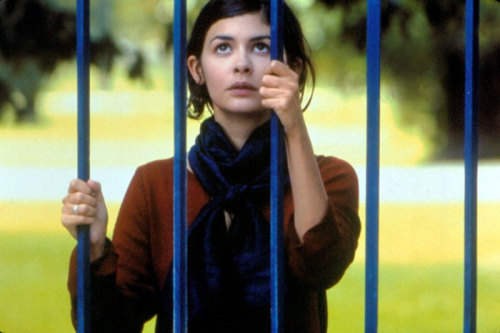
As I mentioned in the introduction both films deal with erotomania, a clinical condition that causes a person to fixate on another, to believe that they are in love, and that their feelings are reciprocated. More specifically both films deal with female erotomaniacs. In He Loves Me… Audrey Tautou plays a woman obsessed with a married doctor, while Isabelle Carre plays much the same part in Anna M. Where the films diverge is in their tone and style.

Why haven’t you seen them?
In Anna M’s case at least it’s likely that you’ve not previously heard of it. Its only UK cinema release was at the ICA, for about two weeks, while He Loves Me… He Loves Me Not, never really took advantage of Audrey Tautou’s increased profile after Amelie with a wide release.

Why should you see them?
He Loves Me… He Loves Me Not is a misleading film from its title on down. Packaged like a romantic comedy, and playing out like that for its first 40 minutes. The film has a truly audacious structure, particularly for a first film by a 26-year-old director. It tells its story, seemingly a comedy about Tautou’s unrequited love for doctor Samuel Le Bihan up to a pivotal point, then rewinds, and plays the same events again, this time from the point of view of Le Bihan, and wife Isabelle Carre, to much different effect. So many films try to juggle opposing tones like this, and even great and experienced filmmakers have come seriously unstuck in the process, but Colombani doesn’t miss a beat, and nor do her actors.

Casting Audrey Tautou is a clever move, because her kooky personality and onscreen magnetism make the second half of the film even more effective, as you realise just what is really going on and little events that get passed over in the films first part are filled in. I don’t want to say too much about how the film unfolds, because the way it pulls the rug from under you is one of its chief joys, but it’s not often that you’re laughing out loud one minute, unnerved the next, and the move between the two feels so natural.

If He Loves Me... is part comedy (think Amelie meets Fatal Attraction, only better than that implies) Anna M is its darker dramatic sibling. This time Isabelle Carre plays the obsessive, rather than someone affected by an obsession. The structure of Anna M is more conventional, and rather than the ensemble piece that He loves Me… is Anna M is almost a one woman show for the extraordinary performance of Isabelle Carre, who throws herself bodily into the part, going at times to painful looking extremes.

Anna M’s darker hue makes it a harder film to love, but probably a more impactful one at the end of the day, but you have to be alert. It took me 3 watches to spot the meaning of the films final shot, which completely altered my take on what I had previously felt was an unneeded last fifteen minutes. Both films have lead characters that should be unsympathetic, but both actresses carry us with them. Tautou does it through sheer magnetism, and Carre through sympathy, because her Anna is so obviously unwell, I really can’t give you better reasons to see these films than their respective leads.


How can you see them?
Happily both films are available on UK DVD, but only He Loves Me… He Loves Me Not can be had in the US. The UK dvd is the one to go for though, as it has almost the full complement of extras from the French edition, including Colombani’s excellent short Le Dernier Bip.

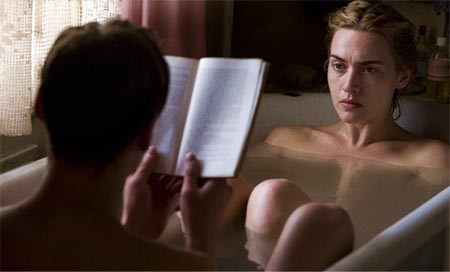
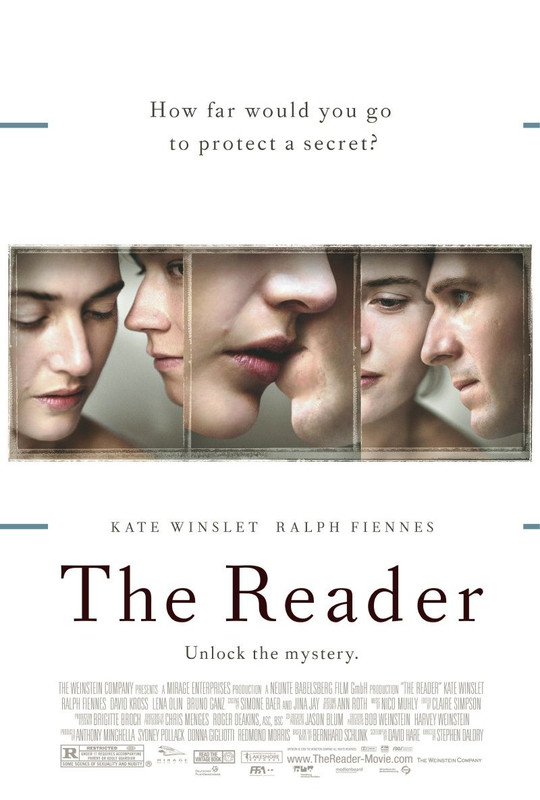
The Reader [15]

Dir: Stephen Daldry
The Reader is based on a novel, originally published in German, by a German writer. It features great German actors across several generations, so why the flaming blue hell is it in English? This question ran through my mind constantly while watching Stephen Daldry’s handsome, classy, and rather cold third film, and I don’t have a satisfactory answer for it, other than money. Audiences, as demonstrated by the continuing, dispiriting success of the endless foreign horror remakes, still don’t much like subtitles, and casting two English actors in the leading roles in The Reader, and having them and the rest of the cast speak English makes commercial sense, despite the fact that it damages the film in a wide variety of ways.

The first of these is a simple credibility gap, the choice to make the film in English introduces strange incongruities like David Kross (as the younger incarnation of Michael Berg, later played by Ralph Fiennes) reading to Kate Winslet’s Hanna Schmitz from English printings of the books he is studying in his German school, as well as English signs around the town, and English menus when Michael and Hanna go out to eat. The bigger problem is that even the most talented members of the distinguished German cast give stilted and unnatural performances as they try to wrap their tongues around an unfamiliar language and embody a character all at once. It really is sad to see the dinner scenes that Kross shares with his family as a group of German actors, including the gifted Susanne Lothar, converse in rote and unemotional English. It’s not just Lothar; Bruno Ganz suffers as Kross’ teacher, Hannah Herzsperung seems devoid of the fire she brought to Four Minutes and The Baader-Meinhof Complex and Karoline Herfurth is lost as Kross’ college girlfriend.

It’s immensely frustrating because there is such an easy fix for this. Either get the English stars to learn German for their roles (a fairer idea, there are two of them as opposed to perhaps two dozen German actors with speaking parts) or simply cast German actors in those parts – Nina Hoss and Mortiz Bleibtreu would have been fantastic. Enough, though, of the film The Reader could and should have been, what about the film it is?

Aside from being frustrating because of the language issue there’s also a strange lack of engagement here. It’s a cold film, and even when it deals with weighty subjects like the holocaust the emotional beats are somewhat fumbled. It’s also difficult, as much as the film tries to give her three dimensions and as good as Winslet is, to ever really feel anything for Hanna. Even in the first act she’s resolutely unsympathetic, and her character only becomes less sympathetic as time goes on, and yet I think the film wants you to feel for her by the end, and it simply doesn’t work.

Kate Winslet is one of the great actresses of her generation, and even in these difficult circumstances, she shines. She braves the extensive nudity, she never once asks for sympathy for Hanna, she nails the German accent, keeping it subtle enough to be real but present enough to convince and she gives a customarily brilliant performance. If she wins an Oscar for this part you could argue she deserves it just for the wordless scene in which she, finally, tells Kross that she loves him. There is also an excellent cameo, in almost the final scene for Lena Olin, who provides the film one of its few moments of genuine, heartfelt emotion. 18-year-old David Kross works hard, and of the German cast he comes off best, but there’s still a forced feeling to his performance, and a lack of connection because of it. Ralph Fiennes is also pretty good, his reading is beautiful, but his accent is a fleeting thing, there on the first few words of each speech, then gone again.

The Reader shows Stephen Daldry to be a director with a strong sense of camera and composition, but a patchier approach with actors, but it’s hard to really see this film being any better in other hands, given the language choice that so fatally undermines the rest of the film. I wish I could recommend The Reader wholeheartedly, and for Kate Winslet fans it remains worth catching, but it just doesn’t work as a whole.
★★½