Showing posts with label JJL. Show all posts

Aug 11, 2017

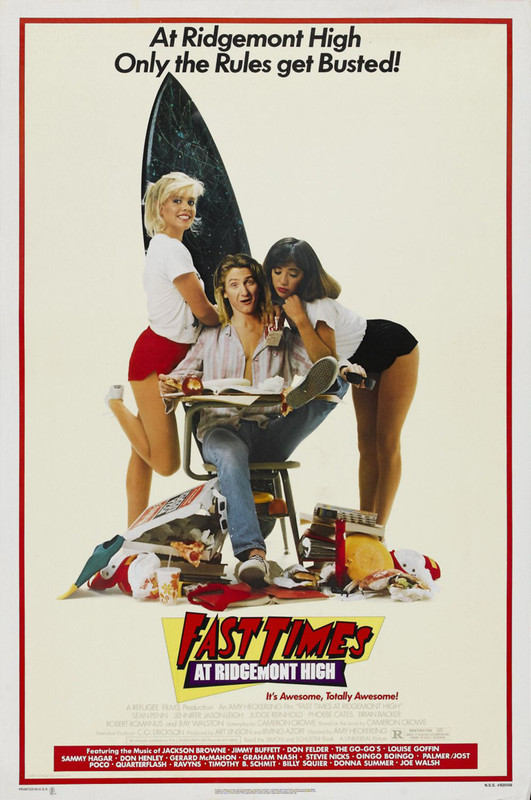
Fast Times At Ridgemont High at 35

In 1982, within five months of each other, three films came out that would forge the identity of much of what would follow in teen cinema, both in the 80's and for decades afterwards. 

First out of the gate, on March 19th, was the blockbuster hit. Porky's cost $4 million to make. In the US alone, within 4 months of release, it took $104 million. Today those numbers would put the widest of grins on a studio executives face, but in 1982 terms they were staggering. Porky's was the fifth biggest box office hit of the year and a genuine cultural moment. 

Next up, on July 30th, was The Last American Virgin, which opened to little fanfare and limited box office, taking just $5.8 million. Its success would grow slowly, until it would become a cult favourite and one of the best regarded, most quietly influential teen movies of its decade. 

On August 13th the third of this important group of films arrived. Fast Times At Ridgemont High cost $4.5 million and took a respectable $27 million, enough to win it a short lived TV adaptation. It got strong reviews, but Fast Times' significance lies as much in the talent behind and in front of the camera as it does in the debt of inspiration the whole of the 80s teen movie cycle owes it. It was a talent farm, growing many people we'd meet multiple times in 80s teen cinema.

Films come and go. Big hits can vanish into cultural irrelevance. Flops can grow to outshine their initial reception many times over. These three films, whatever their level of success in 1982 and whatever the degree to which they hold up today, are culturally important. Between them they all but codified the conventions of the teen sex comedy. Today though, for its 35th birthday, we're going to look at Fast Times.

Of the three key teen movies of 1982, Fast Times At Ridgemont High has aged best. Viewed in the context of the other two it could seem to be a refinement of their themes, especially those of The Last American Virgin, with which it shares enough similarities that several people have mistaken Virgin for a Cannon films ripoff of Fast Times. Of course there is the possibility that Lemon Popsicle served as some inspiration for this film but this seems unlikely, as they had a more interesting source on which to base the film.
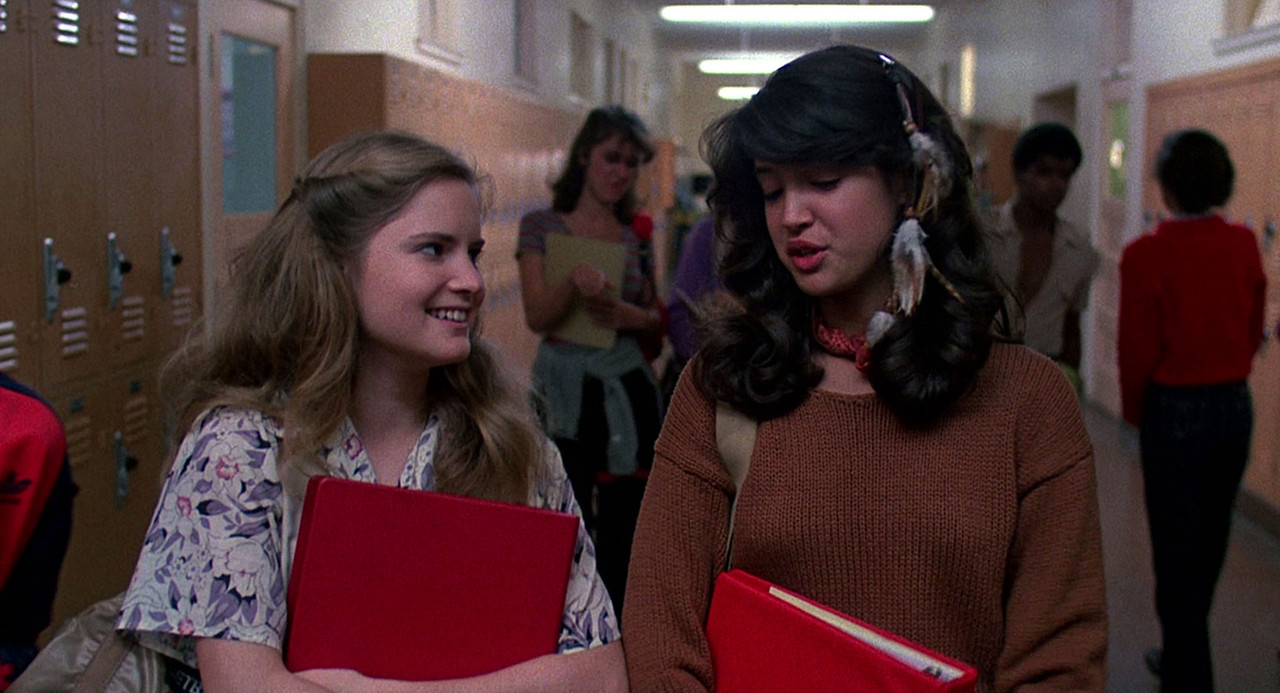
Cameron Crowe was a baby-faced 22 year old journalist with Rolling Stone, when he decided to return to high school for a year in order to research a novel. The result was Fast Times At Ridgemont High, the adaptation of which would become Crowe's first screenplay. Crowe's background work, a massive exception in a genre that can be more prone than most to writing of the laziest possible quality, pays off in characters that, while some have since become the basis of stereotypes, are richer and more relateable than many in teen movies of any vintage.

The film follows a year at the titular school, covering a number of students and their experiences. Crowe's screenplay hits several of the expected beats. There's the tentative romance as terminally nice Mark Ratner (Brian Backer) pursues Stacy Hamilton (Jennifer Jason Leigh), only to initially be outdone by his friend Mike Damone (Robert Romanus), who gets Stacy pregnant and bails on her when she needs an abortion. Stacy's brother Brad (Judge Reinhold), a senior, dumps his girlfriend, but then finds his objective – having his freedom so he can enjoy the best year of his life before he heads off to college – doesn't exactly go to plan. Brad is also nursing a crush on Linda (Phoebe Cates), Stacy's more experienced friend who, as Damone does for Rat, dispenses 'sage like' advice to Stacy. Around these central threads spin a series of fun, more broadly comic incidents, generally involving stoned school slacker Jeff Spicoli (Sean Penn) and his buds. Spicoli's nemesis is American history teacher Mr Hand (Ray Walston), who consistently berates Spicoli for wasting his time, leading to some of the film's funniest moments. 

Like The Last American Virgin, Fast Times At Ridgemont High mixes sex comedy and stoner jokes with a very serious side and a surprisingly realistic look at teenagers' own view of their coming of age experiences. While Virgin can often grind its gears during shifts between its serious and comedic sides, Crowe's screenplay smoothes the transitions in mood, doing a much better job of making the changeable tones feel cohesive. 

Crowe and director Amy Heckerling's deft mix of the comedic, the dramatic and sometimes the tragic, is seen most clearly in Stacy's story. Stacy is played as a typical fifteen year old girl; lacking experience, curious about the sexual experiences her friend Linda has already had and anxious both to learn and have those experiences for herself. Crowe and Heckerling often play this for broad comedy, as in the scene in the school cafeteria in which Linda, using a carrot, shows Stacy how to give a blowjob and Stacy's clumsy attempt draws mocking applause when it's spotted. 

Stacy and Rat's tentative on off romance is also largely played for laughs. Their first date is one of the film's funniest sequences. Damone has advised Rat to play the first side of Led Zeppelin 4 in the car when he picks up Stacy. Crowe knew the guys from Zeppelin from his days with Rolling Stone, but was unable to license anything from 4. Instead, as Stacy and Rat are driving to their date, we hear Kashmir on the stereo. This solution actually makes the scene funnier and more character appropriate than it would be if Crowe had been able to secure, say, Black Dog. The scene plays as if Rat has made a mistake, which suits his character better; he's forever trying hard, but not quite getting it right, in this case playing a track from Physical Graffiti rather than from 4. It's also a great joke because of what Kashmir sounds like. The strings hold a foreboding menace that plays on the nerves, accentuating how Rat must be feeling. This gag is carried through in the design of the restaurant that Rat and Stacy go to, where everything seems huge, purposely designed at Heckerling's request to dwarf Rat and Stacy, making them look like the kids they are trying hard not to be.

As much as Stacy is concerned with romance, her overriding curiosity and that of most of the characters in the film is about sex. Many of the American teen movies of the 80's see sex as something that girls allow to be done to them, rather than something they actively take an interest in, Fast Times differs in this respect. Stacy pursues sex with gusto, she goes after it first with a much older and more experienced man, then with Damone, a guy her own age who gets there first largely because he's more honest about what he wants than his nervy friend Rat. It would be easy to show Stacy's pursuit of sexual experience as something wholly positive, or to depict her as somehow immoral for her curiosity and desire (The Last American Virgin veers more towards the latter path). Crowe and Heckerling, however, take a more nuanced approach. 
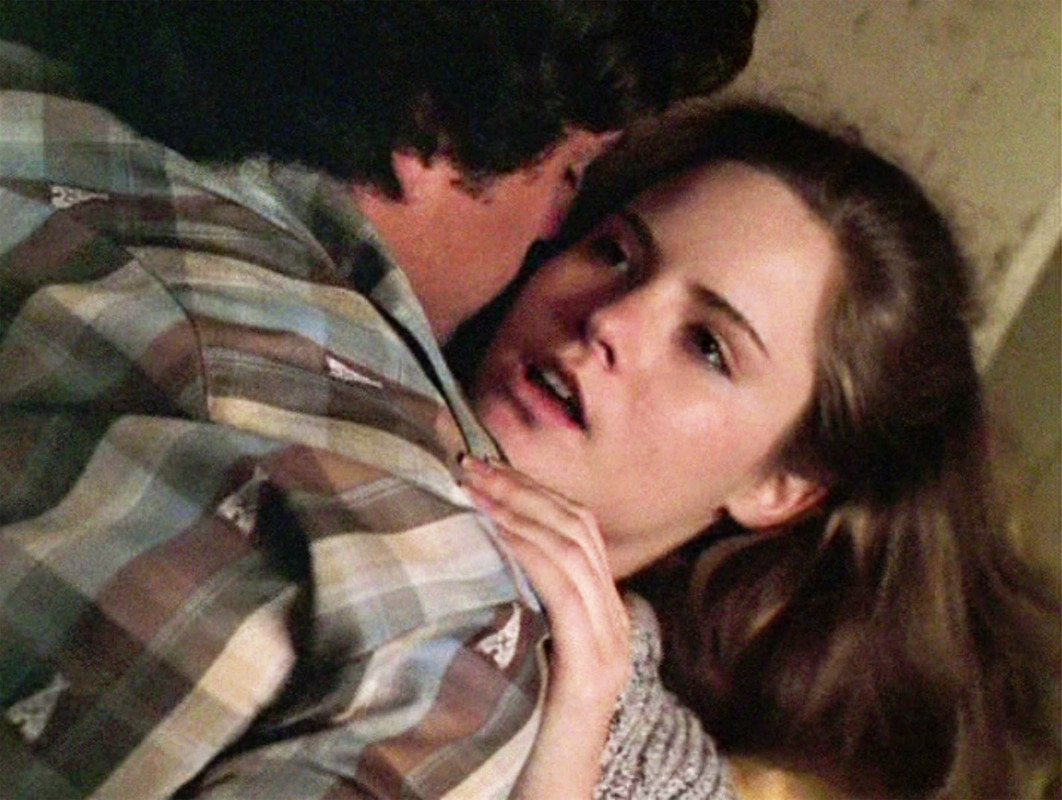
It's clear that Stacy, while she doesn't altogether regret it, is disappointed when she loses her virginity. The venue is dirty, seemingly uncomfortable, and scrawled on with graffiti that suggests Stacy is just one of a long line of girls who have marked this milestone in this place. There's no romance to it, nor do either Stacy or her partner seem to enjoy it much. In this moment the use of the dreadful Somebody's Baby by Jackson Browne, which recurs on the film's soundtrack several times, takes on an ironic tone that seems unintended. This experience feeds in to the next, which is played much more comedically. Stacy now knows what she wants, thinks Damone can deliver, only to be met with disappointment of a different kind when he lasts just seconds. With each of these experiences Stacy grows up a bit, her ideas about what she wants shift and it's this that eventually allows her to see Rat as a serious possibility. This is where Fast Times is truly a coming of age story.

Fast Times is marked by a sexual frankness malleable enough to be both dramatic and funny, but it is also more respectful to its female cast than many of the teen films of this period, which were filled with completely gratuitous nudity (see Tomboy for some especially ill thought out examples). There is plenty of nudity, but the two female characters who are exposed – Stacy and Linda – are perhaps the film's two most developed and realistic individduals. With just one exception, the nudity takes place during sex scenes, and feels like part of the film's commitment to not sugarcoating its content. The bulk of the nudity seems designed to put us inside the awkwardness of Stacy's early sexual experiences. Look at the way Leigh holds herself in the second scene, at first showing off, then repositioning, slightly embarrassed. This intent is clarified with the one nude scene that occurs outside this context.

The exception comes in the scene of Cates getting out of the pool and removing her bikini top. This is one of the iconic images of 80's cinema as a whole, perhaps the trigger moment for an entire generation of guys coming of age, but it is interesting beyond its titillating nature. This scene is the product, within the story if not from behind the camera, of a male gaze, but it's clearly a fantasy and, importantly, a fantasy immediately undercut when Linda catches Brad masturbating in the bathroom. Yes, the film has its cake and eats it, but it's not endorsing Brad's image of Linda (indeed it shows Linda recoiling when she bursts in on him) and neither does it, unlike many of the films that predate it or would follow in its footsteps, eventually allow Brad to fulfill his masturbatory fantasies. One suspects, however, that these subtleties were lost on a 13 year old boy with a rented VHS and a pause button.

The film's coming of age focus pivots around Stacy. Linda learns a few lessons, Brad learns that he was a presumptuous dick in breaking up with his girlfriend and Rat, via Stacy, gets to do some growing up of his own, but it is Stacy we see go through all the most important milestones of young adulthood and deal with their consequences. 
In this respect it is interesting to compare and contrast how The Last American Virgin and Fast Times deal with their respective abortion plot points. Stacy doesn't have a Gary figure to come to her rescue, what she has is Brad to pick her up and drop her off and Damone to grudgingly provide half the money for the procedure. He treats the whole thing like one of the deals he makes in his 'job' scalping concert tickets. However, Fast Times is less cruel to Stacy for making this choice than Virgin is to Karen. There is no equivalent to the cut in Virgin from the procedure to a pizza being sliced, a decision by which Crowe and Heckerling avoid comment on the morals of Stacy's decision. We may never see Stacy go through the process, but we do sense an internal conflict about it, thanks to Jennifer Jason Leigh's remarkable performance.

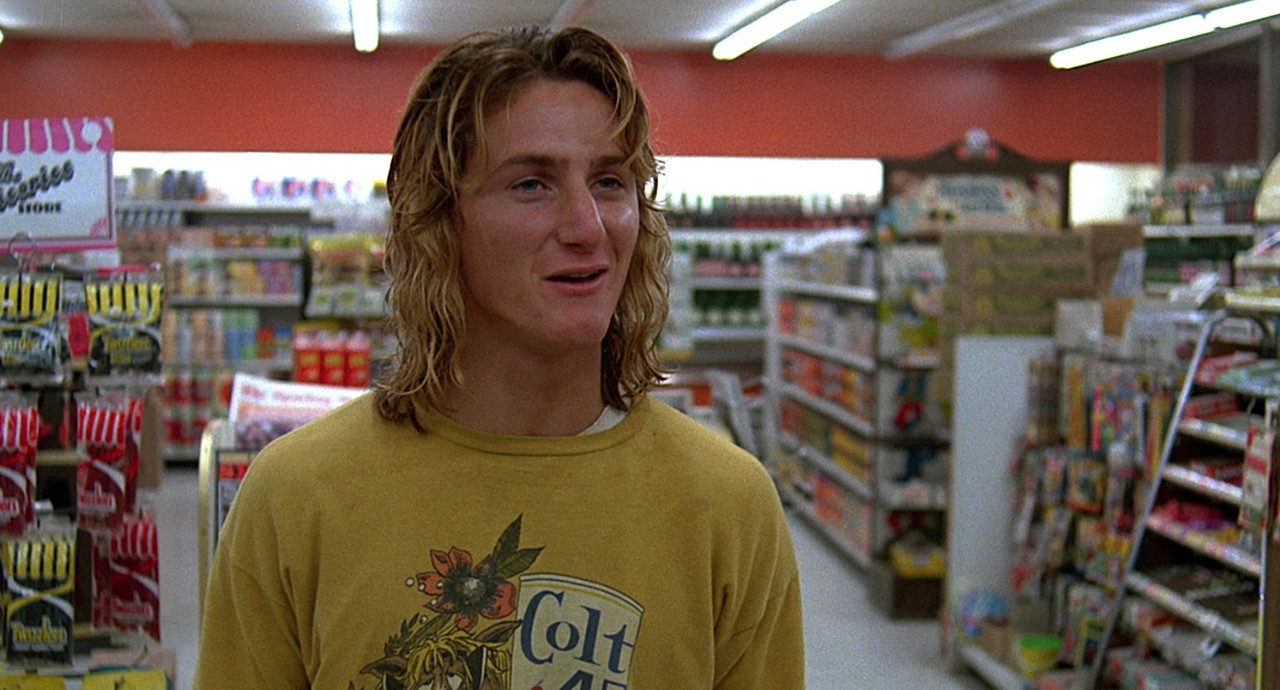
The things I've discussed above are largely the serious themes that are woven through the film, but it is replete with great jokes, and sparky performances from the cast keep the film from ever being mired in its more dramatic beats. This is much of the purpose of Spicoli's role. Spicoli isn't a character of great depth, or even a character at all; he's more of a comedy condiment to be sprinkled on the film, but he's funny enough that it's hard to mind very much. Sean Penn's semi-improvised altercations with Ray Walston's Mr Hand are hilarious and quotable, and his antics give great levity to the film when it's most needed.

A witty screenplay is a good start for a teen comedy but it goes only so far; casting is key. Fast Times may have the most accomplished cast ever to grace an American teen movie. The sheer amount of talent, of people who would go on to work of importance and quality, is staggering, ranging from the leads to people glimpsed in the background of one or two scenes. 

Perhaps the most notable of these talents is future two time Oscar winner Sean Penn, playing far against the type we have come to expect of him, as perpetually stoned surfer dude Jeff Spicoli. Penn was no less method in this role than he is as a matter of course. Throughout filming he insisted that the cast, crew and even his parents, with whom he still lived, refer to him as Spicoli. Spicoli is perhaps the quintessential dumb, stoned, surfer character. He became a model for a whole generation of characters – you could imagine the process of creating Bill and Ted as little more than splitting Spicoli into two bodies and handing each a guitar. Penn is fantastic, taking what is not a key role in terms of what loose story Fast Times has and, aided by Crowe's insanely quotable dialogue, making it the iconic thing to come out of the film.

The only other purely comedic element of the film, which otherwise weaves its laughs organically into its drama, are the repeated sequences of Brad's travails at his various jobs. At first he's smug, he's attained high status as an assistant manager at All American Burger. The hilarious sequence in which he loses that job - "Mister if you don't shut up I'm gonna kick one hundred percent of your ass" - contains several of the film's best lines, while a later job, delivering for a fast food fish and chips place, has one of the film's best visual gags (which also features a cameo by Crowe's wife, Nancy Wilson).  

The cast is jam-packed with quality names in small roles. Nicolas Cage, a runner up for the leading role of Brad, largely by dint of the fact he was still just 17, pops up in the background of a few scenes. Eric Stoltz and Anthony Edwards play Spicoli's buddies, Forest Whitaker makes a huge impression with a single line and Vincent Schiavelli is hilarious as Mr Vargas, who entreats his class to “Have a heart, I just switched to Sanca”. There are also early parts for Kelli Maroney, who went on to post-apocalyptic teen zombie comedy Night of the Comet, Bruce Springsteen's sister Pamela, who took the lead in a Sleepaway Camp sequel and Amanda Wyss, who may be best known for A Nightmare on Elm Street, but who I love in the hilarious Better Off Dead. Some of the main cast ultimately went on to smaller careers. Judge Reinhold, excellent as Brad, had a great 80s career, largely outside the teen movie cycle, but faded in the 90s and has largely been seen in TV and direct to video movies in the past decade, while Backer (who last showed up in Heckerling's Vamps) and Romanus are little seen these days.
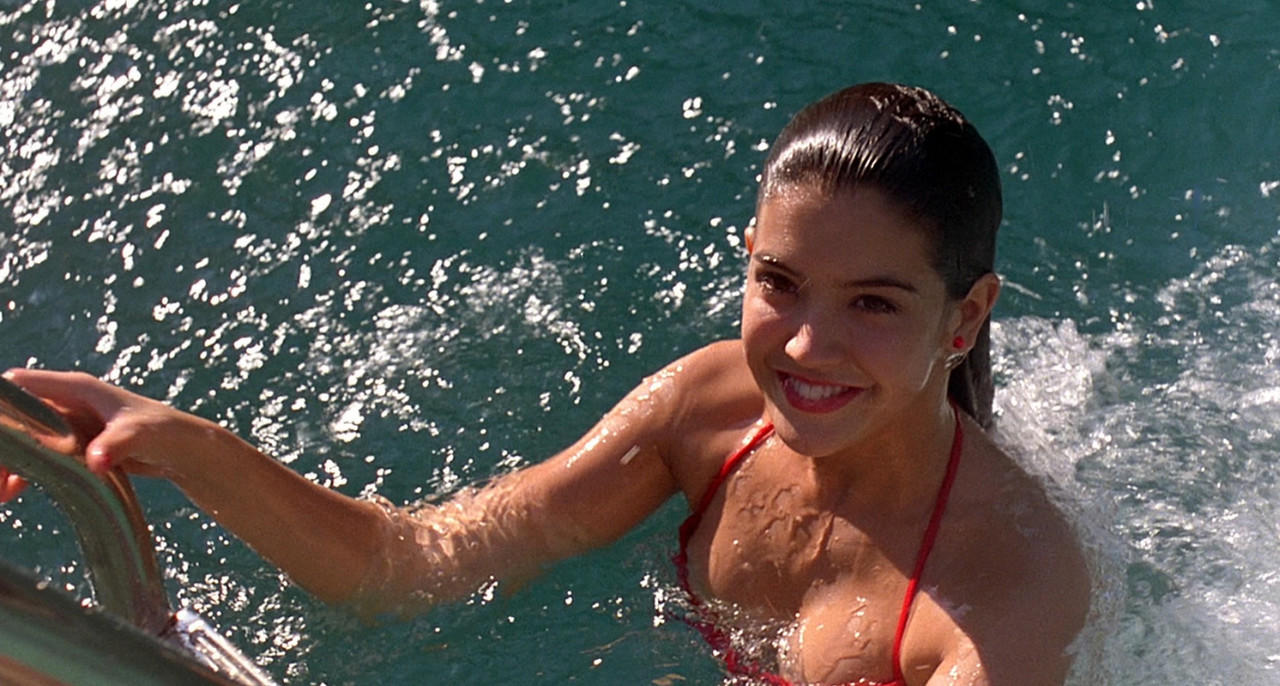
Perhaps the most disappointing of the disappearing acts pulled by the leading cast of Fast Times was Phoebe Cates'. Cates is one of the perennial crushes shared by every guy who loves 80s teen movies, thanks in no small part to the aforementioned swimming pool scene in this film, but she was more than that. Cates is gorgeous and vivacious as Linda, but she makes the character more than the fantasy girlfriend a dumber film and less accomplished actress might have been content to have her be. Cates plays the role with an awareness that Linda is much less of an adult than she attempts to paint herself as being, that her worldly wise pronouncements about her college boyfriend are much more naive than she imagines. Cates puts her own awareness of Linda's naiveté across without giving the character an awareness of it, but also without mocking her or painting her as a dimwitted bimbo. It's a lovely balancing act.  Cates had an interesting career into the 90's, but never became a major star, and perhaps deserved greater recognition as an actress. Soon after making Princess Caraboo, she disappeared from the screen, opting to become a full time parent to the children she has with Kevin Kline. Her last role to date was in 2001, in The Anniversary Party, the co-directorial début of her friend and fellow Ridgemont graduate Jennifer Jason Leigh.

I have to declare an interest here: I think Jennifer Jason Leigh is, at a minimum, the  best American actress of her generation. Fast Times At Ridgemont High was for her, as it was for so many of the young cast, something of a launchpad. Leigh has a well founded reputation as one of cinema's most dedicated exponents of research and pre-shoot character work. Here she appears to have taken it comparatively easy on herself, merely writing her usual in character journal and getting a job in the exact pizza parlour we see Stacy working in in the film's opening scene. If Linda is a naive character who has convinced herself that she is worldly then Stacy is much more aware of her lack of experience and, typically of the teenage girls of 80s movies, anxious to shed it. This became the crux of a problem the late, great, Roger Ebert had with the film in his contemporary review. Ebert decried the film for putting an actress as 'pure and innocent' as Leigh through the various experiences that Stacy goes through in the film, and for exploiting her nudity in those situations. 

Stacy is an innocent, naive, vulnerable teenager. She is often exploited. Jennifer Jason Leigh was a teenager when Fast Times was made but there, it would seem, the similarities between her and Stacy end. Leigh comes across, in the few interviews she elects to do, as a fiercely intelligent, thoughtful and very private woman who is dedicated to her work. She has never appeared to be a naif of any kind. The other thing that has always been clear about Leigh is that her dedication to acting is backed up with a fearlessness about exposing herself, in either an emotional or a physical sense. What is both shocking about Ebert's review and proof of Leigh's brilliance in this part and as an actress overall is that the critic has seemingly confused the actress with her role; he reviews Fast Times as though Leigh were Stacy, rather than playing a role. That's how convincing her illusion is. In commenting on Ebert's review on the DVD commentary track, director Amy Heckerling notes that, if anything, Fast Times failed to go far enough for Jennifer Jason Leigh's liking.

I've talked about Fast Times At Ridgemont High largely in parts. The fact I love this performance, why that scene works, but that's slightly missing the point. I could break this film down to its every constituent part, to bits in the background of scenes (the two girls who both dress like Pat Benetar, for instance), to individual scenes like Brad looking in the "Big Hairy Pussy" mirror or the little glimpse of Damone's best side as he rings round trying to get money for Stacy. A lot of teen comedies work this way, they are a collection of scenes and moments, you can almost see the cards on the screenwriter's board, moving around because there hasn't been a really big laugh for fifteen pages. Fast Times works like that to a degree, but it's also more cohesive, the scenes add up to something. We've discussed Stacy's journey, but the payoff for Spicoli has it's own peculiar emotional charge ("Aloha, Spicoli") and Brad's arc, while small, is another realistic and interesting one. More even than that though, it all works as a whole piece. Crowe and Heckerling keep everyone's stories in focus, they give them all enough screentime to pay off in a satisfying way. Most of all it works because I believe it, it's heightened, but I can see these events being part of a typical school year, I went to school with people like this and I believe them as each other's friends and peers. 

Great films don't always happen by design.
Fast Times At Ridgemont High feels like a particularly special and inexplicable piece of alchemy. All the right people happened to be in the right place at the right time. There's not one role that feels as though it could be cast better (Brad, for instance, needs the regular guy vibe that Judge Reinhold has, not Nicolas Cage's weirdness). All the jokes hit, all the drama connects. It says something to and about its audience without feeling preachy or sentimental. That's why this film endures, the fashion and the soundtrack may have dated, but the characters and their situations are as real today, as present in our high schools, as they were in 1982.

Fast Times At Ridgemont High is a key film in the history of teen cinema. In Cameron Crowe and Amy Heckerling it established the careers of people who would make further key contributions to the genre, in its cast it gave us a generation of actors who would, ultimately, be more important and do more interesting work than many of the 'Brat Pack', who would come to prominence partly through the films of John Hughes. It also influenced a huge amount of films that would come after it, and along with Porky's and The Last American Virgin, kickstarted a decade in which teen narratives would almost come to dominate American cinema. The films Fast Times influenced didn't always learn the right lessons from the three key teen movies of 1982, but good, bad or indifferent, many of them would play around with their influences in interesting ways and bring to the screen a depiction of teenage life and concerns that was absolutely rooted in its time and place.

Aug 16, 2015

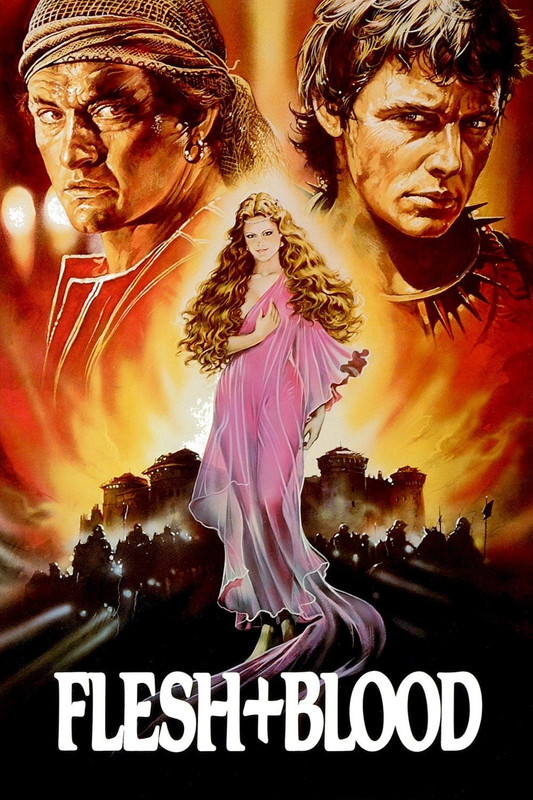
Exploitation Classics: Flesh + Blood [18]

I have just rewatched Paul Verhoeven's Showgirls which, 20 years after its release, seems to be attracting a new critical appreciation. I still think it's pretty dreadful, and easily Verhoeven's worst film.

For me, the Verhoeven film that is most in need of reappraisal and a bigger audience is his 1985 English language début, Flesh + Blood. What follows is a piece originally written as a review of the US Blu Ray release for the blog of the now defunct Vérité film magazine.

Dir: Paul Verhoeven
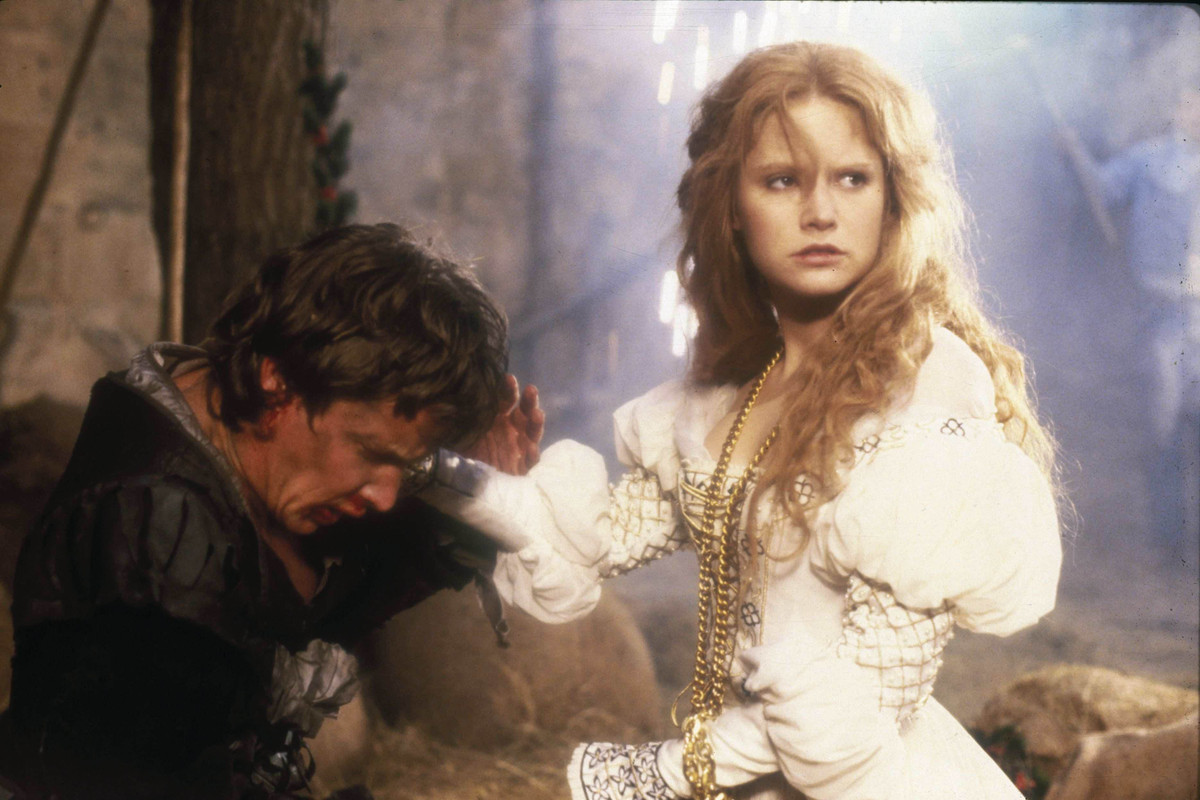
Flesh + Blood is a film that would seem to epitomise the idea of doing exactly what it says on the tin. The course of its running time is split relatively evenly between Jennifer Jason Leigh's flesh, and the blood dripping from the swords of Rutger Hauer and his band of mercenaries. If that were all that Flesh + Blood were offering it'd still be a lot of fun, but coming from Paul Verhoeven, the master of finding substance in schlock, it's so much more than a boobs n' gore-filled guilty pleasure.

In Italy, 1501, Martin (Hauer) and his battle-born warriors are left unpaid by their employer Arnolfini (Fernando Hilbeck) after a claret-soaked conflict. In retaliation they kidnap Agnes (Leigh), the betrothed of Arnolfini's son Stephen (Tom Burlinson), and following a route indicated by a statue of St Martin, take an abandoned castle as their new home. Wanting vengeance and his bride back, Stephen pursues them and lays siege to the castle. These are the bloodied bones of a story that Verhoeven and co-screenwriter Gerard Soeteman pick clean before sharpening them into a set of themes that cut as deep as any of Martin's blades.

In his first English-language film, Verhoeven explores the tendency of power to corrupt, and the abuse of authority by those who hold it, a preoccupation that has informed almost all his subsequent work from Robocop to Black Book. In this sixteenth-century setting, power and authority rest largely with the church, and particularly with Ronald Lacey's easily influenced priest. The film's original suggested title was 'God's Own Butchers', an accusation Verhoeven makes not only of the priest but of Martin, seemingly drunk on the power that his followers belief in St Martin confers on him. The most rational of the group, he sees through the priest's pronouncements but goes along with them to secure his position as leader.

To Verhoeven, the coveting of power and control are basic instincts as hardwired as our sexual urges. Scenes between Martin and the kidnapped princess Agnes are similarly predicated on animal attractions. When we are first introduced to Agnes she is nervous and excited about meeting Stephen, less for getting to know him and more for where it will eventually lead. Her curiosity about sex is such that she orders her maid to seduce another member of their party, so that she can watch.

The extensive nudity is exploitation typical of the randy Dutch director, but with that exploitation comes Agnes' understanding of her doll-like beauty and how to use it in a world of brutes. Raped soon after she is kidnapped, even on her back, Agnes is still the one who wields the power, seemingly hypnotising Martin as he has his way with her and undermining his dominance enough so he is the only one who attacks her. Winning a type of protection, she also gains influence with the savage and watching her manipulations is almost as uncomfortable as witnessing the violation of her body.

The MPAA demanded cuts of course, which Verhoeven details in his commentary before noting with relish that this is the uncut version, but what might have so easily offended works as a wily clash of egos and varying degrees of intelligence, thanks to captivating casting. During shooting, Verhoeven fell out with Rutger Hauer, who'd been his on-screen alter ego up to that point, and they never worked together again. In their final collaboration, Hauer is as good as he's ever been, credibly buffed up as a warrior and charismatic as a leader of men. Martin's unredeemed arrogance, encouraged by the priest's repeated assertions that he has been appointed by God to lead them, is a trait Hauer makes innate without indulging.

Jennifer Jason Leigh spent much of her early career elevating sleaze with her talent, and Flesh + Blood is a fine example of that. While she struggles with an English accent, Agnes' enticing ambiguities are all behind the dialogue. The division of her loyalties is externalised in Leigh's body language, her scheming physicalised, as she writhes this way and that during the sex scenes. Calculating especially when copulating, Agnes looks for weakness and advantage wherever possible. Just watch Leigh as she decides whether or not to stop Martin from eating a particular piece of meat late in the film; the ruthless streak running through Agnes is nakedly on display, in or out of bed.

Tom Burlinson is a blander presence against two strong leads but still manages to make something of Stephen, who's a thinker, not a warrior, only discovering his inner steel after Agnes is taken. His intelligence is a trait Verhoeven has fun with, inventing gadgets that play into the film's action scenes - a mobile bomb in the film's opening siege leaves no doubt over Stephen's ingenuity, and later his smarts are responsible for a disgustingly realised depiction of early germ warfare. The rest of the supporting cast is colourfully eclectic, giving the film more than two-tone mud and plasma. Ronald Lacey and Susan Tyrell are on especially fine form, while an amusingly confused Bruno Kirby is completely miscast.

On his typically forthright and story-packed commentary, Verhoeven lets us know just how hellish a film it was to make, but Flesh + Blood's verve and lack of compromise allowed the director to propel himself into the Hollywood big leagues with his follow up, Robocop. Every bit as violent as that era-defining sci-fi, the stench of battle emanates from every frame, Jan DeBont, then Verhoeven's regular cinematographer (who went on to direct nineties action classic Speed, then killed that career with Speed 2: Cruise Control), keeps the film at ground level, giving it a grimy, gritty look that's overwhelming in HD even if it's not as dirty as the ugly verisimilitude of VHS.

A film you wallow in as much as watch, Verhoeven's most underrated work evokes an unpleasant reality that's raw without being softened by the pulp of the films that followed.

May 24, 2012

The (In)Complete Jennifer Jason Leigh: 1978 - 1984

Prior to her cinematic debut in 1981 slasher Eyes of a Stranger, Jennifer Jason Leigh had a handful of guest spots on TV shows, and was in a couple of TV movies [The Young Runaways and Angel City] which I intend to review if I can get my hands on them. Aside from a few cinema roles, which included her great performance in classic teen movie Fast Times at Ridgemont High, Leigh spent the late 1970's and early 1980's on the small screen, racking up roles large and small in TV movies and specials (one I'm trying to source, called I Think I'm Having a Baby also boasts Helen Hunt and a debuting Ally Sheedy amongst its cast). If her work was sometimes uneven in this period so were the scripts she was working with, but there are frequent glimpses of a great actress, and a handful of fully realised performances which still, sometimes more than 30 years later, stand alongside the best of her work.

I've not been able to see absolutely everything absolutely in order, so this post will be updated with new reviews as an when I see the films, watch Twitter @24FPSUK for updates.

With that said, let's dive right into the films.

NOTE: Huge, huge thanks are owed to reader and fellow JJL superfan Derek Purtell, who has sent me almost every rare piece of Jennifer Jason Leigh footage I can think of (there are certain things, like the scenes she shot for Eyes Wide Shut, which we'll never see). Cheers Derek, there will be a load of DVDs coming your way soon.


The Young Runaways (1978)
Dir: Russ Mayberry
You couldn't, honestly at least, call The Young Runaways a great film. It's a simplistic and often preachy TV film about a couple of terrible parents, C.L. and the otherwise unnamed 'Mamma' who place their two middle children in foster care while they and their eldest; Rosebud and her mute little brother Joseph T go on the road to move to Alaska. Largely treated as baggage by their Mum and Step-Dad, Rosebud and Joseph T sneak into a motor home headed back to Los Angeles where, with the help of some local kids, they try to kidnap their brother and Sister so they can all be together again. Of course they also get caught up in a convoluted plot about stolen money.

The Young Runaways may not be great, but it is good honest fun. As Rosebud, Alicia Fleer is no Jodie Foster (who had put Disney behind her with Taxi Driver), but still she makes for a spunky and reasonably appealing lead and the film moves at a pretty relentless pace, seldom lacking in fun and generating a few good slapstick moments as the bad guy whose motor home the kids hitched a ride in looks for them and his missing money (which, apparently, a 13 year old thought was play money... yeah... not buying it, Kid)

The sexual politics leave something to be desired, as a male cop treats a colleague (to whom he turns out to be married) with barely masked professional contempt, and it gets worse as the ending essentially informs us that women can't have both a career and kids... that would be silly, but frankly the film is such a romp anyway that it's silly to think those things through, the target audience wouldn't have.

A sixteen year old (and very young looking) Jennifer Jason Leigh comes a LONG way down the credits, but actually has a slightly larger part than I'd expected. As Heather she's the girl next door who is infatuated with Eric; the kid helping out Rosebud and Joseph T. The character is an aspiring TV personality, but even so, Leigh's breathy performance often comes off as silly. Looking at it in isolation it's amazing to think that just three years later she'd have performances as good as those in Eyes of a Stranger and The Best Little Girl in the World. Like so many very early roles, this is inauspicious, but the film is enough fun to make it a worthwhile curio for fans.

Angel City (1980)

CBS Afternoon Playhouse: I Think I'm Having a Baby (1981)
Dir: Arthur Allan Seidelman
At only 21 minutes this after school special, which plays rather a lot like a video intended to be shown so a bored teacher can excuse themselves from planning a sex ed lesson, has to cram a lot of plot into a very little time. Because of this, as well as its design as a teaching aid, it is perhaps no surprise that it's about as subtle as baseball bat to the face, but it is a shame, because made a little more realistically and subtly many of its points are worth making to most 15 year olds, as much now as in 1981.

For me (and I'm guessing, since you're reading this, for you) the main interest that this relic of American broadcasting holds is that it contains Jennifer Jason Leigh's first on camera leading performance. She plays Laurie, a 15 year old who is in love from afar with her friend Phoebe's (Helen Hunt, yes, that one) boyfriend Peter (Shawn Stevens). One night at a party, Phoebe and Peter argue and Laurie goes off with him, we see them kiss, and it's implied that they go much further. Laurie begins to suspect that she's pregnant with Peter's child.

I can't hold this up as one of the shining moments in Jennifer Jason Leigh's career but, given the abysmal dialogue shoved into her mouth, she acquits herself reasonably well here in quiet moments. She conveys a sense of how lonely Laurie feels and, as shown much better in Fast Times at Ridgemont High, you can't help but want to reach out and give her a hug whenever she seems hurt. It's not much, and she's pretty damn dreadful when she has to speak, but at least you can see her trying to make something of what is a thunderously stupid and obvious script.

I'm not against media being used to convey a message, but stopping a TV show to essentially deliver a sex ed lecture through the mouths of teenagers (including a very young Ally Sheedy, seriously, everyone did an after school special in the 70's and 80's) really isn't the way to do it either in dramatic or educational terms.

There's not much else to say, other than that the A word does get brought up, slightly less judgmentally than you'd expect, though only slightly, and that - obviously - Laurie's not pregnant and finds the strength to tell Peter he's a cock (though not in those words). This is thoroughly rubbish, but also pretty funny 31 years on.

Eyes of a Stranger (1981)
Dir: Ken Wiederhorn

Eyes of a Stranger is a pretty obscure title by any standards. Its UK release suffered cuts for an X at the cinema in 1981, and the surrounding video nasty panic of that time probably attests to why it was in limbo until sneaking out on video, with 1 minute and 25 seconds of cuts, in 1986 (ironically it would probably have a much higher profile now if the distributor had tried to sneak it through in '81 or '82, when it almost certainly would have landed on the video nasty list).

Ken Weiderhorn's slasher is pretty unpleasant at times, it's about a serial rapist and murderer who is terrorising a Miami beach community, and the film is pretty unflinching when it comes to depicting the attacks. However, beneath what sometimes feels like a mysogynistically leering camera style, there are some really effective things going on here. A TV reporter named Jane (Lauren Tewes) becomes obsessed with the case and believes that her neighbour (John DiSanti) is the killer (and, in one of the biggest mis-steps it makes, the film never even attempts to fake us out in this respect). Jane's sister Tracy (Jennifer Jason Leigh) is deaf, blind and mute; a condition brought on psychosomatically following a traumatic incident in her childhood, this obviously makes Tracy vulnerable, and Jane's obsession with the killer makes them both targets.

For much of its running time, Eyes of a Stranger sort of plods through the motions, finding the odd arresting image (the killer seen through a shower screen; a too easy, but nicely done, decapitation courtesy of effects by Tom Savini) and a handful of scenes which, while we always know where they are headed, play out in pretty creepy fashion. Other moments fall far below their potential, such as a scene where the killer gets his car stuck in some sand while dumping a body. A creepy set piece could have been made out of the moment when a good samaritan gets out of his car to help, but instead it just serves to provide a bit more gore, which is fine as far as it goes, but definitely less than what the scene could have delivered.

For the bulk of the film, Leigh's Tracy is a side character, coming to the fore only in the final act, but as ever, Leigh doesn't let the size of the role give her any excuses to offer up less than 100% effort. Most of the time you can see that people playing blind are merely playing blind. You'll see their eyes catch something, take note of it. It may just be for a moment, and it may be a totally natural thing for the rest of us, but it just breaks the illusion. You'll never catch Jennifer Jason Leigh falling into that trap here, it doesn't even really occur to you that she doesn't share her character's afflictions, so profoundly natural is her performance, and that also goes for Tracy's deafness as she also manages to suppress all those tiny natural reactions we have to sound around us.

The fact that Leigh is so good is what makes the film's last twenty minutes take a huge jump in quality, as Weiderhorn has the blind Tracy menaced by the killer in her apartment. It's a brilliant sequence; terrifying because you can always see just how close the danger is, and just how helpless Tracy is. Adding to this is the fact that the 18 year old Leigh looks even younger and incredibly delicate here, and we've already seen this killer dispatch victims who should be much more able to fight back, it all adds up to a brilliant suspense scene. Weiderhorn also throws a reasonably predictable but nevertheless effective twist into this final sequence, which throws up some great images and, thanks to Leigh's sensitive playing of the moment, turns what might otherwise be a totally gratuitous moment of nudity into something that says a lot more than 'look, boobs'.

Eyes of a Stranger is no lost horror classic, but it certainly has quite a lot to recommend it, all of the performances are solid, and while Ken Weiderhorn's direction is wildly variable, the scenes he gets right are beautifully self-contained mini-movies, most notably that fantastic final sequence. It's recommended for horror, and especially slasher, fans, and is an essential watch for any Jennifer Jason Leigh fan, as her remarkable performance really holds the film together.


The Killing of Randy Webster (1981)
Dir: Sam Wanamaker
A fairly typical 'ripped from the headlines' type TV Movie, The Killing of Randy Webster is about a young man who was shot dead by Police after stealing a van. The case appeared open and shut; there was a gun lying right next to him, but Randy's Father (Hal Holbrook) refused to accept that his son would have either had a gun or attacked a Police officer, his determination led to the prosecution of the officers who shot Randy and covered up what really happened.

With the film now 31 years old, and the events of the case having happened 35 years ago, The Killing of Randy Webster has really lost what impact it might have had at the time, and now appears as something of a curiosity largely for the presence, some way down the cast list and a year prior to Fast Times, of both Sean Penn and Jennifer Jason Leigh. It's a terrible shame that Penn doesn't play Randy Webster, because if there's one especially glaring problem with this film it's that Gary McCleery, who has made a grand total of nine films since this, is appalling in the role, making Randy even less sympathetic than he might otherwise be, and delivering his dialogue with little or no intonation. Penn has little to do as one of Randy's friends, but he's Sean Penn, there's something that just jumps off the screen about him.

Jennifer Jason Leigh has three scenes, and only the third is anything more than functional, but despite a ropey script that fills her mouth with trite dialogue, she plays well off Hal Holbrook. She's not bad as Randy's shellshocked girlfriend, but the reason she's been so upset doesn't quite have the weight it should because we hardly get to know the character or see their relationship.

The rest of the performances are solid, with a dignified Holbrook providing a strong centre, and a better performance than the rather bald script and visuals deserve. The Killing of Randy Webster is a competent, rather than a great, film, but it tells its sad story reasonably well, and is interesting enough for fans of the cast.


The Best Little Girl in the World (1981)
Dir: Sam O'Steen
It may have a screenplay as subtle as a punch in the face, but The Best Little Girl in the World, following the promise of Eyes of a Stranger, was perhaps the film that really confirmed Jennifer Jason Leigh as a young actress worth keeping an eye on. She inherited the role of anorexic 17 year old Casey Powell after Jodie Foster turned it down, in favour of continuing her studies at Yale.

Leigh, as became her custom, began the process of utterly transforming herself for the role. Under medical supervision she dieted her then 98 pound, 5 foot 3 frame down to under 90 pounds (sources quote weights from 89 to 83 pounds). The physical transformation is striking; Leigh, always a delicate looking woman, seems tiny, emaciated, almost breakable. There's an especially shocking scene when she takes her shirt off at the doctors (from behind, it's a TV movie) and we see ribs and spine jutting out frighteningly. However, the transformation is more than physical. The emotional distance between Casey and her family is what really comes across, along with a very convincing depiction of her illness. She's especially outstanding when, the morning after her parents have found diet pills and laxatives in her room, she makes breakfast for the family. Leigh's robotic performance here absolutely nails Casey's calculating and desperate deception, and the way she's sleepwalking deeper into her illness. It's a performance much affecting and much more subtle than the film around it suggests or even earns.

Taken as a whole there are a lot of things that clunk here; a cliche riddled script which moves mechanically through every expected scene and Charles Durning's bombastic and overblown performance as Leigh's frustrated Father among them, but at times, thanks to the strength of the central performance, The Best Little Girl in the World transcends these problems. She would do much better work soon after, but this is still another impressive early hint of the actress Jennifer Jason Leigh would become.


The First Time (1982)
The Man With the Deadly Lens [a.k.a: Wrong is Right] (1982)

Fast Times at Ridgemont High (1982)
Dir: Amy Heckerling
[Slightly revised version of a previously published article]
In 1982, three raunchy American teen comedies came out. Porkys was ribald, and held the promise of loads of nudity, The Last American Virgin - while interesting and underrated to this day - never quite reconciled its comedic first and dramatic second halves, but Fast Times at Ridgemont High got it just right. The backstory is quite famous now. Aged 22, Cameron Crowe, then a journalist for Rolling Stone, returned to high school for a year to research a novel. That novel (notes for which were often taken, apparently, during frequent bathroom breaks at parties) became Crowe's first screenplay, and fortunately for Crowe and debuting director Amy Heckerling it came to Hollywood just when a glut of young talent was also arriving.

Fast Times at Ridgemont High IS the 80's, aside from the brat packers, everyone is in it. Sean Penn, Jennifer Jason Leigh, Judge Reinhold, Phoebe Cates, Nicolas Cage, Eric Stoltz, Forrest Whitaker, Amanda Wyss and Anthony Edwards are all familiar names, and then the cast is filled out by 'oh, it's THAT guy' actors like Scott Thomson, Robert Romanus, Brian Backer, Ray Walston and Vincent Schiavelli. It's a great cast, and it's easy to see why such talent gravitated towards the film (well, leaving aside the ever present need of young actors to no longer be living on their best friend's floor), because the screenplay gives them all sharply defined (even archetypal in some cases) characters, and fantastic dialogue, as well as an effective mix of comedy and drama to play. That's perhaps why it's such a joy to watch, because you can see how much fun everyone is having, how much they are enjoying these characters and these words.

This is especially true of the two leads. Sean Penn is now known as an incredibly intense and serious dramatic actor, but here, in his first really significant role, he's playing Jeff Spicoli; the stoned surfer dude that every stoned surfer dude since, in movies or otherwise, has to live up to. He brought his customary intensity to the set; insisting that everyone call him Spicoli, even when they called him at home, but his on screen performance is totally relaxed, and hilariously funny (perhaps more so now, viewed through the prism of 30 years of absolute seriousness). His rivalry with Ray Walston's authoritarian history teacher Mr Hand is the comedic gift that just keeps on giving from the beginning of the film ("You DICK") to the end ("What Jefferson was saying was, Hey! You know, we left this England place 'cause it was bogus; so if we don't get some cool rules ourselves - pronto - we'll just be bogus too! Get it?").

And then there is Jennifer Jason Leigh, also in her first really significant cinematic role. Ever the method actress, Leigh got a job at the exact pizza place where her character works, and worked there for a month between getting the part and filming. She doesn't so much act Stacy - the most challenging role in the film, as she has the most happen to her, and does the most growing up in the course of the story - as become her. She does this so completely that, when reviewing the film, Roger Ebert asked; 'How could they do this to Jennifer Jason Leigh? How could they put such a fresh and cheerful person into such a scuz-pit of a movie?' Now, I'm sure he's right that Leigh is 'fresh and cheerful', but one thing the last 30 years made clear she's not is delicate, or afraid of immersing herself in a scuzzy world for the good of a movie. What Ebert's done here, essentially, is mistake the actress for the character. That is how good she is here.

But I don't want to get too serious here, because Fast Times doesn't get too serious, oh sure, it deals with the trials of being a teenager, from disappointing sex, to shitty McJobs, from awkward dates, to break ups and even to abortion, but for the most part it deals with everything with a smile on its face and a really good joke not more than a minute away. Crowe crafts the dialogue beautifully, but Heckerling's direction often proves equally droll, be it the graffiti she focuses on as Stacy loses her virginity or the comically huge chairs she uses to make Stacy and her nervous date Mark Ratner (Backer) look tiny as they eat together, Heckerling packs the film with fun little visuals. Visually though, there's one thing most people remember from this film. Well, no, two things; Phoebe Cates' twins. Cates (who I wish had kept working after she had a family with Kevin Kline) plays Linda; Stacy's outwardly worldly wise friend, but plays her with the implication that, actually, she's far less experienced and worldly than she portrays herself. Her nude scene, a dream sequence in Brad's (Reinhold) masturbatory fantasy, is the scene that launched a generation on the way to puberty, and in the age of VHS you could hardly rent a copy on which the tracking remained sound in that moment.

Fast Times does have an overarching story (two really; Stacy's and Spicoli's) but it is more a film of moments, and that's fine, because actually that's being a teenager; you aren't thinking about the grand overarching scheme of things at 15, you're living from one moment, one experience, to the next. In this respect the film, written as it clearly is, is a good reflection of that time in your life, and while the fashions and the soundtrack (especially the soundtrack, and especially Somebody's Baby) have dated massively, the film itself still feels fresh and relevant as it passes its 30th birthday. The laughs haven't dated either (I don't want to live in a time when the fact that someone has written Big Hairy Pussy on a bathroom mirror isn't funny) and the performances are strong all round. Among the cameos Vincent Schiavelli's science teacher may be my favourite (his opening line "I just switched to sanca, so, have a heart" is one of the film's biggger laughs), but just about everyone gets their moment to shine here.

I wish there were more American high school movies this good (the last one to get close was perhaps the still underrated 10 Things I Hate About You), but this one remains a real joy and even though my heart sinks every time we hear Somebody's Baby it still makes me laugh, and, actually gets me on an emotional level too, because it's easy to feel, so well written and acted are these characters that you know, and largely like, these people. That's why it's endured


ABC Afterschool Special: Have You Ever Been Ashamed of Your Parents? (1983)


Easy Money (1983)

There's only really one question that matters in considering any comedy film: did you find it funny? You can't really argue the point with somebody because, more than the question of whether or not a shot is technically competent, or whether a dramatic performance is delivering the required emotion, there really is no 'right' answer. I don't think Rodney Dangerfield is an especially funny man, you may, I don't, and that's a real problem for someone trying to enjoy Easy Money.

The story is basically a riff on Brewster's Millions only when his Mother in Law dies Dangerfield doesn't have to spend money in order to get the big inheritance, he has to give up junk food, alcohol, gambling and many of the other things he loves. It's not a terrible framework on which to hang a script that is, largely, a selection of one-liners, but the problem is that it's so very flimsy. Dangerfield doesn't so much play a character as he plays himself (or at least his comedy persona by another name, Monty Capuletti, and would that the film had done more, or something, with that Romeo and Juliet nod). The dialogue seems, for most of the running time, to be verbatim gags from Dangerfield's one-liner heavy stand up, and much of it isn't even directed at anyone, Dangerfield is just talking out loud, throwing 'zingers'. This would be a smaller problem, but for the fact that most of the gags would have been considered dated in 1883, never mind 1983, and that the film boasts an occasional, but nevertheless troublesome, streak of casual sexism and racism.

For Jennifer Jason Leigh fans, she's cast - barely credibly - as Dangerfield's 18 year old daughter, and the opening half hour of the film is set in the run up to her wedding. In just one of many disappointments her wedding cake is used for a joke you can see coming from across an ocean, but the issue is never addressed after the slapstick moment has been had. The better news is that the scenes between Leigh and screen husband Taylor Negron are some of funniest in the film. sequences set on their disastrous wedding night and when Julio comes to win back Allison boast by far the film's funniest lines, thanks especially to Negron's ineffective attempts to be a badass "Allison, I am bad. I am so bad I should be in detention". Leigh, not a natural comedienne, is really the justification for Negron's comic antics, and is given little opportunity to stretch, though she nabs the odd funny line, and delivers them well. Like many of her early films though, Easy Money fails to use Leigh to her, and its, best advantage.

There are good things here; the friendly and comic chemistry between Dangerfield and Joe Pesci as his best friend, and the always amusing Jeffrey Jones playing, another of his buttoned up authority figures (though he's nowhere near scheming enough here), but the clanging predictability of every joke just killed the film for me - how can you be expected to laugh when you arrive at every punchline before the comedian does? There's a lot of love for this film out there, but I'd only recommend it to fans of Dangerfield's comedy and Jennifer Jason Leigh completists (Hi).


Death Ride to Osaka [a.k.a: Girls of the White Orchid] (1983)
Dir: Jonathan Kaplan
The two titles for this film exist because it exists in two different cuts. Girls of the White Orchid is the original TV movie cut, while Death Ride to Osaka is the video version, with some added nudity (including some by the never shy Jennifer Jason Leigh). The version I was able to get my hands on is the extended, very much R-Rated, cut.

Death Ride to Osaka has a pretty functional story and, like a lot of TV movies, seems to attempt a little commentary on what is perceived to be one of the issues of the day. If anything the human traffiking theme, though addressed in little depth, feels more pertinent now. The film centres on Carol (Leigh), a young singer trying to make it in LA. Having had no luck, Carol applies for a two month contract at a nightclub in Japan, but when she arrives she discovers that she's expected to supplement her income by sleeping with customers at the club, and that the triads who run the club and the girls have taken her passport. At the same time, having just left the Air Force, Carol's boyfriend (Thomas Byrd) is looking for her.

What lifts the film comfortably out of the run of the mill is threefold; a screenplay which - for the most part - rises above its origins as a social concern film, a solid directorial job from Jonathan Kaplan, who would later make The Accused, and, predictably, a shining lead performance from Jennifer Jason Leigh. I've read other reviews that say Leigh, with her apparent youth and innocence, is miscast here, but nothing could be further from the truth. Carol has to seem the wide-eyed innocent for us to believe that she would fall for such an obviously dodgy job offer as the one she receives to take her to Japan, and indeed for us to believe that she can see herself making it, under any circumstances. Despite her estimable acting talents, singing is not Jennifer Jason Leigh's forte, she appears to be doing her own vocals here, and the overwhelming impression you're left with is that she's slightly, but not much, better at singing than your average mentally divergent X Factor contestant.

Where Leigh really succeeds here is in making Carol naïve and trusting rather than simply dumb. From her extremely naturalistic performance you get a sense of this young girl who is too trusting, and perhaps too quick to brush things off (early in the film the Police pull her over, apparently assuming she's a prostitute, and Carol remains as cheerily unaffected as ever as she demonstrates that she is not). Even without her description of it there's a sense of history here; that she's been looking for an audition without success for some time. One of Leigh's best moments comes early in the film when the agent for the Tokyo club asks if she has an agent of her own, she says 'I'm between agents' but then, in a moment that tells a lot about both her innocence and her integrity, and really sets the tone for her character, confesses that this is a lie, and that she actually has no agent. In the Japan set bulk of the film, when it becomes clear that Carol is expected to prostitute herself, it would be all too easy to slip into melodrama when she steadfastly refuses (we've seen that in the opening scenes with another girl), but Leigh keeps the scenes totally grounded, and the character totally consistent.

It has to be said that the film, while not the racist 'beware of forrins' message movie it could have been, devotes rather less time and effort to making rounded individuals of its Japanese characters than it does the white ones. However, that's not to say that there isn't some good work from the Japanese cast, especially Richard Narita as Shiro, who recruits Carol, but seems to take a liking to her and has at least some sympathy when she refuses to go along with the extra things expected of her. Mako also appears, ever his inimitable self, playing a mid-ranking yakuza and Soon Tek-oh is at least entertainingly eeevil, even if all his character really lacks is a moustache to twirl. The most disappointing aspect of the film comes from the story involving Carol's former boyfriend trying to find her. The storyline is underwritten, and the whole history of the relationship is meant to be implied just because they both have the same photo of themselves as a couple on their respective bedside tables. It also somewhat undermines Carol's status as a strong character when, ultimately, she has to be saved by this man who really has no other function in the story.

Death Ride to Osaka is an oddly mixed bag; an unsubtle script about the evils of exploitation, anchored by a strong female lead, yet liberally splashed with nudity. It's saved from an inconsistent tone by a very down to Earth performance from Jennifer Jason Leigh, which gives the film moments of resonance that it really fails to earn. It's definitely recommended for fans, and is a fine early example of how Leigh would go on to bring class and quality to many exploitation films that could have been totally uninteresting without her.


Grandview USA (1984)

Apr 12, 2012

The (In)Complete Jennifer Jason Leigh: Introduction and Film List

You may, just may, have spotted over the years that I'm a bit of a Jennifer Jason Leigh fan. A profile of her was one of the earliest pieces I ever wrote for the site, and I've written several features on her during this blog's lifetime. Well now, over the next God knows how long, I'm going to attempt something pretty insanely ambitious... I'm going to try to watch as many of her films as I can possibly get hold of, and review them all, in chronological order.

A handful of reviews may be re-published (where the original review is recent, detailed, and still reflects my feelings on the film after a re-watch), but the vast majority will be newly written for this series.

The series won't be on any specific timescale, but I'll try to get to it as regularly as possible. I'll focus on Leigh's feature films (though I will cover her early TV work as well). I won't, for example, be tracking down the one episode of the Superman animated series she did a voice in (though I do have the Spawn series on order, it was 1p and I couldn't resist). Before we start, here are a couple of lists, first of the films I either own already, have on order, or otherwise have access to, and second a list of those films I still need to source. If you have any of these, and would be willing to either let me have or let me borrow a copy then please get in touch to sam@24fps.org.uk Anyone who helps me source a film will receive a cool thank you present in the mail, along with my grovelling thanks and credit on the review.

FILMS SOURCED AND AVAILABLE FOR REVIEW
Eyes of a Stranger (1981)
The Killing of Randy Webster (1981)
The Best Little Girl in the World (1981)
The First Time (1982)
Fast Times at Ridgemont High (1982)
ABC Afterschool Special: Have You Ever Been Ashamed of Your Parents? (1983)
Easy Money (1983)
Girls of the White Orchid [a.k.a: Death Ride to Osaka] (1983)
Grandview USA (1984)
Flesh + Blood (1985)
The Hitcher (1986)
Sister Sister (1987)
Under Cover (1987)
Heart of Midnight (1988)
The Big Picture (1989)
Last Exit to Brooklyn (1989)
Miami Blues (1990)
Buried Alive (1990)
Backdraft (1991)
Crooked Hearts (1991)
Rush (1991)
Single White Female (1992)
Short Cuts (1993)
Luck, Trust and Ketchup: Robert Altman in Carver Country (1993)
The Hudsucker Proxy (1994)
Mrs Parker and the Vicious Circle (1994)
Dolores Claiborne (1995)
Georgia (1995)
Kansas City (1996)
Bastard Out of Carolina (1996)
Washington Square (1997)
A Thousand Acres (1997)
The Love Letter (1998)
The Gulf War [a.k.a: Thanks of a Grateful Nation] (1998)
eXistenZ (1999)
The King is Alive (2000)
The Anniversary Party (2001)
The Quickie (2001)
Crossed Over (2002)
Hey Arnold! The Movie (2002)
Road to Perdition (2002)
In the Cut (2003)
The Machinist (2004)
Palindromes (2004)
Childstar (2004)
The Jacket (2005)
Rag Tale (2005)
Margot at the Wedding (2007)
Greenberg (2010)

There are a few things missing from that list that I'll have no trouble sourcing, but there are also some things I could really use some help with.

FILMS NEEDED
The Young Runaways (1978)
Angel City (1980)
CBS Afternoon Playhouse: I Think I'm Having a Baby (1981)
The Man With the Deadly Lens [a.k.a: Wrong is Right] (1982)
The Men's Club (1986)
Picnic (1986)
Partners in Life (1990)
The Prom (1992)
Inside the Actors Studio (1999)
Searching for Debra Winger (2002)
Easter Sunday [Short] (2005)

So that's the potential list of titles, I'll try to have new reviews of  The Best Little Girl in the World and Fast Times at Ridgemont High posted over the weekend. I hope you enjoy reading the series as much as I imagine I'll enjoy watching and writing it, and if you can help source films, as I said: gratitude and presents.

Aug 10, 2011

24FPS Top 100: No.53

53: FAST TIMES AT RIDGEMONT HIGH [1982]
DIR: Amy Heckerling
Why is it on the list?
In 1982, three raunchy American teen comedies came out. Porkys was ribald, and held the promise of loads of nudity, The Last American Virgin - while interesting - never quite reconciled its comedic first and dramatic second halves, but Fast Times at Ridgemont High got it just right. The backstory is quite famous now. Aged 22, Caameron Crowe, then a journalist for Rolling Stone, returned to high school for a year to research a novel. That novel (notes for which were often taken, apparently, during frequent bathroom breaks at parties) became Crowe's first screenplay, and fortunately for Crowe and debuting director Amy Heckerling it came to Hollywood just when a glut of young talent was also arriving.

Fast Times at Ridgemont High IS the 80's, aside from the brat packers, everyone is in it. Sean Penn, Jennifer Jason Leigh, Judge Reinhold, Phoebe Cates, Nicolas Cage, Eric Stoltz, Forrest Whitaker, Amanda Wyss and Anthony Edwards are all familiar names, and then the cast is filled out by 'oh, it's THAT guy' actors like Scott Thomson, Robert Romanus, Brian Backer, Ray Walston and Vincent Schiavelli. It's a great cast, and it's easy to see why such talent gravitated towards the film (well, leaving aside the ever present need of young actors to no longer be living on their best friend's floor), because the screenplay gives them all sharply defined (even archetypal in some cases) characters, and fantastic dialogue, as well as an effective mix of comedy and drama to play. That's perhaps why it's such a joy to watch, because you can see how much fun everyone is having, how much they are enjoying these characters and these words.

This is especially true of the two leads. Sean Penn is now known as an incredibly intense and serious dramatic actor, but here, in his first really significant role, he's playing Jeff Spicoli; the stoned surfer dude that every stoned surfer dude since, in movies or otherwise, has to live up to. He brought his customary intensity to the set; insisting that everyone call him Spicoli, even when they called him at home, but his on screen performance is totally relaxed, and hilariously funny (perhaps more so now, viewed through the prism of 30 years of absolute seriousness). His rivalry with Ray Walston's authoritarian history teacher Mr Hand is the comedic gift that just keeps on giving from the beginning of the film ("You DICK") to the end ("What Jefferson was saying was, Hey! You know, we left this England place 'cause it was bogus; so if we don't get some cool rules ourselves - pronto - we'll just be bogus too! Get it?"). And then there is Jennifer Jason Leigh, also in her first really significant role. Ever the method actress, Leigh got a job at the exact pizza place where her character works, and worked there for a month between getting the part and filming. She doesn't so much act Stacy - the most challenging role in the film, as she has the most happen to her, and does the most growing up in the course of the story - as become her. She does this so completely that, when reviewing the film, Roger Ebert asked; 'How could they do this to Jennifer Jason Leigh? How could they put such a fresh and cheerful person into such a scuz-pit of a movie?' Now, I'm sure he's right that Leigh is 'fresh and cheerful', but one thing the last 30 years made clear she's not is delicate, or afraid of immersing herself in a scuzzy world for the good of a movie. What Ebert's done here, essentially, is mistake the actress for the character. That is how good she is here.

But I don't want to get too serious here, because Fast Times doesn't get too serious, oh sure, it deals with the trials of being a teenager, from disappointing sex, to shitty McJobs, from awkward dates, to break ups and even to abortion, but for the most part it deals with everything with a smile on its face and a really good joke not more than a minute away. Crowe crafts the dialogue beautifully, but Heckerling's direction often proves equally droll, be it the graffiti she focuses on as Stacy loses her virginity or the comically huge chairs she uses to make Stacy and her nervous date Mark Ratner (Backer) look tiny as they eat together, Heckerling packs the film with fun little visuals. Visually though, there's one thing most people remember from this film. Well, no, two things; Phoebe Cates' twins. Cates (who I wish had kept working after she had a family with Kevin Kline) plays Linda; Stacy's outwardly worldly wise friend, but plays her with the implication that, actually, she's far less experienced and worldly than she portrays herself. Her nude scene, a dream sequence in Brad's (Reinhold) masturbatory fantasy, is the scene that launched a generation on the way to puberty, and in the age of VHS you could hardly rent a copy on which the track stayed sound in that moment.

Fast Times does have an overarching story (two really; Stacy's and Spicoli's) but it is more a film of moments, and that's fine, because actually that's being a teenager; you aren't thinking about the grand overarching scheme of things at 15, you're living from one moment, one experience, to the next. In this respect Fast Times, written as it clearly is, is a good reflection of that time in your life, and while the fashions and the soundtrack (especially the soundtrack, and especially Somebody's Baby) have dated massively, the film itself still feels fresh and relevant as it approaches its 30th birthday. The laughs haven't dated either (I don't want to live in a time when the fact that someone has written Big Hairy Pussy on a bathroom mirror isn't funny) and the performances are strong all round. Among the cameos Vincent Schiavelli's science teacher may be my favourite (his opening line "I just switched to sanca, so, have a heart" is one of the film's biggger laughs), but just about everyone gets their moment to shine here.

I wish there were more American high school movies this good (the last one to get close was perhaps the still underrated 10 Things I Hate About You), but this one remains a real joy and even though my heart sinks every time we hear Somebody's Baby it still makes me laugh, and, actually gets me on an emotional level too, because it's easy to feel, so well written and acted are these characters that you know, and largely like, these people. That's why it's endured, and that's why it's on the list.


Standout Scenes


Oh, and this...
You're welcome.

Memorable Lines
Mike Damone: First of all Rat, you never let on how much you like a girl. "Oh, Debbie. Hi." Two, you always call the shots. "Kiss me. You won't regret it." Now three, act like wherever you are, that's the place to be. "Isn't this great?" Four, when ordering food, you find out what she wants, then order for the both of you. It's a classy move. "Now, the lady will have the linguini and white clam sauce, and a Coke with no ice." And five, now this is the most important, Rat. When it comes down to making out, whenever possible, put on side one of Led Zeppelin IV.

Businessman: It says one hundred percent guaranteed, you moron!
Brad Hamilton: Mister, if you don't shut up I'm gonna kick one hundred percent of your ass!

Jeff Spicoli: People on 'ludes should not drive!

Jeff Spicoli: Hey, you're ripping my card.
Mr. Hand: Yes.
Jeff Spicoli: Hey bud, what's your problem?
Mr. Hand: No problem at all. I think you know where the front office is.
Jeff Spicoli: [stunned] You dick!

Mike Damone: I can see it all now, this is gonna be just like last summer. You fell in love with that girl at the Fotomat, you bought forty dollars worth of fuckin' film, and you never even talked to her. You don't even own a camera.

Sep 26, 2010

The Greatest? Part 5: Jennifer Jason Leigh double

With this pair of movies we’re looking at a brief, odd, time in Jennifer Jason Leigh’s career, that brief span of the early 1990’s in which she was, to at least a slightly greater degree, famous. One of these films even embedded itself so much in popular consciousness that it won Leigh one of her surprisingly few awards… the MTV award for Best Villain. Yes, really.

RUSH
DIR: Lili Fini Zanuck
CAST: Jennifer Jason Leigh, Jason Patric,
Max Perlich, Sam Elliott


RUSH is the film where I first really noticed Jennifer Jason Leigh, and made the connection between that and the other films I’d seen her in. Looking at it again, it’s hard to see why this movie turned me into such a big fan, because it really isn’t much good.

It’s based on an autobiographical novel by Kim Wozencraft, who was a narcotics cop in the mid 70’s. Along with her partner, Wozencraft became addicted to the drugs she took to maintain her cover. The film stays relatively faithful to this central idea, casting Jason Patric as the experienced narc and Leigh as his newly recruited, somewhat naïve, partner.

There are moments that work in RUSH, but not a single element that works consistently for the entire running time (including, sadly, Jennifer Jason Leigh’s performance). There are several major issues, but perhaps the biggest is Pete Dexter’s screenplay. It feels like a first draft, with characters not yet coloured in and archetypes in their place. It’s also incredibly heavy on exposition and extremely episodic. There’s act one, in which Kristen Cates (Leigh) is recruited from the Police academy, and learns about drugs at Jim Raynor’s (Patric) knee (this allows Dexter to go into raw exposition mode for minutes on end, notably in a scene in which Jim demonstrates shooting up). Thereafter the rest of the film is an endless episodic series of drug deals with sleazy cameoing actors (William Sadler is memorable), mixed in with an unconvincing relationship between Raynor and Cates and some very cliché struggles with addiction.

Unfortunately debuting director Lili Fini Zanuck, who has not directed a single feature in the ensuing 19 years, shoots the film with all the subtlety and lightness of touch of a man attempting to anaesthetise himself with a mallet. She has directed most of the actors to give almost comically huge performances, none more so than the oddly named Special K McCray whose turn as smack dealer Willie Red is hammier than a buffet to serve 300. At times (notably when they are most strung out) she’s also got Patric and Leigh acting as if to the back of a huge auditorium. Jason Patric is a big problem for the film too, he has zero chemistry with Leigh, and their seemingly instant relationship never has even a grain of credibility, and when not directed to give the most hilariously overblown ‘I’m on loads of drugs, me’ performance I’ve ever seen he brings about the same level of engagement to his performance as I do to my weekly food shopping.

In amongst all this, there are isolated moments in which the film becomes engaging, almost all of them involving Max Perlich as a young dealer Cates and Raynor use as and informant. As in GEORGIA, Perlich has a great rapport with Jennifer Jason Leigh, and they really seem to bring out the best in each other as actors. When she’s with Walker is when we see Kristen at her most human, her most unguarded, and it is in those moments that Leigh really impresses, and gives us a real glimpse of the toll that this double life is taking on Kristen. It’s also notable that, though they aren’t in a relationship in this movie, there is a great deal more chemistry between Leigh and Perlich than she has with Patric.

Lili Fini Zanuck’s direction falls flat on a lot of important levels, from her frankly inexplicable casting of Gregg Allman as the man who Raynor and Cates have been tasked with proving is a major drug dealer to her thuddingly obvious use of montage and her awful choice and use of music. Eric Clapton’s score wails away near constantly (and Tears in Heaven is given an inappropriate airing) and when that’s not plaguing us we’ve got terrible bar bands, and cliché song choices (Freebird, fucking Freebird, really?)

I wish I had liked RUSH better this time around, because it’s actually a pretty important film for me, it led me to discover this great actress, and through that discovery it led me to a mass of great films and many happily spent hours (with many more to come), but that doesn’t make it good. For fans it’s worth seeing, but this is a minor film in a major career.


SINGLE WHITE FEMALE
DIR: Barbet Schroder
CAST: Bridget Fonda, Jennifer Jason Leigh,
Steven Weber, Peter Friedman


If there is a single prevailing theme in Jennifer Jason Leigh’s early career it is her superior taste in and ability to elevate trash. Whether it’s a treacly TV movie like THE BEST LITTLE GIRL IN THE WORLD, Paul Verhoeven’s appropriately titled FLESH AND BLOOD, cult exploitation classic THE HITCHER, or this tawdry little thriller, she can always be relied on to give the part her all, to treat it with the same degree of seriousness and craft that she did her more upmarket roles. It’s no use pretending that SINGLE WHITE FEMALE is anything other than an especially trashy take on the yuppie horror that was so popular in the late 80’s and early 90’s, but while it is trash it is, for the most part, superior, entertaining, trash.

The plot is pretty formulaic. Yuppie Allie (Fonda) throws out her boyfriend (Weber) when she discovers that he’s still seeing his ex-wife on the side. Unable to afford her (HUGE) apartment by herself she advertises for a roommate, eventually giving the place to mousy Hedra Carlson (Leigh). The two become quite close, but when Allie and her boyfriend get back together Hedra begins to try to emulate Allie in some disturbing ways, borrowing more than just the odd dress and spray of perfume.

You can probably guess how it all ends up; in a completely overblown violent conflict, but though the whole thing is desperately formulaic there are many things to like here. Chief among them are the performances. It’s a terrible shame that Bridget Fonda retired from acting following the birth of her son, because she was a genuinely interesting and underrated talent. She makes for a solid and sympathetic anchor here, and generously cedes many scenes to Leigh, but never lets Allie become some cardboard cutout protagonist. There’s also just something likeable about Fonda, she has that indefinable magnetism that allows you to root for just about anyone she plays, and Allie is no exception.

In the hands of a lesser actress the character of Hedra Carlson would have been horrendous to watch. There are moments, even in Leigh’s performance, that are unavoidably hammy (there really aren’t many subtle ways to play the last act of this film), but for the most part she builds a commendably subtle and rather affecting portrait of a young woman who is clearly as damaged as she is deranged. Typically, Leigh did a lot of research for her part, talking to several therapists about Hedra’s pathology, and it pays off, because the transition from the sweet, mousy, girl who comes to view the apartment to the homicidal maniac of the film’s last act is remarkably credible. It also helps that, when dressed the same and given the same (awful) haircut, Leigh and Fonda end up looking eerily alike.

The film does go off the rails in its last act, and director Barbet Schroder seems to throw caution to the wind and ask his stars, especially Leigh, to really ham it up. It is probably no coincidence that in the last few scenes, in which she spends much time stalking Fonda with a gun, Leigh often seems visibly uncomfortable. That said, even in these last twenty minutes there are some strong moments of acting from both women, especially as Hedra prepares to make Allie’s death look like a suicide.

SINGLE WHITE FEMALE is by no means a great film, but it is an entertaining one, it’s a heady mix of silly plotting, copious nudity and overblown violence, elevated by two performances which are far, far better than anything the script demands or earns. It’s perhaps best to turn your brain off, especially in the last act, but if you do you’ll have two hours of unchallenging fun.