Showing posts with label Exploitation. Show all posts

Nov 15, 2020

Recent Viewing: Cutterhead / I Spit On Your Grave Deja Vu

Cutterhead
Dir: Rasmus Kloster Bro
A multi-national crew is cutting a new tunnel for the Copenhagen metro and Rie (Christine Sønderris) has been sent to take pictures of the workers and do puff piece interviews for a PR campaign. While she's watching Ivo (Kresimir Mikic) and Bharan (Samson Semere) change one of the cutters there is a fire in the tunnel and the three are trapped in the pressurized chamber that houses the cutterhead. With oxygen and water both running low, they try to decide if they should wait to be rescued or attempt to escape.

There is something almost inherently tense about a confined thriller like Cutterhead. The fears behind it are primal; claustrophobia, the idea that with each breath you are eating up an increasingly finite resource. In this case that is only added to by the literally as well a metaphorically high-pressure atmosphere, which means that even though the door can be opened, the physical effects of doing it quickly might debilitate the person chosen to leave the capsule. The first act establishes a quick but comfortable dynamic between the three characters, Rie may be doing her job, but she appears to be interested in the processes and to like the two guys, who we quickly establish are friends as well as co-workers. This, of course, is all strained by the situation.

This isn't the most eventful film, a lot of it involves the crew simply waiting to be rescued, but the little moments of levity, paranoia, and of betrayal are all well played and these small moments, as well as the sense of time passing and the space feeling ever smaller and more dangerous adds up to a growing, grinding, tension—think The Descent without monsters. Things do shift somewhat for the third act, though the thrills remain claustrophobic and intimate, with the last ten minutes, in particular, taking a dark direction, leading to a final scene that is tense and airless in an entirely different way to the rest of the film.

This isn't a showy feature debut from Rasmus Kloster Bro, but it does demonstrate an ability to take a limited set of ingredients and find a way to stretch their inherent heart in mouth qualities across the film's 84 minutes. If you're claustrophobic this will be a nightmare, but even if you aren't you're likely to feel Cutterhead gripping your nerves more and more as it runs on.
★★★½


I Spit On Your Grave Deja Vu
Dir: Meir Zarchi
Shot in 1976, first released in '78 and finding a wider audience in grindhouses and on video in the early 80s, I Spit On Your Grave has been notorious for four decades. Meir Zarchi's original film still stands as one of the most powerful and visceral rape-revenge films ever released. A sequel was first mooted in the mid 80s, but that film dropped the link to I Spit, and became Savage Vengeance. Between 2010 and 2015 a trilogy of increasingly terrible films, begun with a remake, was fairly successful in the direct to video market. It must have been that which finally got Zarchi the green light to make this, his first film since 1985's dreadful Don't Mess With My Sister.

You get the sense that Zarchi had a certain pent-up energy as a filmmaker. In his early 80s when making the film, and having not directed in almost 35 years, there is a feeling in the rampantly excessive 148 minute running time that he is simply using this one last opportunity to dump every idea he's had about this series of films since 1978 on to the screen. Unfortunately, most of those ideas involve copying his previous film very, very slowly, introducing overblown religiosity to the villains, and a broken timeline to tie the plot in with the original.

Jennifer Hills (Camille Keaton) has just written a book about her ordeal and her vengeance. Taking a break from promotion, she's having lunch with her daughter Christy (Jamie Bernadette). In the car park after lunch, two 'fans' pull up and while Jennifer is signing her book, kidnap them both, setting off a chain of events that take Jennifer back to the events of the first film and end up with Christy fighting for her life and fighting back.

Things start as they mean to go on: slowly and with terrible dialogue. The original film is recapped in a laughably written radio call-in show with Jennifer responding to questions about her memoir (curiously it's not here that we discover that she was cleared by a jury of any crimes she committed in the vengeance section of the first film, which is a stretch). We also discover that Christy is the world's most in-demand model, and that she just turned down a million dollars to shave her head and pose topless for a magazine cover. This is all delivered in clunky lines by Keaton and an at this stage fairly wooden Bernadette.

Things get turned up to eleven once the kidnapping happens and we meet what is at first a gang of three, all related to Jennifer's tormentors from the first film, there is Johnny's wife Becky (Maria Olsen), Scotty (Jeremy Ferdman), who is the cousin of Andy and Kevin (Jonathan Peacy), who is Stanley's brother. Maria Olsen, in her mid 50s, is clearly too young to have been Johnny's wife (she's roughly the same age as Zarchi's kids, who make cameos to reprise their brief roles as Johnny's children). More puzzling is Scotty's assertion that he grew up around Andy when he was obviously born, given the film never indicates that it is set any other time than when it was shot, at least 10 years after the events of the first film. This, along with other revelations, makes the timeline very difficult to unpick. All three of these performances, along with that of Jim Tavaré as Herman (who we're told is Matthew's Dad, despite the fact he's several decades too young for that) are overplayed to the hilt, with Olsen and Peacy seeming to be in some kind of contest to see who can chomp more scenery.

This would be less of a problem had Zarchi not written a lot of drawn-out dialogue for the villainous characters, but the speeches go on and on, running over and over the same two ideas: that the relatives want 'justice' and that God is going to help them extract it from Jennifer and Christy. The fact that Camille Keaton, so great and unaffected in the first film, never manages to find that same performance is probably down to the writing as much as her work, but she is visibly unenthused and appears to know the dialogue isn't up to par (and that there is too much of it). Only when Jennifer is told to dig her own grave does Keaton find a moment with an ounce of the resonance the 1978 film had throughout. 

The structure of the film is clunky. Not only is it brutally overlong, but the pacing issue isn't simply that a scene here or there needs to be cut, it's that every moment is twice the length it needs to be. There was apparently a lot of back and forth about whether the 2010 I Spit On Your Grave should be a sequel or a remake. In some ways Deja Vu, as suggested by its subtitle, is an attempt to square that circle. The first 50 minutes or so are a direct sequel, then we move into a section which is a fairly close remake, with Christy in her Mother's role. The rape scene can't help but be upsetting and it is in this section that Jamie Bernadette's performance comes closest to matching Keaton's power in the original. As with that performance, it's probable that there isn't much acting involved here, there's a certain level at which what we're seeing is just what's happening and it's not easy to watch.

The third act moves into the vengeance phase. Again the film is fighting with itself over being a sequel or a remake. One revenge sequence directly mirrors a famous scene from the '78 film, which only diminishes this one, because the fact we've seen it before, the cartoony nature of the actor's performance up to that point, and the extended running time means it never captures the shock and horror of its antecedent. Zarchi tries to introduce some twists into the narrative in the last half hour of the film, but he only succeeds in adding more terrible monologues, hammy performances, and timeline confusion to the mix.

I Spit On Your Grave Deja Vu is more than a disappointment, while it's sometimes weirdly reverent of the first film, even to the point of the director reprising his cameo as a church organist, it also feels like its rejecting much of what it meant. It's almost a desecration. When characters repeatedly literally spit on the graves of deceased characters you can't help but feel it represents a certain aspect of its attitude to what has gone before. The original film is a grindhouse classic, but it's more than that, it's still a truly impactful and provocative work. Deja Vu never achieves that, Jamie Bernadette does what she can and, mainly in moments where she doesn't have to wrestle Zarchi's dialogue, has moments that impress. On the whole, though, the film is by turns too silly and too boring to even approach that kind of lasting power.

Jun 17, 2019

10 Years of Arrow Video, 10 Recommendations.

My film fandom covers many things. I’m a fan of actors, of directors, of cinematographers, of genres, but my interest in Arrow has been the first time that I’ve specifically been a fan of a distributor. As a lover of all things horror and exploitation, I fell in love with them and began, in a low key way, collecting their releases in their early years. They’ve diversified, moving beyond but never abandoning the reissued video nasties and other Italian horror that formed many of their early outings, but always sticking to what seems to be the guiding principle of providing the best available prints and as many relevant extras as they can pack a disc out with.

With this in mind, and Arrow’s 10th anniversary sale on now, I thought I would recommend 10 titles I love from their immense and excellent back catalogue.

The Beyond
The video nasties were my way into horror cinema and my way into Arrow. This release was probably the moment I decided I would start keeping an eye on Arrow as a label. I’d seen The Beyond on several DVD releases, but this uncut and spotless edition brought out, better than ever before, the hypnotic dreamlike quality of Lucio Fulci’s visuals for the film and sucked my right into its surreal world along with Catriona MacColl and David Warbeck. An essential piece of Italian horror and British censorship history given the best release it had ever had.

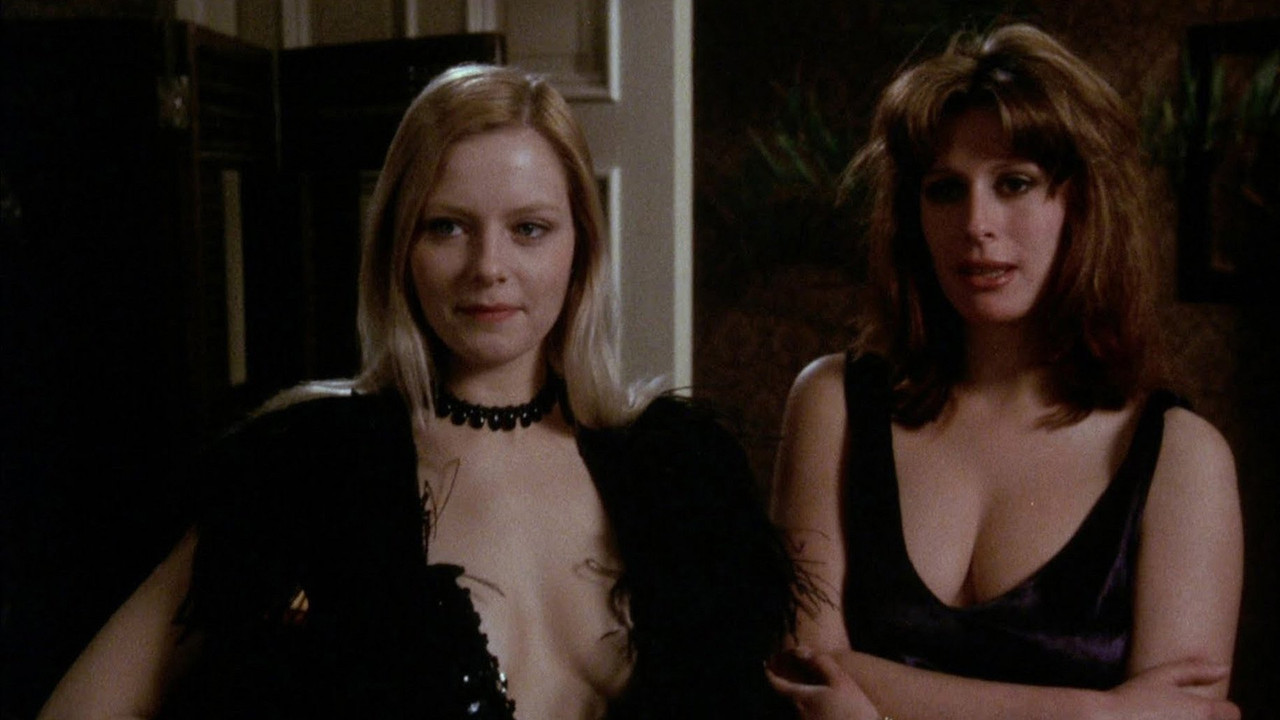
Blood Hunger: The Films of Jose Larraz Boxset
When I was a teenager, there was a series on Channel 4 in the UK called Eurotika. Late on a Friday night they would show a short documentary on an exploitation filmmaker, a reel of exploitation trailers and a film by the director profiled in the documentary. This is how I discovered Jose Larraz and later his beautifully shot, and rather haunting, erotic horror movie Vampyres. Arrow’s recent, and essential, boxset bundles the best ever version of that film with two of Larraz’ others: his debut, Whirlpool and The Coming of Sin, an image from which fascinated me when I saw it all those years ago on Eurotika and has always stuck with me. All of them are making their UK Blu Ray debut here. To my mind, this is a perfect example of a filmmaker too often overlooked because of the genre he worked in finally getting the treatment his work merits.

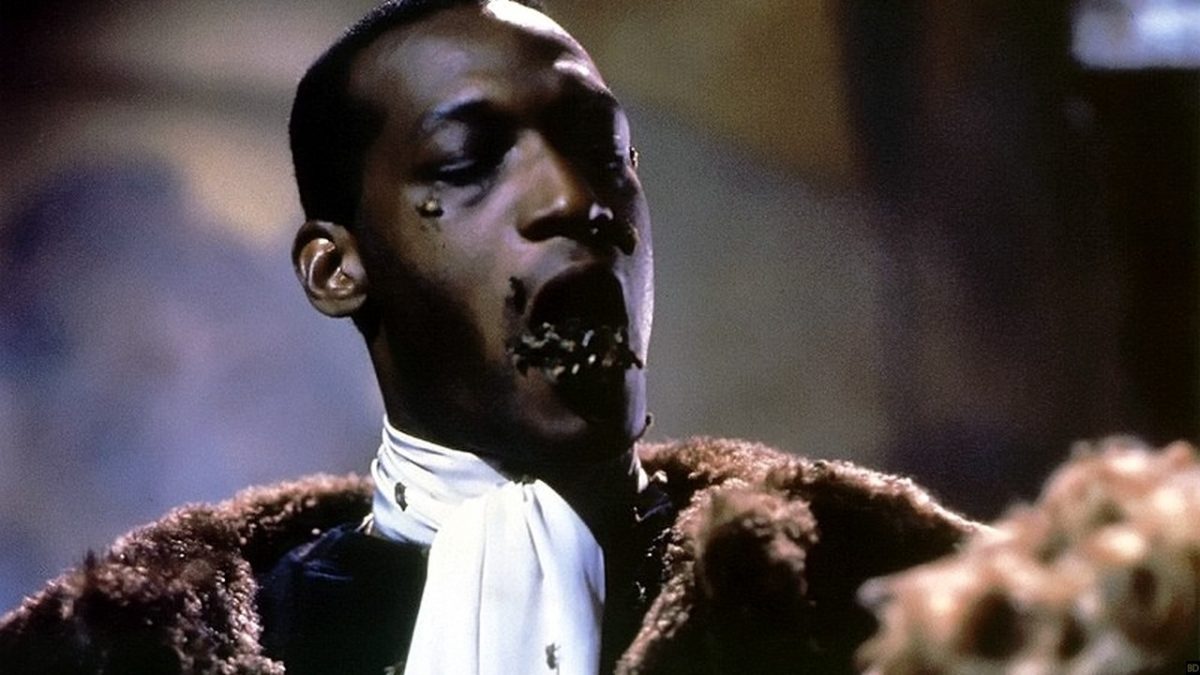
Candyman
The greatest American horror film of the 90s? Certainly you could make a solid argument for it. What sets Candyman apart from the other films about famous horror boogeymen is how deeply the screenplay engages with politics (something the Jordan Peele produced reboot, due next year, will carry over). This is as much a film about race and gentrification as it is about a monster with a hook, today it feels as relevant as it ever has, if not more so. Again, Arrow’s boxset edition massively exceeds any previous release, including two cuts of the film, three shorts by Bernard Rose and a stunning 40 page booklet full of storyboards.

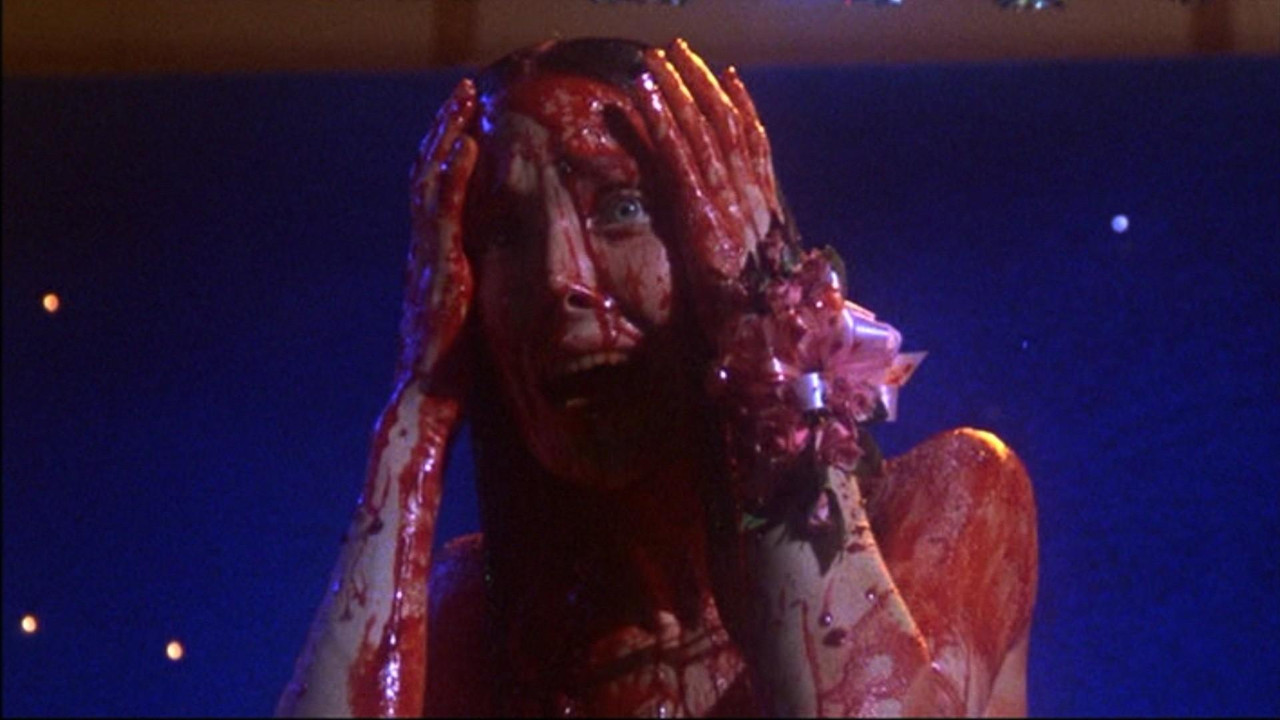
Carrie
The first Stephen King adaptation and still, to my mind, the best by a distance. Carrie is brilliant on multiple levels; it works as pure horror, as a reflection on the high school experience and as a showcase for the brilliantly sustained performances of Sissy Spacek and Piper Laurie, as well as for Brian DePalma’s direction. Unfortunately the beautiful boxset that Arrow put out isn’t available any more, but the standalone disc is, and that boasts the same stunning transfer (miles ahead of the previous blu ray) and contextualising extras both archival and newly produced.

Crimson Peak
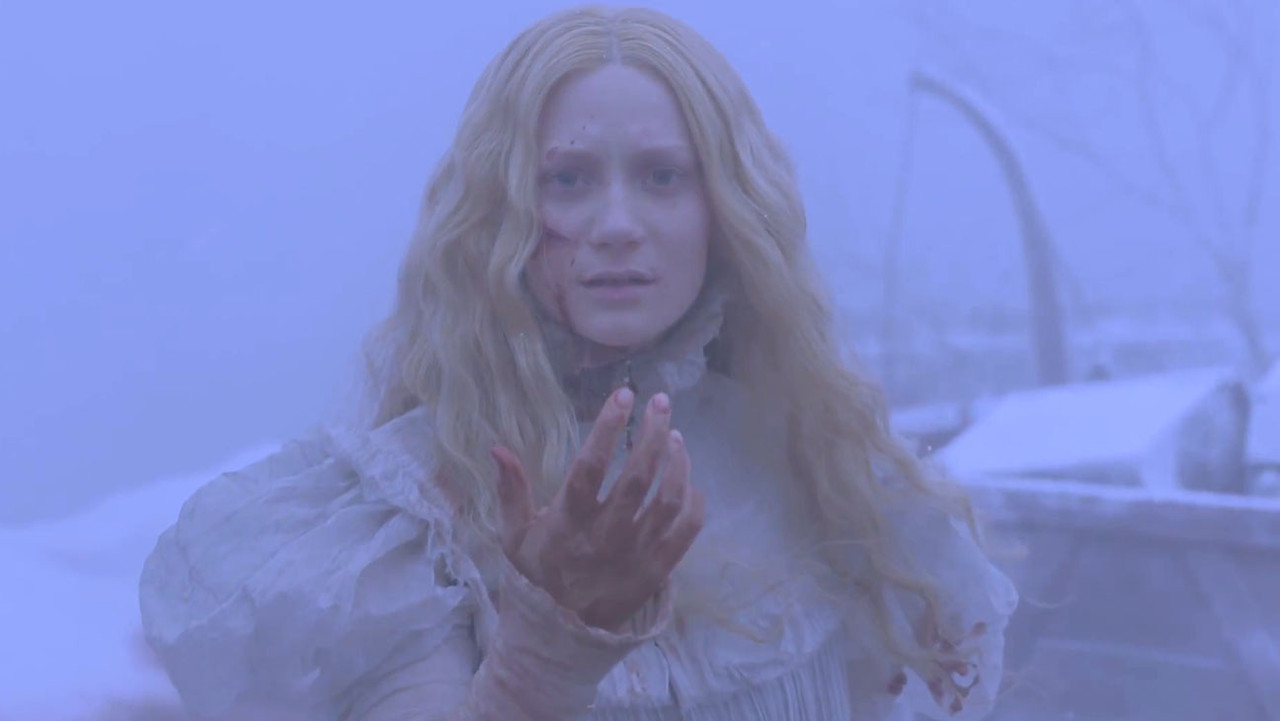
If it’s not quite Guillermo Del Toro’s best film, his ‘gothic romance’ ghost story is by a distance his most underestimated and another stunning boxset from Arrow provides the opportunity for an already overdue reassessment. I love everything about it, from the customarily stunning and incredibly detailed design, to Jessica Chastain’s glorious scenery chomping as Tom Hiddleston’s sinister sister. The beauty carries over into Arrow’s packaging of the film in a presentation box, I only wish it creaked as you open it, just to add to the creepy feel of the whole thing.

Female Prisoner Scorpion Boxset
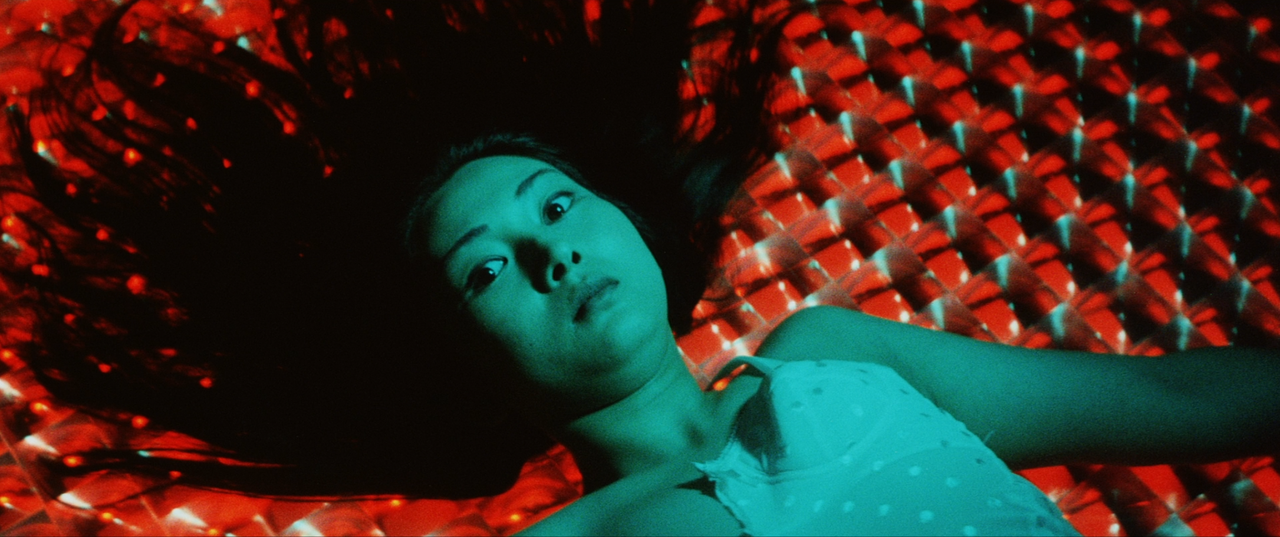
I had seen the first of this series a few years prior, but it was through Arrow and their releases that I properly discovered Meiko Kaji. Kaji was a notable  presence in Japanese exploitation cinema in the seventies and, for my money, one of the purest movie stars we’ve ever seen on screen. There are plenty of good actors, but few true movie stars - the people who walk on screen and own every frame they are in, inextricably drawing your eye. Kaji is one of those people. These films, with her as the vengeful Sasori, are driven increasingly by her physical presence - by the end of the fourth film, Grudge Song, she’s no longer a character but a pure force of nature. The visuals are powerful and often striking,but it’s Kaji who makes these films extraordinary.

Hounds of Love
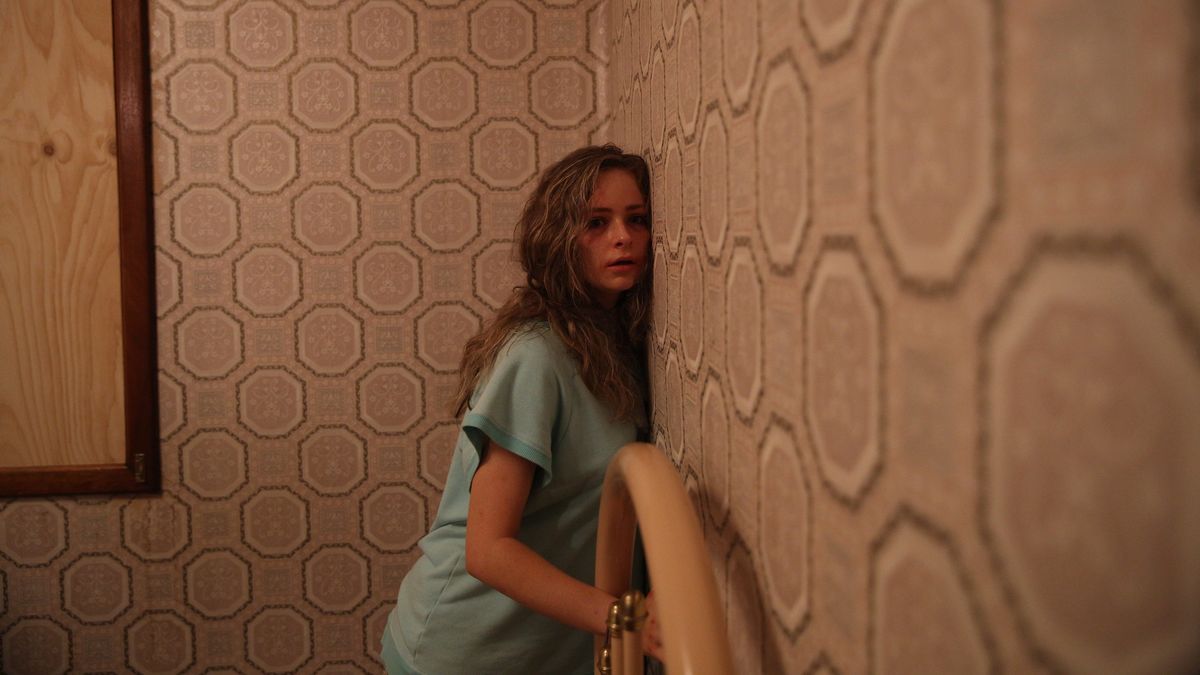
Serial killer films are one of my favourite horror sub-genres for one simple reason: the fact people like this actually exist in the world make those movies scarier than, say, one about a boogeyman that kills you in your dreams. One of Arrow’s still relatively rare releases of a brand new film, Hounds of Love is one that can stand alongside true classics like The Black Panther and Henry: Portrait of a Serial Killer. An Australian film based on a real case from the 80s, it’s a stunning directorial debut for Ben Young, whose opening sequence alone - essentially the film in miniature in 10 minutes - serves notice that he could be a major figure to watch. Likewise, the performances from Stephen Curry and a pitiable yet terrifying Emma Booth are revelatory.

The Lickerish Quartet
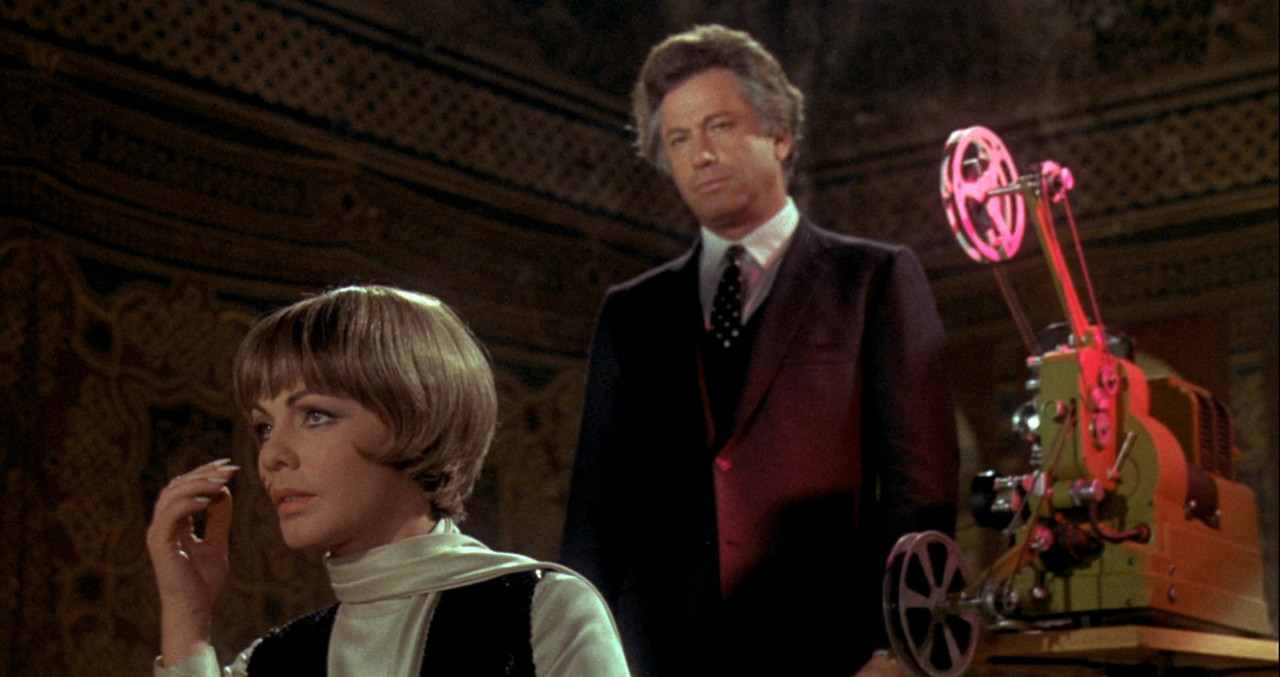
Of the three Radley Metzger films released by Arrow, this is by far the best. A surreal softcore drama that is as much about storytelling and filmmaking as it is about titillation (though it doesn't skimp on that). It's about a family who go to fairground and end up bringing home a beautiful motorcycle stunt rider who looks exactly like the woman in a porn film they were watching earlier. Dealing with perception and how we interpret cinema, it's the film that best shows off Metzger as not just a craftsman but an auteur, elevating what might, in other hands, just be smut. This isn't one of the most comprehensive Arrow disc, but it was an introduction to a film and a filmmaker who I have come to be a great fan of. This may be the film I have become most evangelical about, having first seen it via Arrow.

Matinee
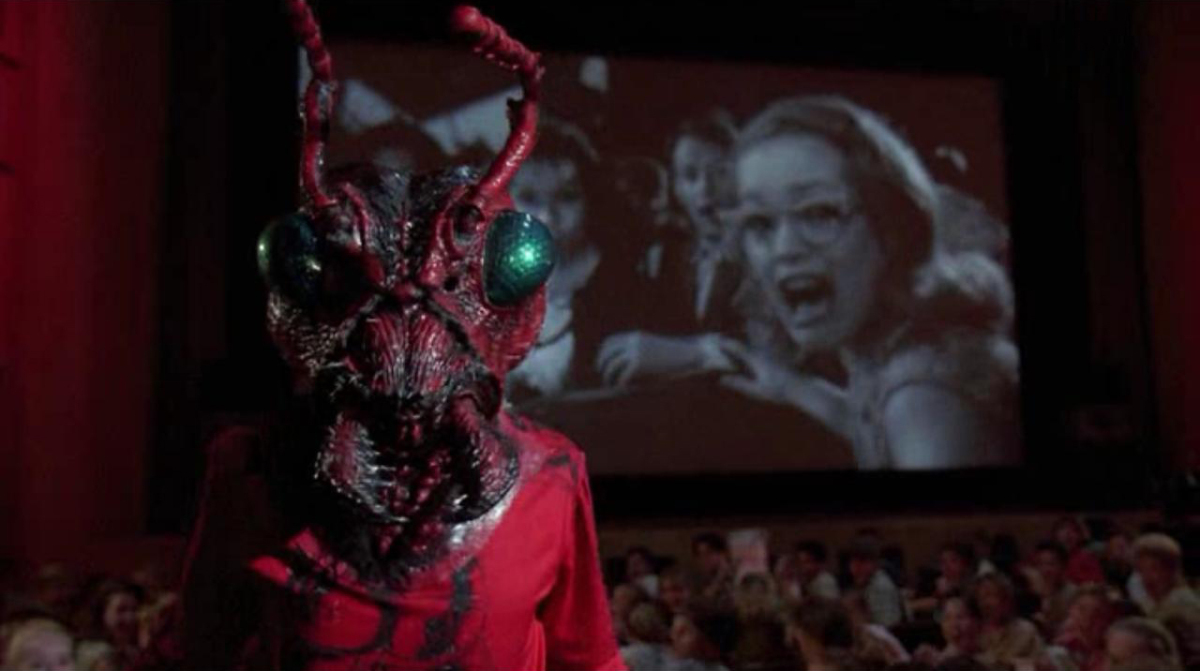
Joe Dante is one of the great genre filmmakers, for over 40 years now he has been remixing his influences into a truly distinctive filmography with a wit that is totally specific to him. This is clearly his most personal film, and for me his best. A charming coming of age movie about a kid who loves monster movies getting to meet his idol (a producer played by John Goodman as an amalgam of William Castle and Alfred Hitchcock) when he premieres his new film in Key West the weekend of the Cuban missile crisis, Matinee is Dante's most devoted love letter to cinema and what it means to those of us who find solace and escape in it. The film packs so much into under 100 minutes; a sweet romance, political commentary, hilarious B movie parodies and so much more. The Blu Ray is similarly brilliant, presenting the film with plenty of extras and, for the first time on UK home formats, in its proper ratio. 

Psycho II
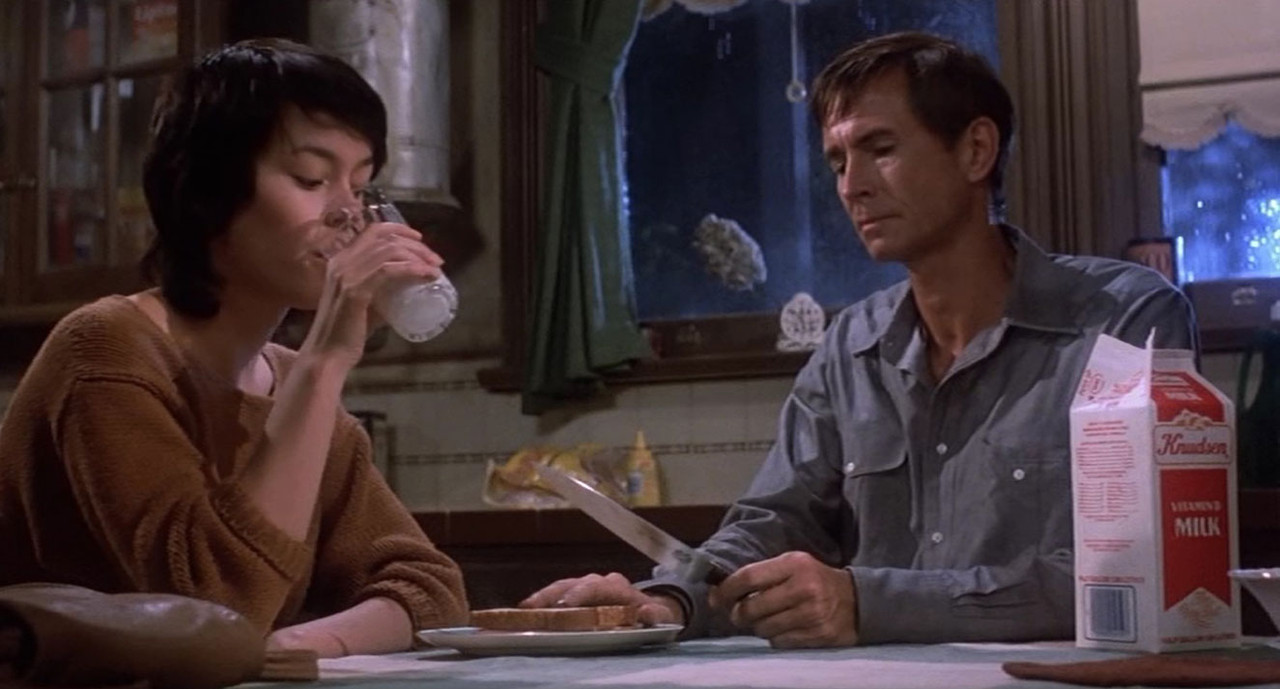
Delayed sequels and reboots are popular among studios at the moment, but they don't always seem like a good idea. This would seem to be the grand champion of terrible and pointless sequel ideas. How could you possibly, 23 years on and without Alfred Hitchcock, continue Psycho? Tom Holland's screenplay and Richard Franklin's direction square the circle brilliantly, paying tribute but always making sure to do more than slavishly homage, cutting their own path and bringing the film into the 80s, using the greater freedom they have to show violence and blood. Perhaps even more importantly, they find  an interesting direction for Norman Bates' story, making him a somewhat sympathetic figure and drawing a performance every bit as brilliant as in the original from Anthony Perkins. I was so happy when Arrow announced this film, as I'd been championing it since the first time I'd seen it and was glad that it would not only get an HD release, but the deluxe treatment.

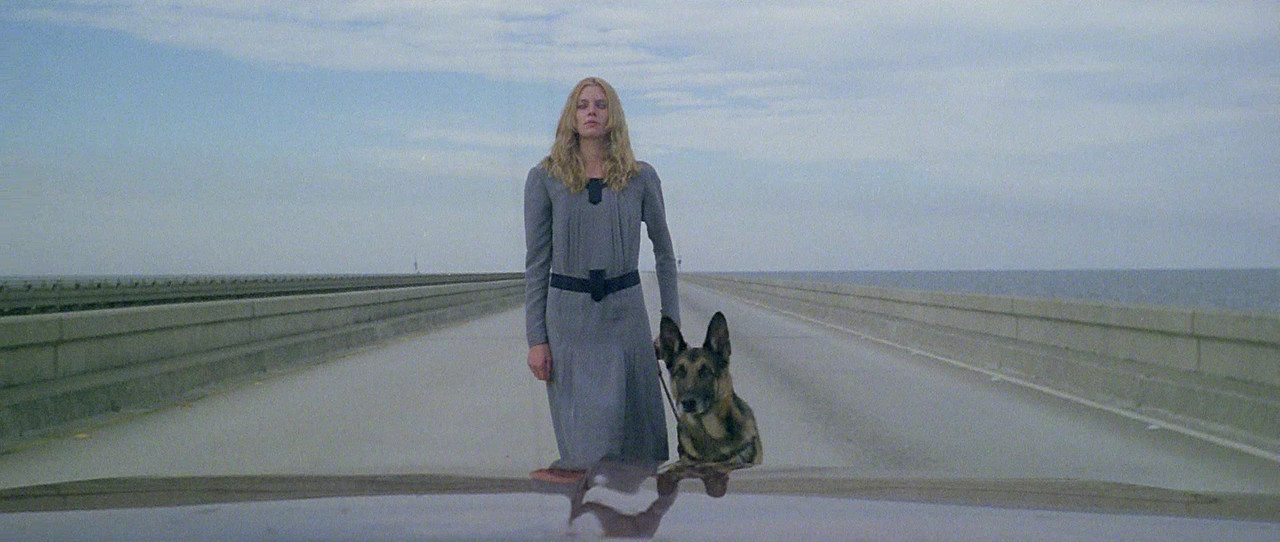
The Witch Who Came From The Sea
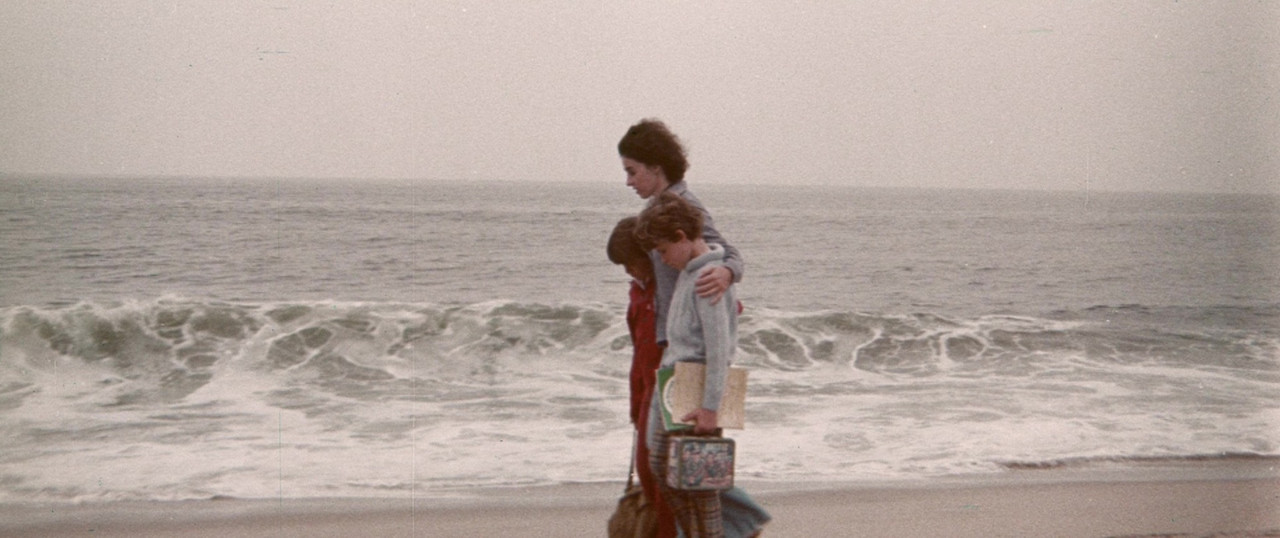
The first volume of the American Horror Project, containing this, Malatesta’s Carnival of Blood and The Premonition, may be long deleted, but the single disc release of The Witch Who Came From The Sea remains an essential piece of any horror fan’s collection. The story comes off like a video nasty version of To Die For, as a television obsessed woman (played by Millie Perkins, who was Anne Frank in the 50s film), traumatised by her childhood, begins to lose her grip on reality and starts murdering men. Confrontational at times, hypnotic at others and driven by impressive, sometimes surreal, visuals from Dean Cundey (later DP to Spielberg and Carpenter) and an astounding performance from Perkins, this is a true original. The fact we still have this film, which could easily have disappeared, is reason enough to be thankful the video nasties list existed.

Also Recommended: Combat Shock [DVD only], Don't Torture a Duckling, The Last American Virgin, The Last House on the Left boxset, Night of the Comet, Spider Baby, Stray Cat Rock boxset, Suture, The Texas Chainsaw Massacre 2, Vigil

Aug 16, 2015

Exploitation Classics: Flesh + Blood [18]

I have just rewatched Paul Verhoeven's Showgirls which, 20 years after its release, seems to be attracting a new critical appreciation. I still think it's pretty dreadful, and easily Verhoeven's worst film.

For me, the Verhoeven film that is most in need of reappraisal and a bigger audience is his 1985 English language début, Flesh + Blood. What follows is a piece originally written as a review of the US Blu Ray release for the blog of the now defunct Vérité film magazine.

Dir: Paul Verhoeven
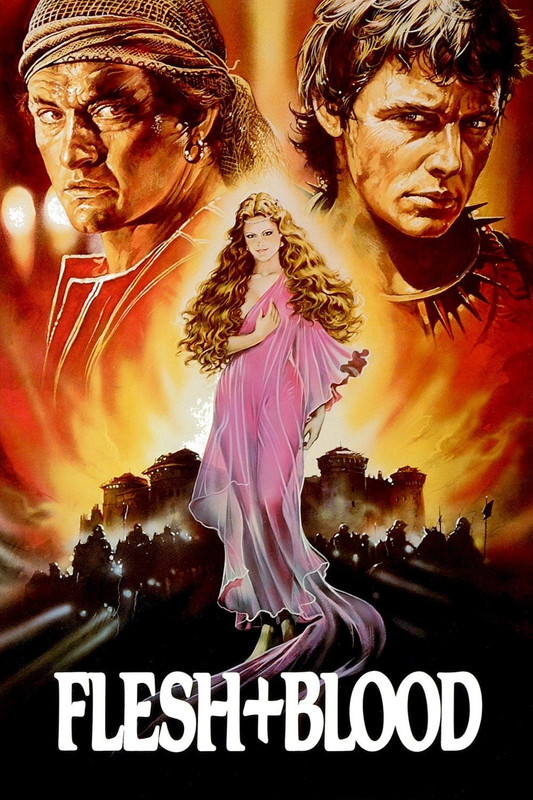
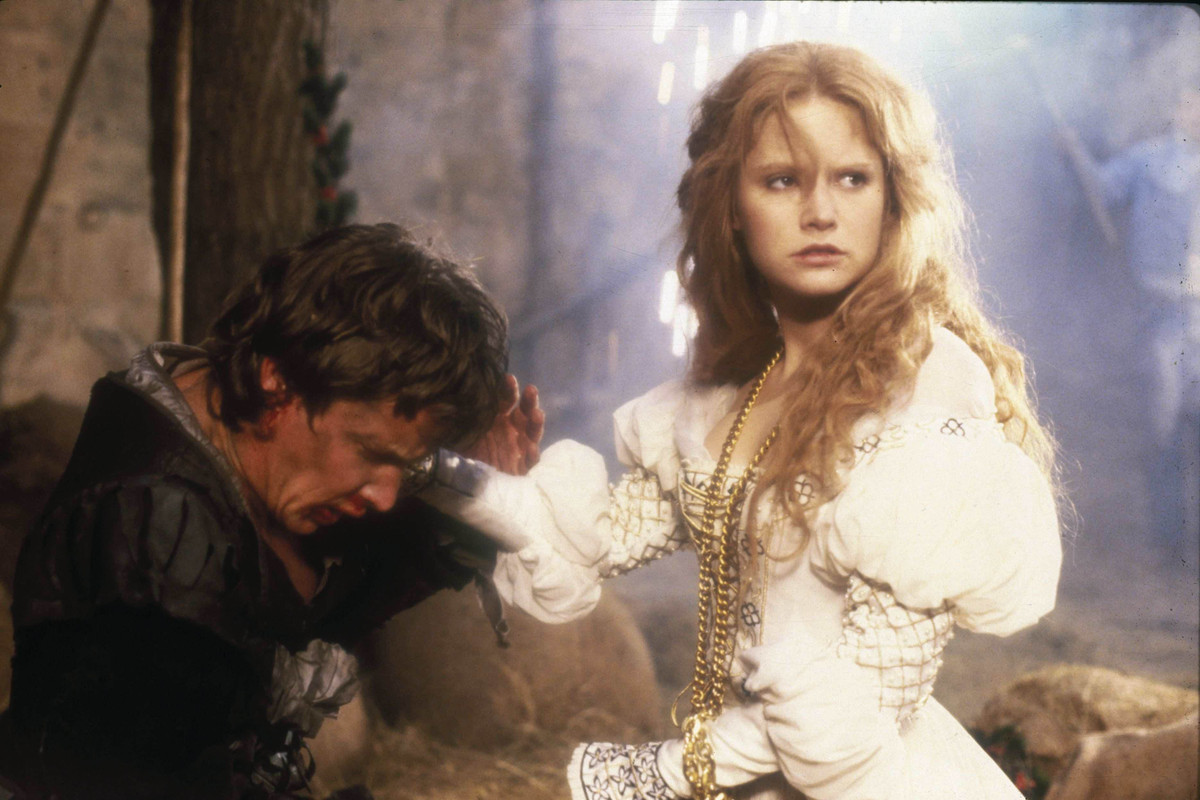
Flesh + Blood is a film that would seem to epitomise the idea of doing exactly what it says on the tin. The course of its running time is split relatively evenly between Jennifer Jason Leigh's flesh, and the blood dripping from the swords of Rutger Hauer and his band of mercenaries. If that were all that Flesh + Blood were offering it'd still be a lot of fun, but coming from Paul Verhoeven, the master of finding substance in schlock, it's so much more than a boobs n' gore-filled guilty pleasure.

In Italy, 1501, Martin (Hauer) and his battle-born warriors are left unpaid by their employer Arnolfini (Fernando Hilbeck) after a claret-soaked conflict. In retaliation they kidnap Agnes (Leigh), the betrothed of Arnolfini's son Stephen (Tom Burlinson), and following a route indicated by a statue of St Martin, take an abandoned castle as their new home. Wanting vengeance and his bride back, Stephen pursues them and lays siege to the castle. These are the bloodied bones of a story that Verhoeven and co-screenwriter Gerard Soeteman pick clean before sharpening them into a set of themes that cut as deep as any of Martin's blades.

In his first English-language film, Verhoeven explores the tendency of power to corrupt, and the abuse of authority by those who hold it, a preoccupation that has informed almost all his subsequent work from Robocop to Black Book. In this sixteenth-century setting, power and authority rest largely with the church, and particularly with Ronald Lacey's easily influenced priest. The film's original suggested title was 'God's Own Butchers', an accusation Verhoeven makes not only of the priest but of Martin, seemingly drunk on the power that his followers belief in St Martin confers on him. The most rational of the group, he sees through the priest's pronouncements but goes along with them to secure his position as leader.

To Verhoeven, the coveting of power and control are basic instincts as hardwired as our sexual urges. Scenes between Martin and the kidnapped princess Agnes are similarly predicated on animal attractions. When we are first introduced to Agnes she is nervous and excited about meeting Stephen, less for getting to know him and more for where it will eventually lead. Her curiosity about sex is such that she orders her maid to seduce another member of their party, so that she can watch.

The extensive nudity is exploitation typical of the randy Dutch director, but with that exploitation comes Agnes' understanding of her doll-like beauty and how to use it in a world of brutes. Raped soon after she is kidnapped, even on her back, Agnes is still the one who wields the power, seemingly hypnotising Martin as he has his way with her and undermining his dominance enough so he is the only one who attacks her. Winning a type of protection, she also gains influence with the savage and watching her manipulations is almost as uncomfortable as witnessing the violation of her body.

The MPAA demanded cuts of course, which Verhoeven details in his commentary before noting with relish that this is the uncut version, but what might have so easily offended works as a wily clash of egos and varying degrees of intelligence, thanks to captivating casting. During shooting, Verhoeven fell out with Rutger Hauer, who'd been his on-screen alter ego up to that point, and they never worked together again. In their final collaboration, Hauer is as good as he's ever been, credibly buffed up as a warrior and charismatic as a leader of men. Martin's unredeemed arrogance, encouraged by the priest's repeated assertions that he has been appointed by God to lead them, is a trait Hauer makes innate without indulging.

Jennifer Jason Leigh spent much of her early career elevating sleaze with her talent, and Flesh + Blood is a fine example of that. While she struggles with an English accent, Agnes' enticing ambiguities are all behind the dialogue. The division of her loyalties is externalised in Leigh's body language, her scheming physicalised, as she writhes this way and that during the sex scenes. Calculating especially when copulating, Agnes looks for weakness and advantage wherever possible. Just watch Leigh as she decides whether or not to stop Martin from eating a particular piece of meat late in the film; the ruthless streak running through Agnes is nakedly on display, in or out of bed.

Tom Burlinson is a blander presence against two strong leads but still manages to make something of Stephen, who's a thinker, not a warrior, only discovering his inner steel after Agnes is taken. His intelligence is a trait Verhoeven has fun with, inventing gadgets that play into the film's action scenes - a mobile bomb in the film's opening siege leaves no doubt over Stephen's ingenuity, and later his smarts are responsible for a disgustingly realised depiction of early germ warfare. The rest of the supporting cast is colourfully eclectic, giving the film more than two-tone mud and plasma. Ronald Lacey and Susan Tyrell are on especially fine form, while an amusingly confused Bruno Kirby is completely miscast.

On his typically forthright and story-packed commentary, Verhoeven lets us know just how hellish a film it was to make, but Flesh + Blood's verve and lack of compromise allowed the director to propel himself into the Hollywood big leagues with his follow up, Robocop. Every bit as violent as that era-defining sci-fi, the stench of battle emanates from every frame, Jan DeBont, then Verhoeven's regular cinematographer (who went on to direct nineties action classic Speed, then killed that career with Speed 2: Cruise Control), keeps the film at ground level, giving it a grimy, gritty look that's overwhelming in HD even if it's not as dirty as the ugly verisimilitude of VHS.

A film you wallow in as much as watch, Verhoeven's most underrated work evokes an unpleasant reality that's raw without being softened by the pulp of the films that followed.

Feb 22, 2015

Random Viewing

A few reviews short(ish) for an odd mix of older films I've seen recently.

Phoebe in Wonderland
Dir: Daniel Barnz
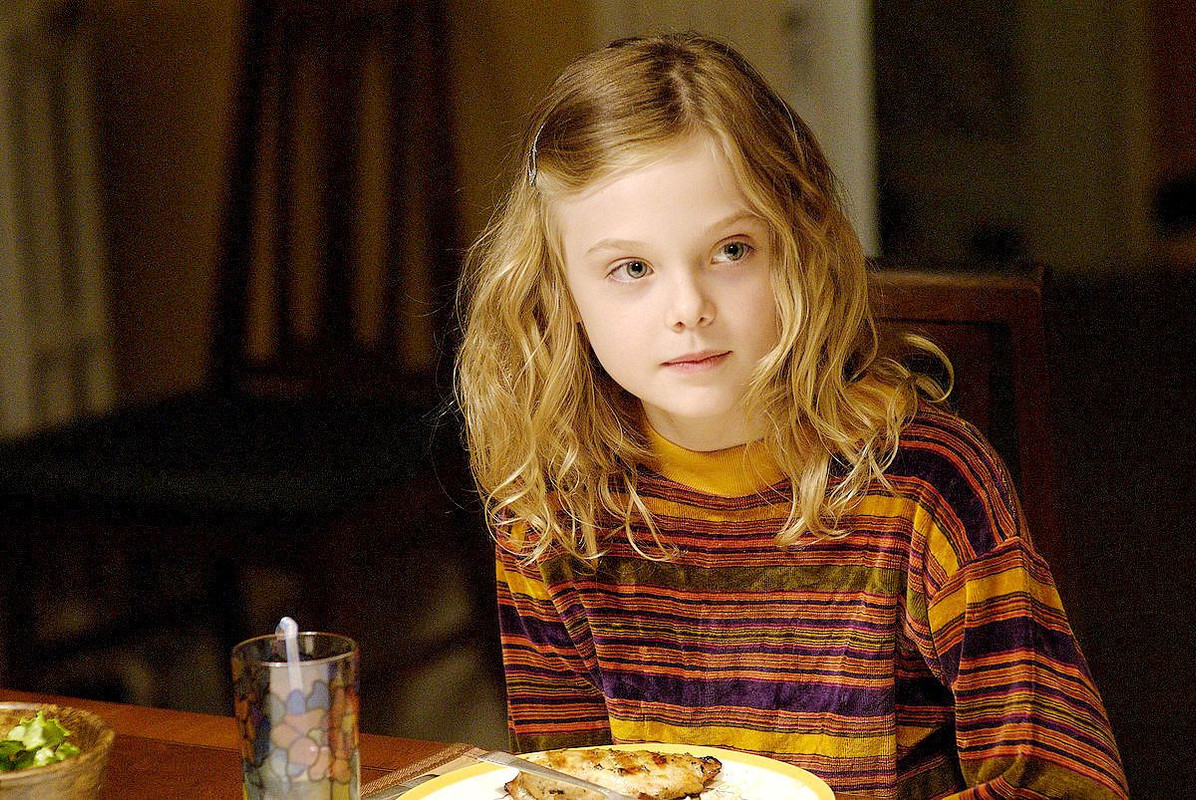
When I put together a list of my favourite actresses currently working, I put Elle Fanning in among the other, much more established, names.  She was just 15 at that time but already had turned out a long string of impressive performances.  I'm surprised that it took me this long to get around to this film, which gave Fanning her first proper leading role.

The film is a mixed bag.  It can be affecting, but it's also prone to being horribly treacly, and drifts further from credibility as it runs on, in all but one aspect.

Fanning plays Phoebe, a nine year old girl who can't seem to follow the rules at school or at home, and who often finds herself doing illogical things (jumping in a particular pattern, for example), because that she believes something will go horribly wrong if she can't get that specific action 'right'.  Her parents (Felicity Huffman and Bill Pullman) initially think she's just being a kid, but it increasingly seems that something deeper is wrong, and that Phoebe's participation in the school play is the one thing that helps her.

At the film's centre, Elle Fanning is little short of sensational.  She has always appeared to have an uncommon understanding of the complexities of her characters, and there is always a lot going on in her performance as Phoebe.  She talks about finding herself doing things without wanting to, even things that she hates having to do, but honestly the lines are barely needed, we can see it all in her physicality.  She's also great in the scenes where Phoebe is acting in Alice in Wonderland, giving a true sense of the weight being lifted off her.

Unfortunately, nothing around the central performance has anything like Fanning's level of consistency.   Daniel Barnz' screenplay is strong when it comes to Phoebe and her illness, giving her some powerful dialogue, but the fairytale trappings and Patricia Clarkson's drama teacher are just awful.  Towards the end, Barnz simply abandons recognisable human behaviour in his writing of the adult characters, and even actors as good as Huffman, Pullman and Campbell Scott can't help him.

Phoebe in Wonderland is Elle Fanning's show all the way and, despite its many problems, is worth seeing just for her remarkable performance.

Killer's Moon
Dir: Alan Birkinshaw
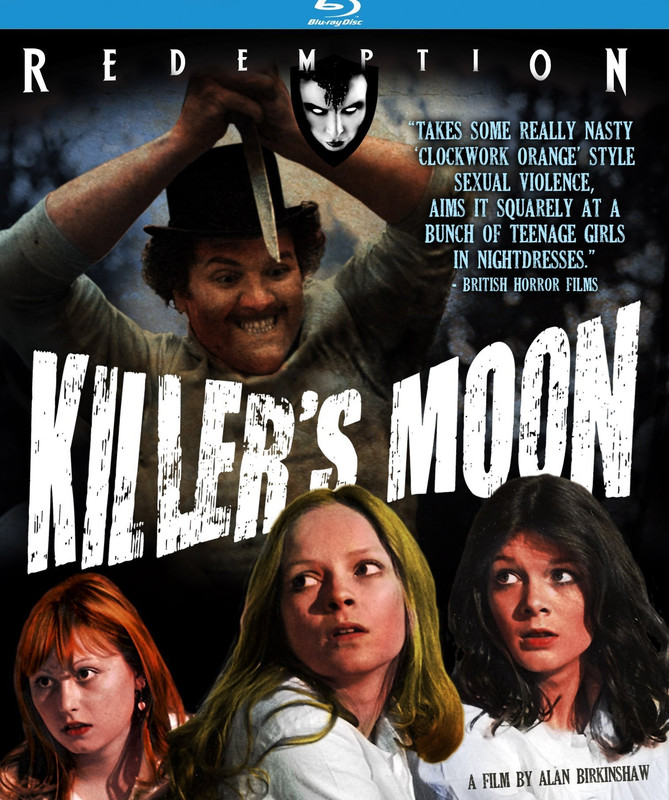
I wasn't expecting a huge amount from Killer's Moon.  I thought it would be something I'd enjoy simply as a fun, sleazy bit of the history of English exploitation cinema, which would have been fine.  What I wasn't expecting was something with as many ideas and as many layers as this surprising film has.

The story appears simple.  A group of schoolgirls on their way to a choir competition are stranded in the countryside for the night when their bus breaks down.  They find a place to stay, in a hotel that is yet to open for the season.  Unfortunately some less welcome guests also find their way to the hotel; four escaped mental patients on an LSD treatment, who have been told to purge their every violent whim, safe in the knowledge that what they are experiencing is a lucid dream.

The structure is pretty skeletal, but director Alan Burkinshaw has fun with it.  The early lost in the woods scenes work quite well, establishing (broad) characters and giving us a few creepy moments.  At the same time, cutaways establish the impending threat of the escaped patients, giving the scenes in the hotel a sense of build up, rather than just marking time.

The screenplay has its problems, particularly a regressive 70's attitude to some of the film's sexual violence (one girl comforts another by saying "at least you were only raped"), but additional dialogue by Fay Weldon (the director's sister) adds some wit.  The best line, however, comes in a creepy exchange between two of the patients "Do you always dream in colour?" "When I can.  I like the flesh tones."

The second half of the film is marked by two things, its nastiness and its uncommon amount of ideas.  The film's sexual violence is pretty brutal, and made to feel more so by the fact that the actresses playing the schoolgirls look very young indeed.  The nastiness of the film is also intensified by its ideas, first by the fact that the patients are so often gleeful about what they are now allowed to do, because this is a dream and because, as they start to figure out that they are not dreaming, their attitudes don't change.  The killers' observations of dream and reality manage to straddle a fine line between creepy and funny throughout, giving the film a peculiar atmosphere all its own.

Not everything works,  The two male campers who help the girls escape are little more than convenient props, and the film would be more interesting if the girls had to battle the patients by themselves.  There are also some problems with the camerawork, while Burkinshaw's angles and editing are fine, the choice to shoot almost every exterior scene in less than convincing day for night means that the film doesn't look as strong as it might have.

Overall though, Killer's Moon was an intriguing surprise; a film smarter, funnier and more disturbing than I had expected and, if you can forgive a few clunky moments, a minor exploitation classic.


The Last Stand
Dir: Kim Jee-Woon
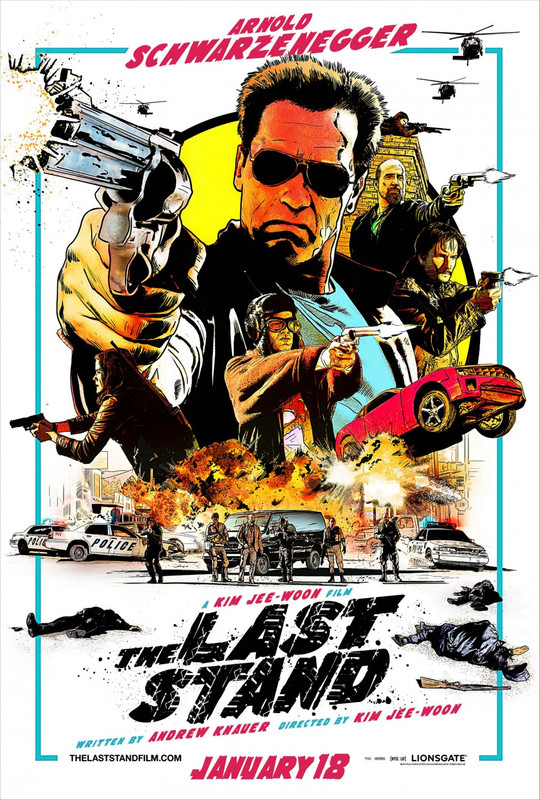
There are actors, there are movie stars and there are people who combine the two.  Arnold Schwarzenegger is a movie star, for many of us, myself included, he always was, making his first impact with starring vehicles like Conan the Babarian or The Terminator.  Then, after decades of success as a movie star, he became Governor of California (as one does).  With that job out of the way, he returned to cinema, with The Last Stand marking his first leading role in the decade since the underrated Terminator 3.  Little had changed.

Arnie plays Ray Owens, the inexplicably Austrian accented sheriff of Sommerton a small town right on the border between the US and Mexico.  A drug kingpin on federal death row has escaped, and he may be aiming to cross the border by going through Ray's town.  This, needless to say, is not the best idea he's ever had.

The Last Stand is what it is, and it revels in the fact.  The idea is basically High Noon, with a long build up to the promise of a massive fight between Arnie and Eduardo Noriega as the cartel boss.  Of course that can only happen in the third act, so before that we have Forest Whittaker as the FBI agent on Noriega's tail and a small army, led by Peter Stormare with an accent even more hilarious than Arnie's, building a bridge in order to allow Noriega to cross into Mexico.

The action is largely confined to the final third of the film, but there's a great shootout with Stormare and his mercenaries around the halfway point, in which Arnie gets to show that he still has all the badassery of his earlier films.

Between action beats, Schwarzenegger shows an admirable willingness to acknowledge his age without playing too heavily on it for gags.  He's not the best actor in the world, but there's a sense here of a guy who's seen a lot, became tired of it, and now wants to do some good while essentially having a quiet life.  

If there's a sleepy small town feel to Sommerton, Kim Jee-Woon injects pace and action into the chase movie that leads up to the film's final confrontation.  Noriega has fun as the adrenaline junkie cartel boss, avoiding the FBI in a supercar.  This part of the film also gives us a great action scene, as a police barricade is decimated by Noriega's goons.

The third act is where it all comes together.  An energetic and fun supporting cast, including Johnny Knoxville, Luis Guzman and Jamie Alexander allows Arnie to share the load  in the bigger action scenes, but Schwarzenegger is still obviously doing almost all his own action and appears to be enjoying himself doing it.  The showdown in Sommerton is a fantastic sequence, with Kim keeping the geography of the action intelligible and finding moments that are both brutal and funny (the flare gun).

The Last Stand is, by design, a throwback.  Is it a return to Schwarzenegger's very best form?  No, it's no Commando, but it recaptures the feel of 80's and 90's action cinema without being a slave to nostalgia and, ultimately, it's just a whole lot of fun.  Never change Arnold.

Nov 26, 2014

Arrowcast Episode 3: The Lickerish Quartet

In this episode of Arrowcast, my Picture Show co-host Mike Ewins joins me for the second episode running. We discuss the hidden depths of Radley Metzger's The Lickerish Quartet. We talk about Metzger as an auteur, the film as a commentary on cinema and the way we watch. We talk about films we think influenced Metzger and films we think may have been influenced by The Lickerish Quartet. Finally, we cover why we think both the film and its director deserve a thorough critical reappraisal and where they fit in the cinematic canon.

You can listen to the show [60 minutes] in the player below, or download it HERE

Feb 6, 2014

Coming of Age Movie Month: Days 3 and 4

My third coming of age movie was going to be Tuff Turf, but since I found it incredibly dull and have little to say about it besides 'THE 80'S!!' I decided I would count the other film I watched that day, which also had a lot of coming of age elements, as the day's entry in this series.


L'Immoralita
Dir: Massimo Pirri
My interests in coming of age movies and exploitation cinema often cross over, but seldom in as troubling a manner as they do in L'Immoralita [Immorality].  The film opens with Federico (Howard Ross), a serial child killer, burying his latest victim, then being chased down by the Police.  Injured, he comes across Simona (Karin Trentephol) an 11 year old girl who agrees to help him and gives him a place to hide.  As the local community hunts Federico, Simona begins to fall in love with him, and react jealously when her mother (Lisa Gastoni) seduces him.

First love is a common theme in coming of age cinema, and it will run through almost every entry in this series to a greater or lesser degree, but this is perhaps the most disturbing take I've ever seen on the subject (with the possible exception of Maladolescenza), both because Simona is so young and because she is not naive about what Federico has done.  There is a duality about Simona's character; in some ways she is hopelessly naive, she clearly still has a child's understanding of adult relationships and her jealousy of her mother is a child's petulance.  However, Simona is also calculating.  A chilling scene in the middle of the film has her stealing a gun and buying bullets on her father's account, for what reason we don't yet know.  Simona also seems aware of the way that she appeals to Federico and this too plays out in an extended and uncomfortable scene.  The discomfort around the Simona character is even further accentuated because, even through the haze of typically shonky Italian dubbing, you can see that Karin Trentephol (who never made another film) is giving an excellent performance.

While the increasingly disturbing dynamic between Federico, Simona and her mother holds the attention, there isn't much drive to the narrative that has both the Police and local vigilantes after Federico, with the film conjuring little of the fevered atmosphere of provincial paranoia that Lucio Fulci's Don't Torture A Duckling manages.  Ultimately the film is a mixed bag; competently shot, variably acted as far as one can tell through the dubbing, but at the centre lies this fascinating and disquieting relationship.  It's not an easy watch, even for fans of Italian sleaze, but it is worthwhile.
★★★

All The Right Moves
Dir: Michael Chapman
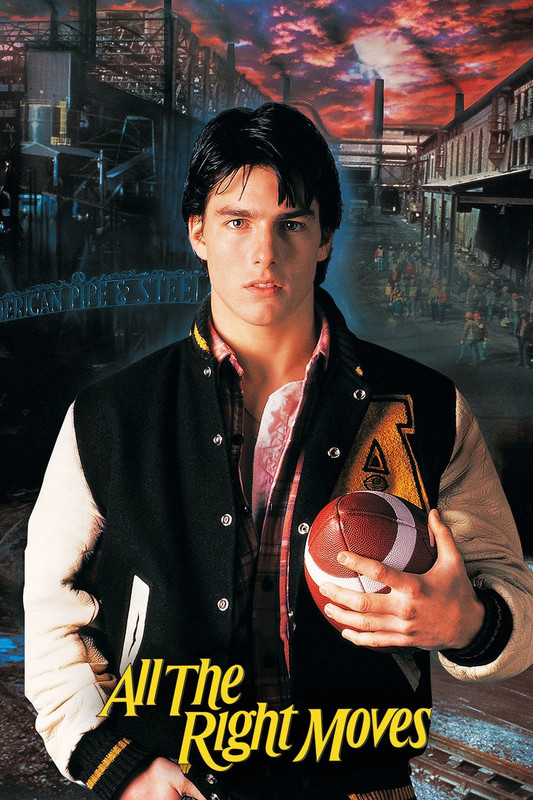
I thought that All The Right Moves was going to be a rather different movie than the one it turned out to be.  It begins with that staple of the 80's movie; its own (pretty upbeat) theme song, and I was expecting to see Tom Cruise triumphing against the odds as a small town high school football player trying to find a scholarship to a college.

The movie soon set about disabusing me of this notion, from the colour palette on down All The Right Moves is a surprisingly bleak and hard hitting film.  What it's really about is people, young as they are, being trapped in a bad situation and having one chance to get out.  This is the situation we find Cruise's Stef in.  He's a high school senior, a star player on the football team with a few colleges sniffing around to give him a scholarship, and he knows this is his only way out of an economically decaying future in a Pennsylvania steel town.

Former cinematographer Michael Chapman paints the town in greys and browns, the colour and energy seeming to leak out of it along with the jobs and this, along with the way we see Stef's friend (Chris Penn) captured by the town when he gets his girlfriend pregnant, accentuates the urgency of escape.  Interestingly, the image Cruise has built since this film played into my expectations, his characters usually lead such charmed lives that I expected the obstacles that Stef would have to face would be extremely minor, instead the conflict with his coach (a very good Craig T Nelson) seems as though it will consign Stef to the scrapheap.

Outside of the football games and the attempts to escape from his dead-end town, there is a relationship storyline.  Lea Thompson's melancholy performance as Stef's girlfriend Lisa gives the film several of its most resonant moments, especially a scene in which she tells Stef that she too has ambitions beyond their town, but that music scholarships aren't on offer.  Her monologue realising that much of her life is, at seventeen, already written for her is extremely sad and resonant.  Thompson, an underrated actress who should have had more chances, is great in the part.  It's also worth noting that she's probably responsible, thanks to one scene, for a lot of boys growing up pretty suddenly.

Cruise is also good.  He's much less put together here than he has been in most of his films and Stef (while, of course, ridiculously handsome) does come off like a typical teenager.  Cruise plays him naive but anxious, this comes through notably in the sex scenes, but also informs the rest of the character: Stef wants things; Lisa, his scholarship, and naively thinks that he can't, at this point, jeopradise his chances of having them.  Cruise's youthful exuberance suits the opening part of the film well and makes it all the more effective when he's beaten down.

It's a pity that Michael Chapman didn't direct more (only one more notable feature, Clan of the Cave Bear, followed this, his debut), instead of returning to cinematography.  He shows an affinity for his characters, extracting uniformly strong performances from his cast, and his unobtrusive camera style makes their world feel real and vivid.

While it snatches victory from the jaws of defeat (in what feels like a bit too much of a movie moment), for the most part All The Right Moves is an effectively downbeat drama that has something to say about growing up, but also about how adulthood doesn't always live up to what we expected.
★★★

Aug 16, 2013

Passion [15]

Dir: Brian DePalma
Once a filmmaker has established a sizeable body of work you can usually see an ebb and flow within it; moments or periods of great inspiration, alternating with films, or even stretches of films, that don't work.  This is perhaps especially true of those filmmakers who really stamp their identity on their work, filmmakers like Brian DePalma.  Before 1993 DePalma had made good films and bad ones, along with several (Blow Out, Carlito's Way, Carrie and arguably Dressed to Kill and Scarface) great ones, but after Carlito's Way, based on what I've seen - which is most of his subsequent work, bar the reportedly interesting Femme Fatale - his talent completely deserted him.

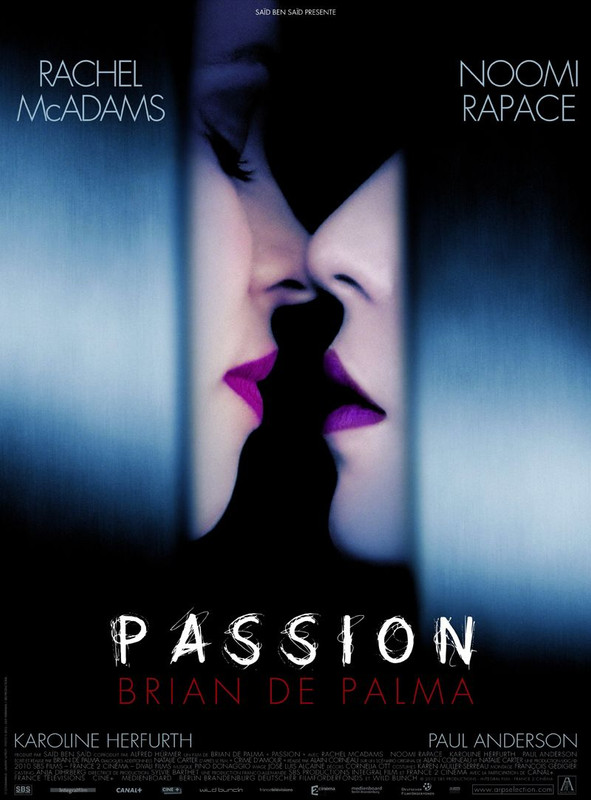
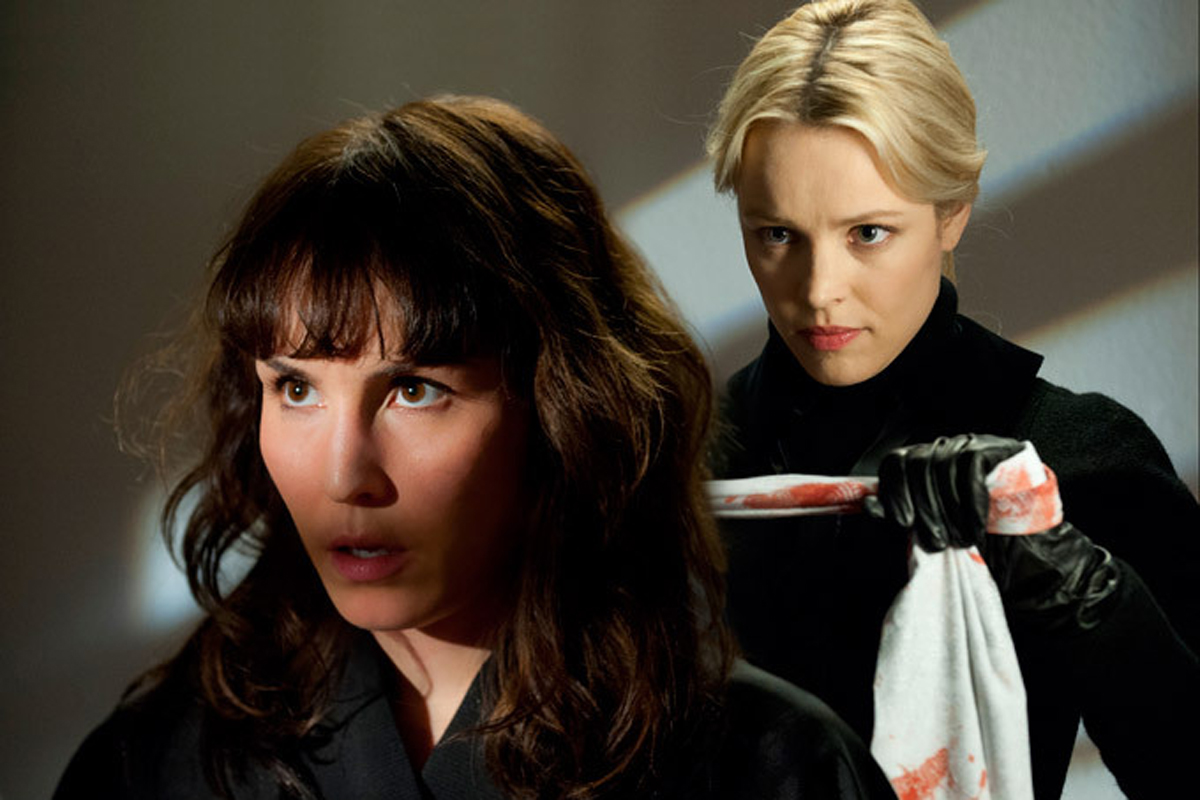
Passion, a very close remake of Alain Corneau's French language Love Crime, which was made in 2010 but released here only at the end of 2012, certainly finds DePalma on firmer ground than, say, the outright unwatchable Redacted, but it certainly doesn't find him on inspired or even middling form.  The plot, just as it was in the original film, is erotic thriller by numbers.  Christine (Rachel McAdams) and her junior executive Isabelle (Noomi Rapace) are working on an advertising campaign for a new smartphone, initially they seem close, perhaps even attracted to one another, but when Christine claims one of Isabelle's ideas as her own it begins a rivalry which also entangles Christine's on-off lover Dirk (Paul Anderson) and Isabelle's young assistant Dani (Karoline Herfurth).

To be fair to Brian DePalma, and to the critics who have enjoyed this film more than I did, Passion is not entirely without merit.  DePalma does stamp more authorial identity on this film than we've seen for a while, and there are some striking images (they don't all entirely work for the film, but we'll come back to that point).  On the level of pure aesthetics, Passion does often look good, even in the more mundane looking scenes the production design and photography are strong, giving the film a sleek and stylish veneer.   Plot wise, DePalma does add a sub-plot about Isabelle's assistant that seems initially tacked on for titillating purposes, but does lead to the film's only good sustained scene.  That scene takes up about ten minutes towards the end where, preposterous though it is (and was in a slightly different way Love Crime), the plot wraps up in a way that is reasonably clever.  To DePalma's credit, this change to the narrative could offer up a haunting final note.  Sadly the film then botches this decent ending with ten tacked on minutes of nonsense that are DePalma's other major contribution to the narrative, the rest of which is almost word for word the same as the original film. Outside of those ten minutes and the sometimes striking design, however, Passion is a dead loss on pretty much every level.  Part of the problem lies with Love Crime which, bluntly, just wasn't much good to begin with, and which DePalma has stuck to closely enough to give original screenwriter Natalie Carter an additional dialogue credit.  

Perhaps the biggest problem comes in DePalma's most fundamental choice: the casting.  Rachel McAdams is an appealing screen presence, but I'm yet to see any real evidence that she's a great actress and while she can certainly play a comedy bitch (who doesn't love Mean Girls?) she seems unlikely casting as an icy and ruthless executive.  Passion demonstrates that there's a reason you don't think of McAdams for that part: she is dreadful in it.  Honestly I can't blame her, in fact I feel rather sorry for her, she's totally out of her depth in a part she's utterly unsuited to, fifteen years too young for and must battle some truly abysmal dialogue into the bargain ('How about you call me never?').

If you were going to go younger (Kristin Scott-Thomas played it in the original film) with the part of Christine, you could have done a lot worse than Noomi Rapace, who brought the emotionally isolated Lisbeth Salander to life in the original Swedish film of The Girl With The Dragon Tattoo.  Unfortunately she's playing the much more passive and meek Isabelle and while this casting, given the way the part evolves, is less catastrophic than McAdams' it's also terribly misconceived and plays to the weaknesses of a fine actress.  Rapace isn't as extravagantly bad as McAdams, but I've never seen her so flat, so devoid of energy.  In her best roles (Daisy Diamond, Babycall, Dragon Tattoo) Rapace pulls off the illusion of not appearing to act.  Here it doesn't feel like an illusion.  Maybe it's the language issue or maybe this really was just a paycheque job, but either way her performance leaps off the screen in waves of sheer apathy.

The supporting cast is small but, impressively, manages to contain a performance that is worse than McAdams' turn.  I was counting, and I'm not sure Paul Anderson, as Dirk, says one sentence in a way that doesn't feel like he's in a terrible audition.  With every scene he seems to manage to lurch to a less impressive place with his performance.  On the other hand, Karoline Herfurth, who I've liked since seeing her in German coming of age film Big Girls Don't Cry, manages to pull out the only impressive performance in the film, she has little to do for much of the running time, but impresses in those ten good minutes at the end of the film, and she, at least, is appropriately cast as the assistant looking to move up in the company and in love with her boss, Isabelle.

Aside from the casting and performances, there is one other film hobbling problem at work, especially in the first hour of the film.  DePalma always, both as writer and director, seems uncertain of the tone he is attempting to strike.  Sometimes it feels as though he's attempting an icy, sexy, neo-noir, but in the very next scene the tone will wildly slingshot us into outrageous camp, to the point that the film begins to feel as though it is attempting a parody of erotic thrillers.

Those who like the film seem more convinced by the latter tone, but because it is so inconsistent I was never convinced that the hint of parody was intentional.  Even if it is, it still doesn't work, first because DePalma doesn't seem to be committed to it and secondly because as parody goes it hews so close to what it is ostensibly commenting on that it seems not to joke about low rent erotic thrillers as unintentionally become one.  DePalma also falls into this trap, for me, with his most notably auteurist moment; a split screen sequence that shows a ballet on one side of the screen and a shower scene on the other, yes, I get the point he's making, and it does pay off, but it's so much a DePalma trademark that it no longer feels clever or inventive, and like much of the rest of the film it's so overblown it teeters on parody, without ever being funny.

If you attempt to take the film seriously then it really falls flat on its face, first with the overblown stylistic tics, such as a ten-minute sequence which is shot completely through a blue filter at canted angles (shades of Battlefield: Earth in the persistence of those angle choices) in a hamfisted attempt to make you question whether you're watching a dream sequence and then also because of all the other problems; the script, the acting, the off balance tone.

Passion is a misfire on every level.  It takes a film that was less than great to begin with and makes it worse by completely miscasting it and by seeming to have no idea of which of several films it wants to be.  Ultimately this failure to choose a clear tonal direction means that Passion hits a dead end down every road it attempts to travel.  It's a dreadful film, and one that says to me that Brian DePalma's powers really have finally deserted him, because if there was ever a project that should have brought him back to form then it was this one.

Jul 29, 2013

A Night of VHS at the Prince Charles Cinema

I grew up in the era of VHS and of independent video stores (Upfront Video was especially important as a kid, I went there a lot and discovered a lot of movies through their shelves.  They also used to give away all their promo posters.  I wish I still had those.)

I haven't an instinctive nostalgia for VHS (I'll take the jump in quality and diminished perishability of disc based media over any rose tinted memories of the 90s), but I do still have about 400 tapes and a couple of VCRs because it's an easy and cheap way to check out movies I might not otherwise want to blind buy and because there are still tapes in my collection that aren't available on DVD or Blu Ray.

This was they key reason that, on Saturday night, I - along with my friend and podcast co-host Mike - went to my favourite cinema, the Prince Charles Cinema in London for an all night screening of six VHS exclusive films, all shown from the original tapes.  Three of the films were chosen by Viva VHS, a collector I've known for a while on Twitter, the other three by The Good Bad Movie Club, which holds monthly screenings at the Prince Charles.

We trooped through the rain to the Prince Charles only to find a massive queue (which turned out to be for the other allnighter, a Studio Ghibli marathon), and tweeted Dale (VivaVHS) to let him know we were hanging around and would like to say hello before the screening started.  We had a good chat with Dale and his wife about the movies that were showing that night, exploitation films and video tapes, before heading in to take our seats.

NOTE:  Film titles in Bold are clickable for a trailer.

First up was Enemy Territory, which, like most of the other films on the programme, I'd never heard of, let alone seen.  It turned out to be a 1987 actioner which drew on John Carpenter (Assault on Precinct 13 came to mind) and anticipated the likes of Die Hard and The Raid, while, to be fair, not being as good as any of those films.

Enemy Territory made a great start for the night.  The setup is simple: a white insurance agent is sent into a dangerous building in the ghetto and has to escape when the gang that controls it decides to kill him for a minor insult.  Gary Frank makes for a pathetically weedy lead, but Ray Paker Jr (yes, the Ghostbusters guy) is fun and much more proactive as the phone company worker and (of course) 'Nam vet who tries to help him escape.  In supporting parts we also see a very young Stacey Dash, eight years pre-Clueless and the ever charismatic Tony Todd, menacing as the leader of ridiculous gang The Vampires.

The action is solid, the tension consistent, and everything is drawn together by a fantastic synth laden score that Carpenter himself would be proud of.  It was a great lead off for the night, and a film I'd love to see polished up for DVD or Blu Ray.


Next up was The Taking of Beverly Hills.  I know this is something of a personal favourite of Dale's, and he promised we were going to really enjoy it.  I wish I could have agreed with him.  This action movie has a nice central idea (ex-cops fake a disaster as a cover for a massive heist) but bemulleted lead Ken Wahl simply doesn't have the presence or the appeal of, say, The Rock and the fact that the grating Matt Frewer is second lead really didn't help.

The action is competent, but never really stands out, especially given that this film post dates (and nods to) Die Hard.  Overall I found it very middling and not even particularly interesting as a cheesefest.


After two action films, Dale's final choice was quite a change of pace.  The film was Naked Vengeance, screened from an American tape because the BBFC approved 18 rated cut was 'trimmed' by a mere 24 minutes.


Naked Vengeance is essentially a digest of scenes ripped off from other rape/revenge films (and a few other things for good measure).  The most notable influence (I say notable influence, I mean blatant beat by beat rip off target) is I Spit On Your Grave.  In this film a housewife (Dallas cast member Denorah Tranelli, who in all fairness isn't bad here) goes to stay in her parents house for the first time in years, in an attempt to get away from the fact that her husband has been murdered and the Police can't catch the criminal because witnesses are unwilling to testify.  When she gets back home almost every man in the town responds to her like a rabid, leg humping dog.  Begin rape/revenge movie.

The degree to which I Spit On Your Gave is ripped off is staggering.  An early gas station scene may just be a rewrite of the original, and a later scene in a lake manages to rip off the lake scene, bathroom scene and boat scene from I Spit in barely 3 minutes, admittedly, this is almost impressive.

Naked Vengeance is unpleasant; the massive gang rape scene (which basically combines elements of Straw Dogs with the I Spit homage) is long and brutal, but the idea that 24 minutes had to be cut is ludicrous.  What did the BBFC cut consist of,  a badly acted film about a woman who goes on holiday?

As a fan of exploitation films, and as someone who thinks the rape/revenge genre is extremely interesting, Naked Vengeance is both good and bad.  As a film, it's bad, really quite bad.  The script is ludicrous, with every man in it a slavering dog who immediately sexually harasses Tranelli (and this is a whole town, not the four people we see in I Spit), and the acting (Tranelli, who does what she can, aside) is pretty awful all round.  On the other hand if you know your exploitation and don't treat it seriously then it's pretty good fun playing rip off bingo (Taxi Driver... BINGO!).  I enjoyed it in that respect, but wouldn't recommend it outside that context.


By this time it was about 3am, and I confess I nodded off for much of the running time of The Good Bad Movie Club's first choice, Cellar Dweller.  This is a terrible shame because the premise of a comic book artist drawing a monster that comes to life was extremely cool, as were the bookending scenes that I did see.  I suspect this might have been my favourite film of the night, and I will be finding and watching it ASAP.


Refreshed (somewhat) by a snooze and doses of sugar and caffeine, I stayed awake for the next film, Double Trouble, and was very pleased I did.

Double Trouble is the flat out stupidest film I've seen in ages.  It stars bodybuilding twins David and Peter Paul, one's a cop, the other's a criminal and they have to work together to bring down the criminal's boss.  It's incredibly formulaic, mind-alteringly idiotic, and incredibly entertaining.  The Pauls, better known as the Barbarian Brothers, can not act.  At all.  The ineptitude, the lack of connection to human emotion or the way people talk, is so profound that it almost seems like a studied technique.  The line readings are so terrible, the comic timing so inept and so consistently a beat (or three) off that they enter into a sort of parallel universe of sublime badness, becoming hilarious once again.

The chief problem/asset of the film is the Barbarian Brothers, who are both ludicrously unbelieveable in their roles.  From the moment that one of them (I forget which plays which part, but it really doesn't matter much) appears in a tight, cropped, Raiders T-Shirt with an extravagant mullet and announces that he's a cop it's clear this film doesn't exist in the real world.  The other ridiculously bulky bodybuilder plays a cat burglar, which is perhaps even less credible, given that the chance of him sneaking anywhere is the single funniest joke in the film.  However, this frees you to see Double Trouble as an alternate world filled with hilariously overblown villains, and forget any notion of sense.

A stupid, stupid movie, Double Trouble was perfect for a night of VHS exclusive cheese, and if you're a connoisseur of crap you must seek it out.


The last film of the 'night' (it was 6:30 am by now) was He's My Girl.  A lighthearted ending to the marathon seemed like a good idea, but this choice - a 1987 farce in which a young musician wins a trip to California  from an MTV style TV show, but can only take a girl with him so, 'hilariously', his manager drags up to go with him - really didn't work for me.

The drag comedy was a tired and laboured genre long before this but, despite an energetic turn from T. K. Carter, He's My Girl brings nothing new to the table.  The jokes are older than time, and not executed especially well, and the music plot is both obvious and terrible, thanks to the combination of a wet performance from David Hallyday and the (flaccid) cock rock they have his character play.  The closing number is called Rock Revival, it  made me want to bury the entire genre in a very deep hole, rather than risk its revival (click above to hear for yourselves).

The only really interesting part of He's My Girl was seeing a young Jennifer Tilly, who plays Hallyday's love interest and whose voice is so high here the film makes a joke about it in the end credits.  Overall, even for what it is, He's My Girl was pretty bloody awful.


One extremely crappy movie aside, the night was great fun.  I found a new cheesy favourite, an underrated actioner I'll be sure to show people, and a cool looking horror movie I need to track down.  I also noted some titles from the various trailer reels that I need to see (Wild Thing is top of the list).  It was great to meet and chat with Mr and Mrs Viva VHS (who sat with us for the screenings).  I really hope that, despite the relatively sparse attendance Dale, The Good Bad Movie Club and The Prince Charles will do this again some time soon.