Aug 24, 2014

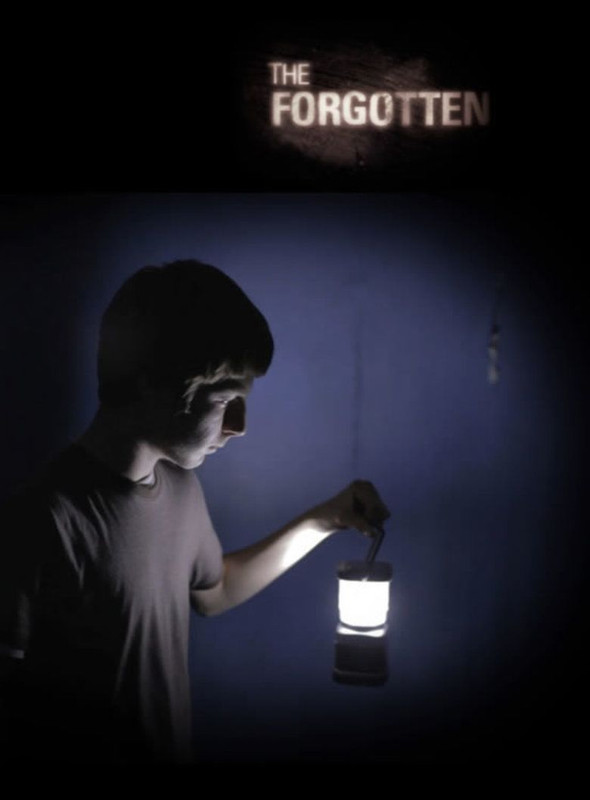
Frightfest London 2014: The Forgotten

Note: Most of my Frightfest coverage will be at Afraid of the Dark, but as Steve and I have much the same take on this film we decided we should only run one review there.

Dir: Oliver Frampton
If there's one thing I'm not keen on in current horror cinema it's ghost stories, particularly those centering on things that go bump just off screen, so I did find myself wary, early on, of the direction that The Forgotten began to go in, but it ended up taking me by surprise.

The Forgotten is set in contemporary London and centres on a father and son (Mark and Tommy, played by Shaun Dingwall and Clem Tibber respectively), who are living a hand to mouth existence, squatting in a block of flats scheduled to be demolished, while Mark strips the flats for copper that he can sell.  At night, Tommy begins to hear noises from the flat next door and becomes curious about what may be going on on the other side of his bedroom wall.  He befriends a local waitress named Carmen (Elarica Gallacher) and soon the two of them are drawn into the mystery behind the noises.

Perhaps the best thing about The Forgotten is that, while it's a very important and effective aspect of the film, the things that go bump in the night element of it is not the driving force of the drama.  Instead director Oliver Frampton and his co-writer James Hall use the characters to drive the film.  This is vital, and what so many films miss.  I don't care about a mystery very much if I don't care about the characters we're following as we investigate it. This is how The Forgotten draws us in; it spends a good amount of time setting up genuine, interesting characters, so by the time it throws them into danger we're actually scared for them.

The character work here hinges equally on the script and the performances.  For their part, Frampton and Hall provide a screenplay that seems to get its characters just right. Everyone has an identifiable, individual, voice and the dialogue feels well observed without descending into the sort of impenetrable slang that Attack the Block (which this can feel like a far more grounded take on) often did.  The actors give the words a loose feel that makes the film feel all the more as though it is being observed rather than constructed.  This is especially true of the growing friendship between Tommy and Carmen, which is beautifully observed and played.  Clem Tibber and Elarica Gallacher give very different performances; he is reserved and shy, emotions pointing inward while she projects everything outward, sometimes coming off as aggressive, but revealing a softer side as the film goes on.  They play particularly effectively off each other in the scene in which Carmen comes to the flat at night to hear the noises for herself, firmly telling Tommy she's just there as a mate.  The fact that the character detail of this and other scenes is so convincing means that the supernatural elements of the story also play more convincingly, because the film has grounded you in a real world.

Frampton and DP Eben Bolter create an eerie atmosphere in the abandoned flats; a real location actually scheduled for demolition, they have a sense of being haunted even before the supernatural side of the film ramps up.  Aside from the nighttime scenes at the flats the film has a very down to earth visual style, giving it a real sense of place and emphasising the tough circumstances that Tommy is growing up in without pushing the boat out into melodrama.

The Forgotten pulls several clever reversals on us.  For a long time during the first two acts I thought I had the story all figured out.  It all seemed a little telegraphed, but it was well told, stylish, and the performances were excellent, so it was hard to mind, but the film is altogether cleverer and more interesting than that.  In the third act the film inverts your expectations of one key character not once but twice, throwing a different light than I expected on both that character and the events that took place in the empty flat.  I wouldn't want to give anything away, but I'll be surprised if anyone guesses the twists and turns of this one ahead of time.

The supernatural horror may play largely in the background of what, for the best part of an hour, functions more as a social drama, but when it arrives it is highly effective.  The empty flat itself has a high creep factor as Carmen ventures in to investigate and the sequence when she's trapped in the room next to Tommy's is eerie and has a couple of hugely effective shock moments.  The last of the film's horror sequences bows a little more to convention, but it pays off anyway because of the hard work put in to the characters and relationships early on, and allows for two very powerful emotional payoffs, closing the film on a moment that is both frightening and deeply sad.

This is an extremely impressive début for Oliver Frampton; a chilly and intelligent piece of contemporary British horror that played against my expectations of a sub-genre that has become beyond hackneyed.  I hope that a distributor will pick it up and give it the spotlight it deserves.

Aug 12, 2014

On Robin Williams and depression

The world today is a less funny place than it was yesterday, because Robin Williams is no longer among us.  It seems that, at the age of 63, Williams took his own life after losing a long battle with depression.  Today many are asking what, as a successful, wealthy man with a loving family, many friends and adoring fans the world over, Robin Williams, of all people, had to be depressed about.  These people don't get it, but that's okay, depression isn't an easy thing to understand from the inside, even less so from the outside, and it is a problem that we tend to want to brush under the rug.  This is especially true in the UK, where there is still something of a cultural tendency to say that people who are depressed should just get over it; adopt the 'typical' British characteristic of the stiff upper lip.  

We need to understand more about depression, we need to see it as the illness it is (it's not just a vague feeling of sadness) and we need to treat it both more seriously and better.  Why did I (and, to some degree, do I) struggle with depression?  I'm sure I could list a lot of answers, but ultimately it's probably not any one of them but the combination, along with the fact that I am, at some level, pre-disposed to suffer depression.  

Since I first started meeting other film critics I have become good friends with many of them and I've talked with some of them about my own issues with depression.  At first I was surprised to find many people who would nod and say 'yeah, me too'.  Then I thought about it.  Of course film criticism attracts many people who have or have had this illness, consider what we do; we sit in a dark room and, for two hours at a time, escape our own worlds to enter someone else's.  I can't think of many things more attractive to a depressed person.  I think this also goes some way to explaining why many actors seem to have experiences with depression, they too get to escape their own lives for periods of time.

The sad clown is beyond trite as an image, but few clichés become prevalent without an essential grain of truth to them.  I think you could always see, in Robin Williams' comedy and especially in his live work, the fact that comedy can be a shield for people who otherwise find it difficult to deal with the world.  The idea is that if you can deflect something, turn it into a joke, it can't hurt you.  A lot of the time it works, but apparently this and whatever other coping mechanisms he had failed yesterday for Robin Williams.  That's something it's going to be hard to deflect with a joke.  It hurts, and that's a measure, I think, of why people are struggling to understand his depression.  Couldn't he SEE, couldn't he FEEL the affection people had for him? 

I'm far from a comedian, but I often use humour as a coping mechanism myself.  Anxiety disorders such as the one I've had issues with hit at the heart of your self-confidence and one way to respond to that is with a self-deprecating joke.  When someone makes a self-deprecating joke and says 'just getting that one in before you did', chances are they're not kidding.  Just to be clear, I don't need an intervention, most of the time I'm fine.  I have good days and bad days.  The bad days are perhaps more extreme than most people's, but they're rare now and I find I can pull out of my down periods more easily these days.

One of the things to which I credit my (drug free) ability to cope better with my own mental health ups and downs is cinema.  I may rant here from time to time (actually I may rant here a lot, but still), but there are still few things as joyous for me as seeing a truly great film or having a truly great experience at the cinema.  I always want to find the next moment like that, and on the odd, long ago, occasion that's kept me going.  I may not have been the biggest Robin Williams fan, but he's had a part in my experience of cinema since I was a kid and I owe him for that.  I also owe him for giving us a space to talk about these issues.  I only wish it hadn't had to happen quite like this.

Aug 3, 2014

Next Steps: Teenage Kicks

Teen and coming of age movies seem to me to be the most universal of cinematic genres.  Few of us fight monsters, few of us rob banks, but we all grow up, we all go to school, we all fall in love for the the first time, in short we can all relate to the experiences that characters go through in coming of age movies.

The teen movie has a long history, stretching from Andy Hardy's innocent dates with Judy Garland through to last year's wonderful The Spectacular Now.  But that's just the US, rich veins of coming of age cinema have also come from all over the world, with especially rich histories in the genre coming from France, Scandinavia and Japan.  The teen movie isn't, perhaps, so much a genre in itself as an iteration of various sub-genres.  There are romances, sex comedies, family dramas, crime movies, coming out stories, war films, all of which sometimes pivot around coming of age themes.  It's fitting, then, that the BFI has decided to devote a season (somewhat inevitably called Teenage Kicks) to the teen movie but while, like last month's selection of martial arts films, it provides a good primer on the genre and features many fine films the selection isn't as far reaching as it could be.

In this article I'll be taking key films from the BFI season as a jumping off point, then suggesting films that you can move on to, further exploring that element of the coming of age movie.

Carrie: High School Horror
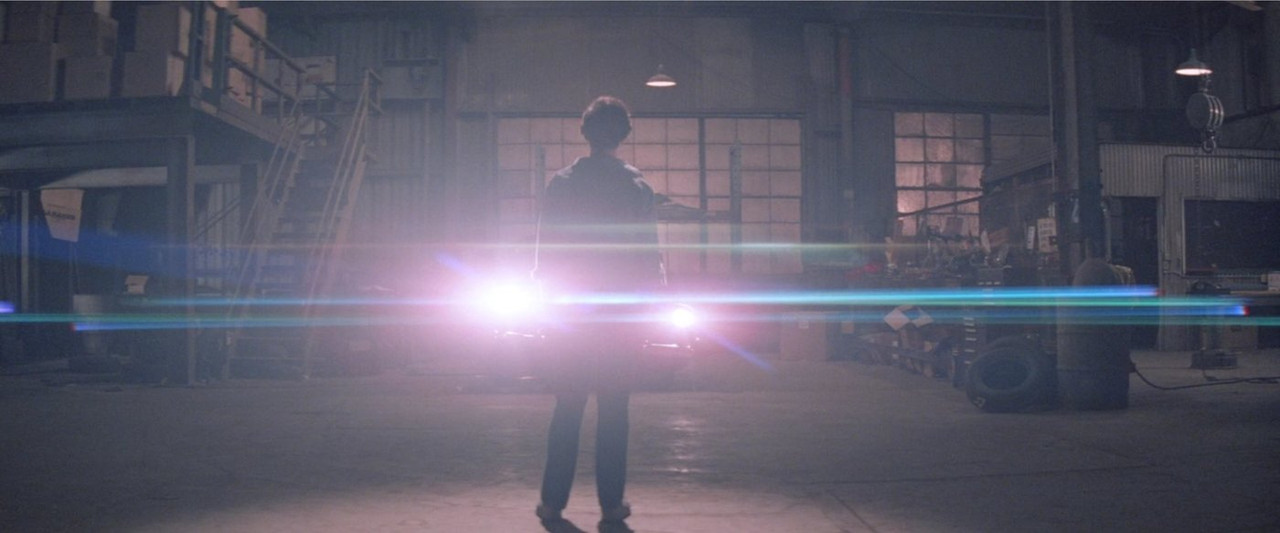
John Carpenter's Christine
Throw a dart at a list of slasher films and you'll probably hit something with some relevance to a coming of age narrative, whether it's in the main body of the film or simply the grounding for the killer's motive, but there are also horror films that deal more directly with coming of age movie ideas.  Carrie may be the obvious choice, but it's also one of the best horror films ever made and one of the best high school films ever made, so it's the perfect choice for the BFI season.

Delving further into this sub-genre brings us immediately back to Stephen King, with John Carpenter's Christine, which channels key teen movie themes of first love through geeky Arnie Cunningham's (Keith Gordon) obsessive relationship with a car he repairs.  It's a film with great insight into the importance, as a teenager, of being cool and of being seen to be independent from your parents and, like Carrie but unusually for King, it has a decent ending.  Keith Gordon is great in the lead, credibly evolving from geek to dude and Carpenter does an especially fine job giving Christine (the car) a personality, certainly more so than Michael Bay has managed with any of the Transformers. 

When, in kickstarting the 90's slasher revival, Scream skewered the rules of the slasher it was inevitable that films that sought to break those rules would follow in its wake. One of the notable things Scream did was to crystallise in the public imagination the idea that only a virgin could be a final girl in a horror film, so of course a film came along to subvert that rule.  Cherry Falls isn't a great film, but it has a killer conceit at its heart.  The killer in this film ONLY pursues virgins, so the way to survive is to lose your virginity.  It's less explicit than it could be and the eventual reveal is kind of stupid, but while it's no classic Cherry Falls is fun.  The cast is game and the concept intelligently subverts both horror and teen movie concepts.  More than most of the 90's slasher cycle this is ripe for a remake, but it's still interesting.

Valerie and Her Week of Wonders, like Carrie and the later, also recommended, Ginger Snaps, triggers its horror through the onset of its protagonist's first period.  In Jaromil Jires' surreal, dreamlike, fairytale this key coming of age moment seems to plunge 14 year old Valerie (Jaroslava Schallerova) into a world where her grandmother has become a witch, her father is a weasally vampire (the look is part Max Schreck, part rat) and the town she lives in seems to have fallen under a strange spell.  The great thing about Valerie is that you can turn your focus to different aspects, different characters and have a different experience every time because these 72 minutes are so rich and strange.

More grounded than notions of possessed cars and fantasy worlds is another slasher that deals with a common coming of age experience, that of having a new parent in your life. The Stepfather could easily have been a grotty little B-Movie (and by all accounts became one when it was remade a few years back), but the screenplay by Donald E. Westlake and performances of Terry O' Quinn and underrated scream queen Jill Schoelen lift it.  Schoelen's character arc is better drawn than most final girls and her performance, set against O'Quinn's, makes her conviction that there's something off about her new stepfather convincing as a teenager's typical reaction to a new person in the house.  Of course she's right, he's actually a serial killer.  Overall though it's great to see a final girl who is smart and thinks things through rather than simply playing a reactive role.  For all that teens have big parts to play in slashers they're not often that complex.  This is an exception.
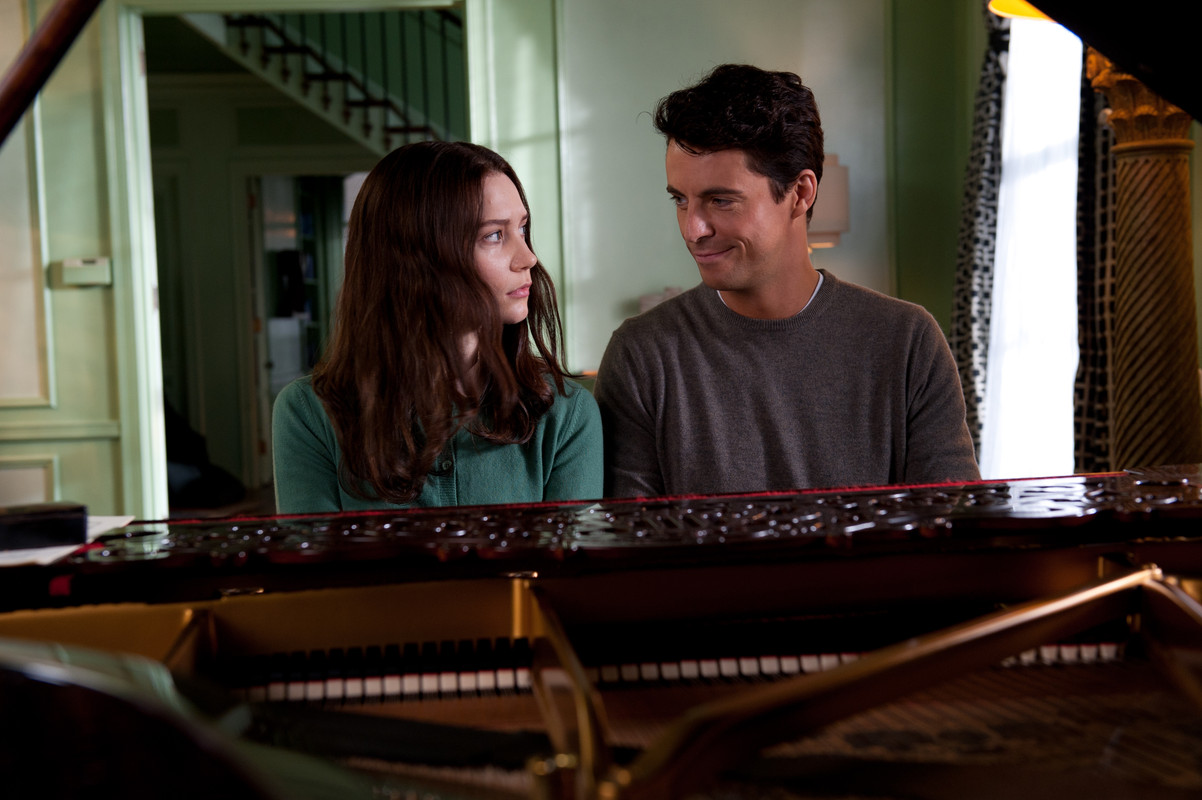
Mia Waskiowska and Matthew Goode in Stoker
2013 brought us what, for my money, may be the finest teen horror film since Carrie: Park Chan-wook's English language debut, Stoker.  Of all of these films it is perhaps the one that squares the coming of age and horror sides of its story best.  It has elements that are redolent of The Stepfather (the unsettling presence of Matthew Goode's Uncle Charlie) and further all the way back to Hitchcock's Shadow of a Doubt.  The coming of age element centres around the many awakenings that Mia Wasikowska's India has during the film, all pivoting around her 18th birthday.  There is the expected sexual awakening, seen in her interactions with a boy from school, with Charlie and, once, with herself.  There is also another kind of awakening; one of a darker connection she seems to have with Charlie, seeded in the film's first image but only clarified in its final scenes.  Stoker is also explicitly about growing up, which Park and DP Chung Chung-hoon graphically represent through a motif of shoes; first the same pair in increasing sizes, then a new pair, signaling India's transition to adulthood.  Stoker is a major work, whether viewed through the prism of horror, thriller or coming of age film and it's one you should see immediately spinning off this season.


Fast Times and Heathers: The first golden age of American teen movies
The first golden age of the American teen movie began in 1982 with the release of three pivotal films.  Within five months Porky's, The Last American Virgin and Fast Times At Ridgemont High.  Of these Fast Times, written by a young Cameron Crowe and based on a book he returned to high school for a year to research, is the right one for the BFI to show; it's easily the best and has an amazing cast, almost all of whom went on to bigger things. 
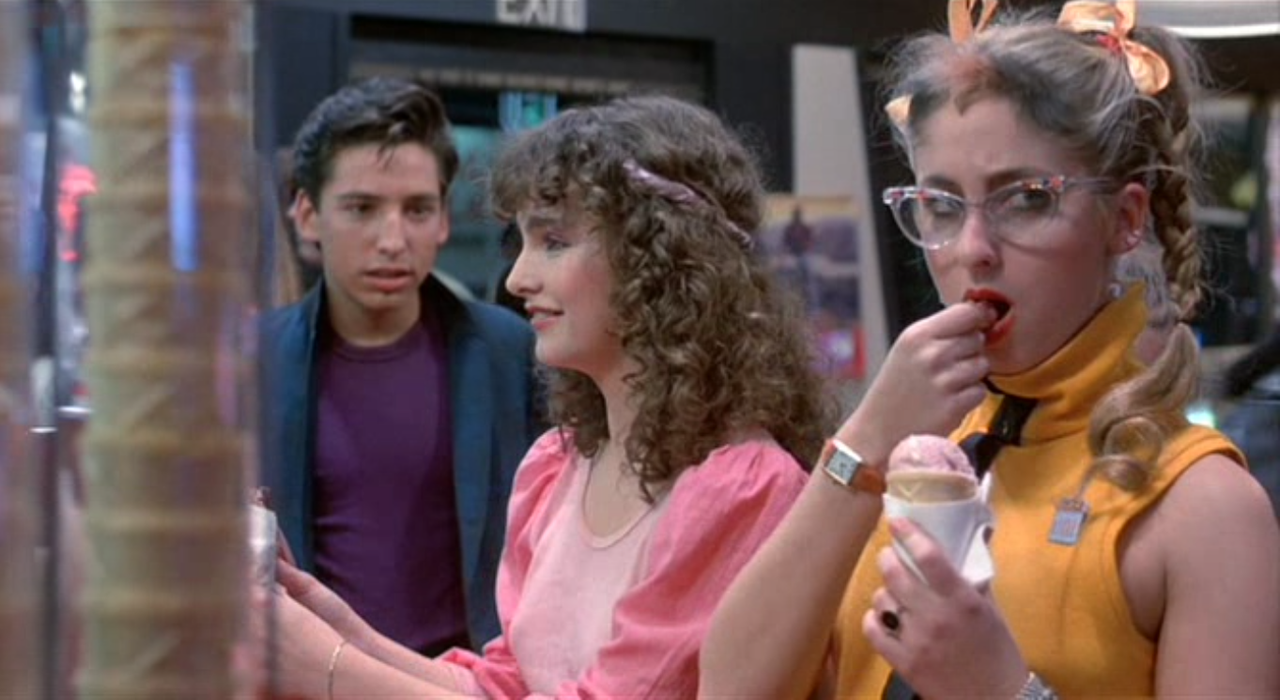
Lawrence Monoson, Diane Franklin and Kimmy Robertson
in The Last American Virgin
The Last American Virgin is a film that has long deserved more attention.  Part ribald sex comedy, part hard hitting drama, it doesn't always combine those elements perfectly and spends too little time on the drama, but much of it works brilliantly.  There are some great comic set pieces (the American Pie franchise owes the first 15 minutes a huge debt) and the drama, while rushed, does punch above its weight, especially in its final moments.  While the cast of Fast Times went on to bigger things this film's excellent cast largely faded into undeserved obscurity.  Lawrence Monoson is great as the geek with a crush on Diane Franklin, the new girl at school and there's a lovely, if small, role for Kimmy Robertson, who has her own crush on Monoson.  For both Monoson and Robertson's characters this is a film that, uncharacteristically for an American teen movie, deals with the harsher realities of being a teenager and admits that the hero doesn't always get the girl.

Of course there were teen movies being made and released in the 80's before these three films came along, and one of the more interesting is 1980's Little Darlings.  It's an odd film; a summer camp set comedy drama that seems to straddle American and European influences.  Its story sets Tatum O'Neal and Kristy McNichol against each other as teenage girls who have a bet on which of them will lose their virginity first during the summer.  This clearly anticipates the sex comedies that would come to dominate the genre in the 80's, but it also has silly slapstick sequences, like a mass food fight, which feel more out of a mid 70's Disney movie.  The European influence comes through in the more dramatic side of the film, especially O'Neal's crush on a camp counselor played by Armand Assante and McNichol's relationship with a local boy played by a very young Matt Dillon.  It's interesting to see a sex comedy that both approaches its genre from the perspective of two female characters and treats their relationships with a degree of seriousness.  It's schizophrenic at times, but engagingly played by O'Neal and McNichol.

The 80's teen movie had its share of oddities.  'Savage' Steve Holland carved a niche of his own with three absurdist comedies that have gone on to cult success.  The middle entry in this trio of films, One Crazy Summer, is a good laugh, but it has nothing on the films Holland made either side of it; Better Off Dead and How I Got Into College.  Better Off Dead is one of the strangest films of the 80's teen movie cycle.  The central story of Lane (John Cusack) deciding to kill himself after he's dumped by his girlfriend sounds depressing, but Holland filters it through a madcap surrealist comedy full of absurd characters, barmy running gags and offbeat punchlines.  The film features alumni of many other teen movie classics.  Curtis Armstrong, of Revenge of the Nerds, is hilarious as Lane's friend, who is constantly trying to find ways to get high and whose ski coaching amounts to "Go that way, really fast.  If something gets in your way, turn.  Diane Franklin is charm itself as French exchange student who falls for Lane and Cusack has perhaps the best track record in this genre in the 80's.  We'll come back to that.  Better Off Dead's greatest strength is its breathless inventiveness, the way it finds bizarre ways to approach situations that, even by this stage, were cliché.  For instance, Lane's crappy job in a burger bar eventually leads to a stop motion animated sequence featuring one of the burgers and a series of challenges to drag race is enlivened by the fact that the challengers talk like Howard Cossell.  It would be a crime to spoil more of the jokes.  This one of the best comedies of the 80's.  Just watch it.
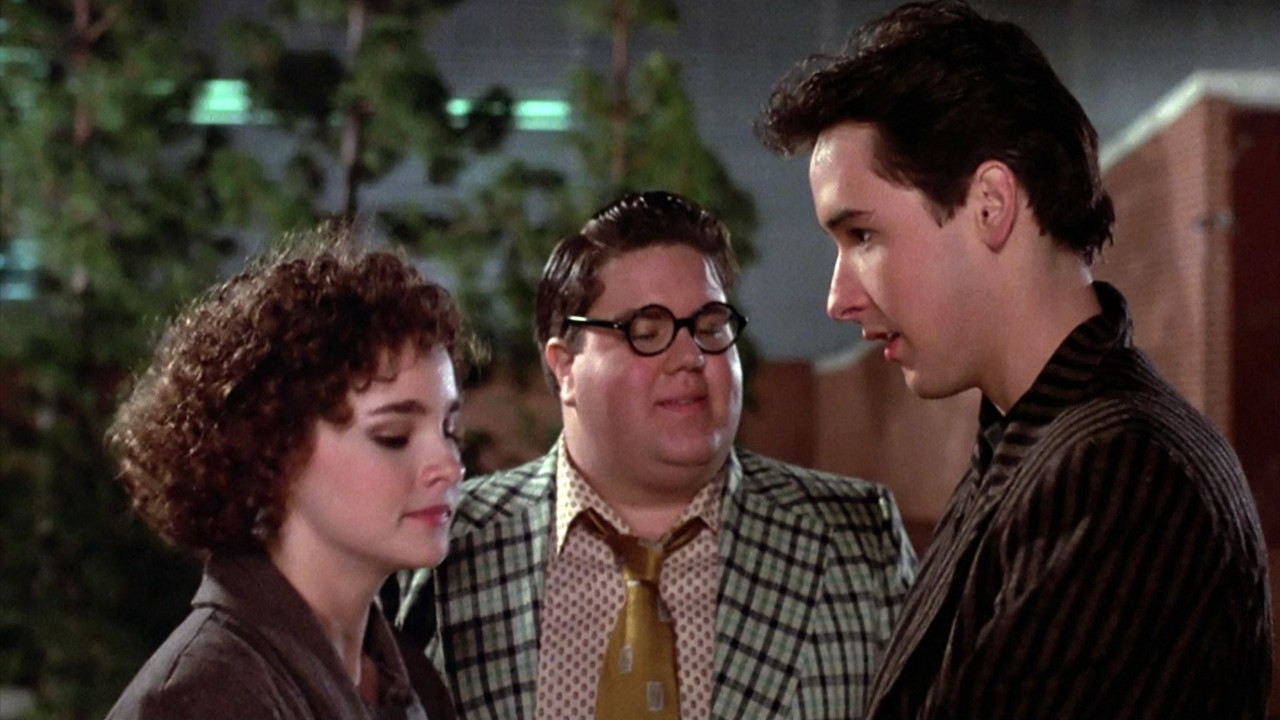

Diane Franklin, Dan Schneider and John Cusack in
Better Off Dead
Holland hasn't released a film since 1989's How I Got Into College (he's working on a new one as I type though).  This is criminal.  How I Got Into College is another brilliant slice of madness, revolving around a guy who is desperate to get into the same college as the girl he's had crush on all through high school, thinking this will make her take him seriously.  Again, it's simply jam packed with gags, my favourite being a recurring one anthropomorphising the multiple choice answers on the college entrance exam as two guys discussing how Marlon (Corey Parker) is going to answer the question they are trapped in.  Steve Holland is a talent that the film industry let slip through its fingers once, let's hope they don't make the same mistake when Multiplexing finally happens.

John Cusack, inexplicably, isn't a fan of Better Off Dead.  However, he did have an incredible run in teen movies.  Hot Pursuit didn't work, but otherwise his filmography is full of classics from all corners of the genre, be it his small part in established classic Stand By Me, his lead in Cameron Crowe's Say Anything or Rob Reiner's often forgotten second film. The Sure Thing has, over the years, been swallowed by the reputation of the two films that Reiner made either side of it; This is Spinal Tap and The Princess Bride, but it more than holds its own in their company.  The Sure Thing is essentially an 80's teen movie take on It Happened One Night with Cusack as a college student on a cross country trip in pursuit of a girl he has been promised is the sure thing of the title.  He makes the trip with a nerdy and uptight fellow student played by Daphne Zuniga and, well, you know what happens.  It's a smart, engagingly played and very funny updating of a classic template, with Cusack and Zuniga bouncing off each other beautifully. There are also some lovely throwaway lines, like Tim Robbins introducing himself as "Gary Cooper, but not the Gary Cooper that's dead". I'm amazed that this isn't considered a classic romantic comedy, a classic teen movie or a more important part of Reiner's incredible early run as a director.

Clearly not all of the teen movies of the 80's that you've never heard of are classics, but there are still a lot of interesting films among them.  If 1985's Mischief is remembered at all today it is largely for Kelly Preston's full frontal nude scene (which, to be fair, is memorable) but despite the fact that it's cool guy teaches geek how to get the girl story is pretty generic it has one moment that really sets it apart; a line that defines the problem with every romantic comedy that doesn't work.  Late in the film, the relationship with Kelly Preston's character having broken down, the geeky lead says "I was so busy trying to fuck her that I never got to know her".  It's an insightful piece of criticism; a moment sees the film, surely accidentally, turn inwards and analyse itself and its genre.  It makes an otherwise unmemorable film one that sticks in the mind, if only for the implications that criticism has.  
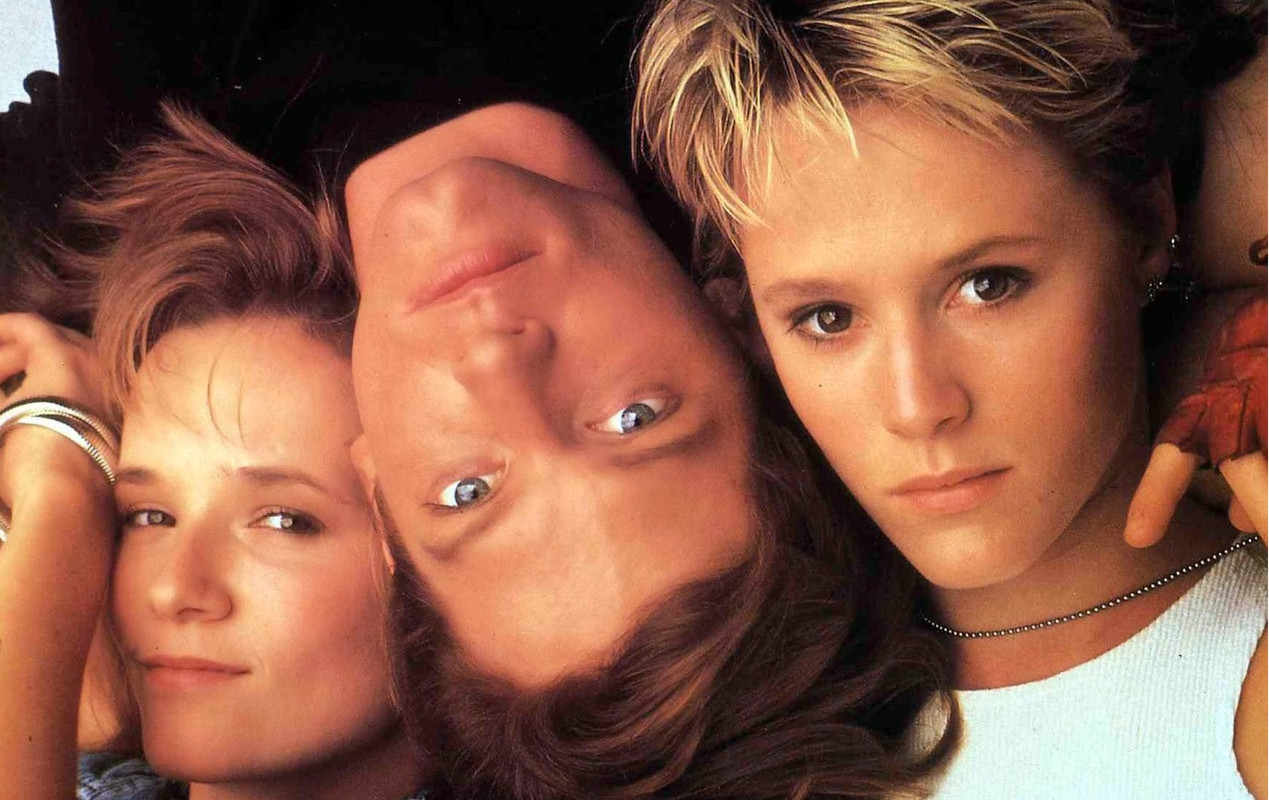

Lea Thompson, Eric Stoltz and Mary Stuart Masterson
in Some Kind Of Wonderful
Some other oddities also stand out, such as the Keanu Reeves starring The Night Before, which has the feel of After Hours filtered through a teen comedy as Reeves looks for the prom date it turns out he accidentally sold and Three O' Clock High, which transplants High Noon to high school.  It's a bit clunky at times, but certainly an original idea.  More a rarity than an oddity is the film that Cameron Crowe wrote between Fast Times and Say Anything.  The Wild Life is rarely seen these days, but like Fast Times it's well observed and has an excellent cast, including Back To The Future's Lea Thompson, who had fantastic career in teen movies with those two, a fine performance in the more dramatic All The Right Moves and a supporting part as the 'perfect girl' in my favourite John Hughes penned film, Some Kind of Wonderful.

There are so many that I've yet to mention... early roles for Heathers star Winona Ryder in Square Dance (affecting, but for Rob Lowe's awful hamming as a mentally handicapped character) and Lucas... Goofy comedy Real Genius; a college set flick which has Val Kilmer, as a scientific genius, being more fun than in anything else he did before Kiss Kiss, Bang Bang... Ladies and Gentlemen, The Fabulous Stains; a hard to find punk movie with a young Diane Lane... Mask; a heartfelt (if sometimes slightly cloying) romance from Peter Bogdanovich, who made the greatest coming of age movie of them all: The Last Picture Show... These aren't all great films, but none of them is boring, all are, at some level worth seeing and they all contribute to a picture of a sub-genre that ruled the 80's, pulling in every genre under the sun.

Aug 2, 2014

The Month In Movies: July 2014

FILM(S) OF THE MONTH
Flickan / All Good Children
No, those stills aren't both from the same film, but despite major differences in their stories Flickan and All Good Children do have a somewhat similar look and feel.  Flickan [The Girl] is a Norwegian film, set in 1981, about a 9 year old girl who has to stay behind when her family goes to Africa for the summer because she's too young to go along.  Initially she's looked after by a flighty aunt, but she soon leaves with a boyfriend, leaving the girl (who is never named) to fend for herself.  Sometimes funny, sometimes tense, and filled with beautifully observed moments, this is a great low key coming of age film.  Blanca Engstrom, who plays the girl, has done nothing since, but she's amazing here; an expressive and soulful performer, captured beautifully by Hoyt VanHoytema's Malick-esque visuals.  You should track this one down.

All Good Children starts off in a rather light mould, with two kids of about 13 (Jack Gleeson and Imogen Jones, both excellent) becoming friends and seemingly starting to fall in love for the first time, but things take a darker turn after their first kiss and the film builds slowly and credibly into a tale of obsession and possessiveness.  Director Alicia Duffy gives the visuals an impressionistic feel that gives the film a feeling of rose tinted childhood memories turning sour.  She and the cast capture the confusion of first love in an immediate and truthful, if heightened, way.  It's a real pity neither Duffy nor Imogen Jones have made a film since.


WORST OF THE MONTH
Circle Of Two / Argento's Dracula 
In my ongoing viewing of many, many coming of age movies I saw two films this month in which Tatum O'Neal ends up romancing an older man.  Little Darlings is often fun, Circle of Two is cringemakingly awful.  O'Neal isn't a bad actress, but she simply can't make the fact her character is supposed to be in love with Richard Burton, who is more than 3 times her age, anything other than laughable.  Burton is hammy and awful throughout, but it's not as though the banal and frankly icky screenplay helps.  The nadir comes when O'Neal strips to try to seduce Burton, who kicks over a paint can while yelling "put your clothes on".

Sometimes I wonder whether Robert DeNiro has been replaced by a talent deficient doppelganger.  I'm certain that Dario Argento has been.  Even by his miserable recent standards, his take on Dracula is beyond abysmal.  The acting is shockingly awful, ranging from a Jonathan Harker more wooden than Keanu Reeves to Miriam Gionavelli's hilariously dreadful vampire, but the visuals are what sink this film.  Overlit to the point of being outright painful to watch (in service of the 3D presentation) and with an ugly digital sheen, the film looks more like a cheap TV show from about 2002.  The effects are laughably chintzy, with ill fitting vampire teeth that make some moments look like a filmed school play.  And yes, Asia Argento gets naked in yet another of her Dad's movies and no, it hasn't stopped being creepy.


AWARDS
I nicked these categories from my friend AJ, who has been asking people to fill them out each month for many years at the joblo.com message boards.  Only first viewings are eligible.  If there is a tie films are listed in the order in which I saw them.

Best Actor: Andy Serkis - Dawn of the Planet of the Apes
Best ActressBlanca Engström - Flickan
Best Director: Alicia Duffy - All Good Children
Best ScreenplayAlicia Duffy - All Good Children
Best Visuals: Flickan
Biggest Surprise: All Good Children
Biggest Disappointment: Ping Pong Summer
Most Fucked-Up Movie: Nice Girls Don't Explode
“I’m Pretty Damn Sure No One Else Has Seen This” (and they should): Flickan
“Why Is He/She Still in Movies?”: Dario Argento [Director] - Argento's Dracula
One To Watch: Imogen Jones - All Good Children / Ingrid Bolso Berdal: Hercules
Movie I Finally Got to Friggin’ See: Claire's Knee
Hottest Lady: Bettie Page - Bettie Page Reveals All

Aug 1, 2014

Hercules [2D] [12A]

Dir: Brett Ratner
Many people star in movies, but a true Movie Star is something different, something rare.  Being a Movie Star isn't always about being the most beautiful person or the best actor, though neither is a disadvantage, it's less readily definable than that.  A Movie Star is person who, without seeming to try, can become the centre of attention in every shot in which they appear, who can draw your eye even in the periphery of a scene.  It is perhaps not something you can learn, or even a transferable skill (Madonna, who can be incredibly compelling otherwise, is dull on film).  It is something that you have or don't have.  Dwayne Johnson has it.  He is a Movie Star.   

This, beyond his obvious physical qualifications, is why Johnson is perfect casting as Hercules.  He has an aura of otherness about him, thanks largely to his supernatural levels of charisma, it goes a long way to explaining why the other characters in the film might believe that he is a demigod.

This is where Hercules' story is perhaps more interesting than you'd expect.  It's never clear in this version whether he is in fact the son of Zeus.  The 12 famous tasks are referenced, but as tales told to build up the legend of this great warrior, who, along with his friends, is available for hire as a mercenary.  The film sees Hercules and his fellow mercenaries hired to help defeat a warlord, but finding that they may have been on the wrong side of the conflict.

Hercules is by no means a great film, but it doesn't have to be.  Nobody is coming to it expecting Oscar winning performances or the most creative screenwriting of the year.  It's a processed meal of a movie, but a processed meal is okay once in a while and this is a high quality one.

The cast is of a higher standard than the script deserves.  Johnson is as commanding a presence as ever, but it's his ease on screen that makes him so watchable, he puts across the same mix of strength and good humor as he does off screen.  He may not be challenging himself here, but you can't fault his energy or his commitment and while the dialogue can be risible he tries his best to sell it, and largely succeeds.  Johnson is clearly enjoying himself and this is something we can see in the rest of the cast as well, be it John Hurt's goatee, hamming it up as Hercules' employer, Rufus Sewell as Herc's right hand man, Ian McShane as a psychic with a vision of his own death, or Aksel Hennie as a psychotic silent warrior who was rescued by Hercules as a child.

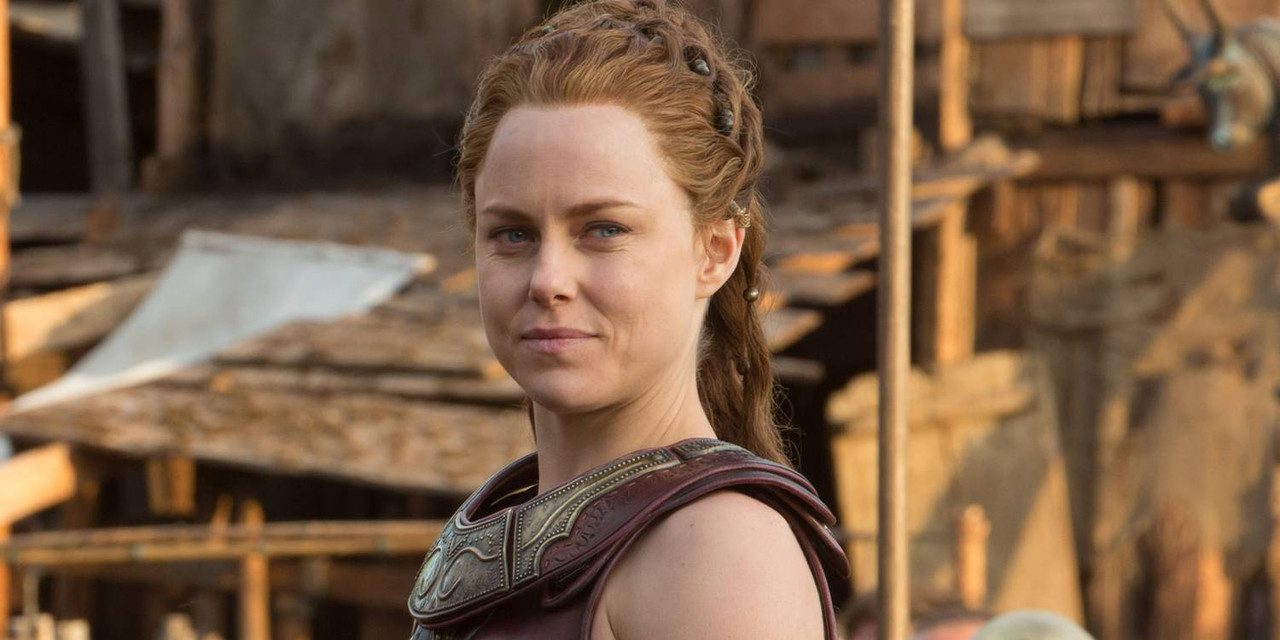
Hercules is a boy's own movie.  It's largely about men, men hitting each other, for the most part.  Given that, it's perhaps a surprise to find that aside from Johnson the actor who makes the biggest impression is Cold Prey's Ingrid Bolsø Berdal as Amazonian archer Atalanta.  She doesn't have the deepest character; a quickly sketched tragedy in her past is what passes for motivation, but Berdal has great screen presence and acquits herself fearsomely in the action scenes, particularly when she has to use the blade on the end of her bow.  Berdal is a beautiful woman, and there's certainly something sexy about seeing her in action here, but it's refreshing that Hercules, while catering to a male audience, neither belittles nor objectifies her.  Atalanta more than holds her own, saving the men numerous times and never becoming a mere damsel in distress.

The action scenes are the centrepiece of the film and while, like the rest of it, they contain little you haven't seen before they're solidly executed by director Brett Ratner.  The cutting is sometimes a little fast and the brutality has to be dialed back in service of the 12A rating, but there is still a lot of fun to be had here.  While there is plentiful CGI employed one of the best things about the film's action is that, outside of larger crowd shots, the emphasis seems to be on practical stunts and effects.  The enemies that Hercules and his fellow warriors face tend to be human and this grounds the action scenes, giving them more impact.


The film has a reasonably  well developed sense of its own ridiculousness. Johnson's tongue is clearly shoved firmly in his cheek when he punches a man on a horse and says "Fuck centaurs" or, shirtless, bellows "I AM HERCULES" and rips his chains out of the stone floor they're secured in.  The tone is quite well judged overall; never too dark, never too jokey, but always possessed of a sense of fun.

While I was never bored watching Hercules it's also clear that it's not a great film.  The action scenes are competent and fun, but the choreography is a bit too standard for them to stand out as truly memorable.  The performances are solid all round, but none of them, even Johnson's, will acquire the iconic status of a Conan (Arnold Schwarzenegger vintage).  The screenplay, while perfectly functional, has only a handful of decent lines and though it seems, through the question about whether Hercules is actually a demigod or the stories are more of a PR exercise, to have some interesting ideas, they are never fully explored.

Overall, Hercules is what it is.  It's a genre exercise, and what it does it does well.  It's a fun way to spend 100 minutes, no more or less, perhaps we undervalue that now.