Showing posts with label Top 5. Show all posts

Jun 20, 2013

Mid-Year Favourites

I have, of course, started making my end of year lists of the best and worst films of 2013 (it’s a 12 month process, if it weren’t I’d forget something at the end of the year). Yesterday I voted in Simon Kinnear’s poll to find the best film of the year so far (which is something you should do too).

Given that that idea has already been taken, I thought I’d ask a different question…

What are the Top 5 films NOT from 2013 that you’ve seen for the first time this year?

My list follows below, please add yours in the comments, or tweet it to @24FPSUK or email it to sam@24fps.org.uk. The actual midpoint of the year falls on July 3rd, so soon after that I’ll have a post with some of the recommendations that result from this little survey.

Top 5 NON 2013 releases I’ve seen this year
 5: Onibaba
My first Kaneto Shindo film, and it’s a strikingly creepy, extremely well acted, drama about extreme poverty and jealousy, inflected with supernatural themes.

4: Love in the Afternoon ['72]
A complex and well observed drama about a man tempted by infidelity, despite the fact that he loves his wife. Eric Rohmer directs unobtrusively and offers no easy moral escape for his protagonist.

3: The Place Promised In Our Early Days
Makoto Shinkai weds a big sci-fi concept to an intimately and touchingly observed love triangle plot that makes everything personal, and then shows it to us with images that look like an animated Terence Malick film. Breathtaking.
 
2: Solaris ['72]
Andrei Tarkovsky’s film is far from the austere, remote thing I feared it would be. It moves slowly, but inexorably, using its science fiction concept (and the fantastic performances at its heart) to tell a desperately moving and tragic love story.
 
1: Tuesday, After Christmas
The most brilliantly acted film I’ve seen for a long time; a brutally raw and real film about the breakdown of a marriage after the husband has an affair with a younger woman. It’s full of moments of pain, but equally of moments of joy. The 15 minute break up scene in the middle of the film is one of the best sustained pieces of acting and direction so far this decade.
 
So, those are my choices. What are yours?

Apr 23, 2009

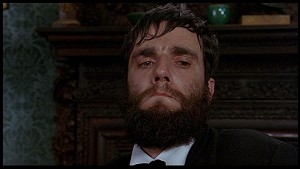
The Top 5… Daniel Day-Lewis Performances

In a first for 24 FPS, we’ve got a guest writer. Oren Soffer, who you may know as Monotreme at the Joblo.com forums, is a film fan based in Haifa, Israel. We don’t always see eye to eye on movies, but I always like reading what he has to say. He’s a smart, incisive, entertaining and ridiculously informed writer and I’m really pleased that he took up my invitation to write an article for the site, hopefully it won’t be his last.

For his first article Oren has picked a subject that allows him to educate me, I haven’t seen enough of Daniel Day-Lewis’ work, so this list should give me a good jumping off point. Note: Unlike me Oren has ranked his list. Now over to Oren. Enjoy.


Throughout a career spanning nearly three decades, Daniel Day-Lewis has managed to achieve something no other actor has achieved; a sort of prestige and respect that puts him in the position of exclusively picking his acting roles, which provides him with one of the most consistently high-quality filmographies of any performer of his generation. He is also my favourite actor of all time. Marlon Brando, Robert De Niro and a few others are constantly lauded for their immersion in their roles, but I truly think they pale in comparison to the type of engagement and devotion to the performance that Day-Lewis consistently shows in his acting gigs. His talent essentially makes pretty much all of his acting roles excellent, and picking 5 that stand out is harder than one might think, but here goes anyway.


5. Jack Slavin in The Ballad of Jack and Rose (2005)

Day-Lewis is known by most for his more bombastic, theatrical performances (Gangs of New York, for example), which is what makes this turn as an ex-hippie trying to shelter his daughter from the influences of the outside world so notable for its delicate subtlety. As the role as an altruistic, calm man at peace with himself and nature demands it, Day-Lewis enormously tones down his grandiose style for a performance that rewards us in its intricacies and gestures. Even as events start getting out of his hands – his daughter discovering her sexuality and wanting to get out and learn when all his life he has tried to shield her from the negative influences of society on the one hand, and a developer building a housing contract threatening his environmentally-friendly commune on the other – and Slavin begins to lash out at anyone who doesn’t share his concerns, he still retains a certain calmness about him which is just a wonder to see Day-Lewis play through, playing through the restraint and simply refusing to let go. It’s a wonderful performance in an equally good and quite overlooked gem of a film, written and directed by Day-Lewis’ wife, Rebecca Miller, daughter of lauded playwright Arthur Miller.
See also: Newland Archer in The Age of Innocence (1993), John Proctor in The Crucible (1996).

4. Cecil Vyse in A Room with a View (1985)

In this Merchant-Ivory classic we see Day-Lewis in a rare supporting role; A Room with a View includes one of his earliest roles and is often credited as putting the actor on the map, especially when coupled with the other film he released that year, My Beautiful Laundrette, in which he played a quite different character showcasing his extensive range. The film, based on the E.M. Forster novel, like most stories set in the period from Forster and other important authors who wrote about that time, specifically Jane Austen, is essentially about the oppression of women in 18th century England, who were torn between what society dictated and expected of them and their own unrestrictive needs and desires. The lead character Lucy Honeychurch, played by Helena Bonham Carter in her first film role, is in love with a freewheeling young Englishman she met in Florence, but is to be married to an upper-class dignitary, played by Day-Lewis. The role heavily showcases Day-Lewis’ ability to totally nail the mannerisms, behaviours and nasal, high-pitched accent characteristic of characters of his type, but what makes it truly exquisite is that although he is essentially playing the villain and the symbol of Lucy’s repression, he still plays the character in a way that invokes genuine sympathy from the audience, and makes us feel genuinely bad when Lucy turns down his eager and fretful advances.

3. Gerry Conlon in In the Name of the Father (1993)

Here is a perfect example of Day-Lewis’ total immersion in his roles. Day-Lewis plays a man involved in the real-life case of four innocent North Irish natives who were in the wrong place in the wrong time in London, and who ended up being falsely accused and coerced to confess to an IRA bombing they didn’t commit. The film is the seminal work of prolific Irish director Jim Sheridan, the only director other than Martin Scorsese who has worked with Day-Lewis more than once, which is saying a lot. Although it’s not a particularly showy or bombastic role and doesn’t demand Day-Lewis to show off too often, he still takes the role and totally runs with it, deftly portraying the mannerisms, quirks and characteristics of his character while also showing off some really impressive acting skills in a few scenes in which his character completely explodes and folds under the immense pressure bearing down on him.

At first, Conlon is just another average, troublemaking, rebellious but family-centric small-time thief from North Ireland who couldn’t care less about politics and just wants to have a good time and be slightly naughty. But after he is wrapped up in the whole conspiracy against him and his friends, he totally loses it and there are a few scenes of desperation and yelling that would put Al Pacino to shame. Although close with his mother, Conlon was always estranged from his father, and so when his father is mixed up and also falsely accused in the IRA bombing as well, the film shifts focus heavily to the relationship between Conlon and his father, which also affords us a beautiful acting rapport between Day-Lewis and his mentor, Pete Postlethwaite in the role of the titular father.
See also: Danny Flynn in The Boxer.

2. Christy Brown in My Left Foot (1989)

This was long considered Day-Lewis’ seminal role, and the performance that truly put him on the map as one of the greatest actors of his generation (and also won him his first much-deserved Oscar). In this true story, his first collaboration with director Jim Sheridan, out of three, Day-Lewis plays the almost insanely difficult role of a real man who was born with cerebral palsy into a poor and very large Irish family, an ailment leaving him able to control his movement only in his left foot. Able to speak only in guttural sounds, he is mistakenly believed to be retarded for the first ten years of his life but later, with the help of his devoted mother, develops into a brilliant painter, poet and author while struggling with simple daily physical tasks. Day-Lewis gained much notoriety for the extreme form of method acting he employed in order to portray the role; staying in character throughout the entire shoot, Day-Lewis the actor was himself essentially paralyzed just like his character, and had to be carried around the set just like the real-life counterpart of his character was his whole life. It is truly a remarkable performance in which Day-Lewis enters the very limited pantheon of actors who have successfully achieved the balance of portraying characters with mental or physical disabilities and excelling not only in perfectly reproducing the external and physical aspects of the disability but also in portraying their characters with true, genuine emotion.


What makes Day-Lewis’ performance that much better than other successful disability performances, such as Dustin Hoffman in Rain Man or Sean Penn in I Am Sam, is that he doesn’t sanctify his character or make him holy or pure; Day-Lewis portrays Brown as a totally realistic individual, a man who, though overall trying his best, has his flaws like anyone else. In frustration for his unfeasibly difficult physical disability, he often lashes out at those close to him, and finds it exceedingly difficult to forge a genuine closeness and connection with people due to his uncomfortable feelings about people always having to take care of him. In all, it’s a monumental, daring and truly incredible performance that showcases Day-Lewis’ ability not only to immerse himself in his performances, but also to transcend the physical requirements of his performance and deliver so much more.

1. Daniel Plainview in There Will Be Blood (2007)

It is known that any part of a movie starts in the screenplay. That includes everything from the story itself to the specifics of the character. With his latest film, the incredible There Will Be Blood, acclaimed filmmaker Paul Thomas Anderson wrote an absolute miracle of a screenplay that manages to achieve something last achieved at this level in 1941 by Orson Welles and Herman J. Mankiewicz with Citizen Kane: creating the most extensive, comprehensive, fascinating character study possible. Anderson’s masterpiece is about a whole lot of things, but at its centre is its monumental construction and de-construction of its protagonist, Daniel Plainview. Although Daniel Day-Lewis almost always plays the main character in his films, he is always one of a few main characters; this time, though, the entire film literally rests entirely on the actor’s shoulders, which applies a lot of pressure, because it essentially means that whether the movie works or not depends entirely on him.


Obviously, Day-Lewis being the remarkable talent that he is took the most fleshed out, deep, resonant, comprehensive character since Charles Foster Kane himself and forged it into one of the single greatest performances of all time. Day-Lewis plays Plainview in a way that exposes every single quirk, mannerism, nook and cranny of his character to the audience. He crafts a unique physical language for the character which he gradually deconstructs corresponding with the character’s own self-deconstruction; from the posture to his way of walking to the accent, Day-Lewis fine-tunes every little detail to perfection. Essentially, Daniel Plainview is a man who cares about one thing and one thing only: Daniel Plainview. The character himself mentions in the film to the man he is led to believe is his brother that he “just doesn’t like people.” But what is most fascinating about the role and the performance is how in the beginning, when his mind is devoted to other things, namely climbing the social and economic ladder on his way up to the top and his sheer and absolute devotion to achieving his goals and ambitions, Plainview manages to shut out his hatred for everything else around him, restraining himself and keeping about him an air of dignity and poise. But once he reaches the top, Plainview no longer has anything to distract him, and he just totally lets himself go.


Day-Lewis plays this deconstruction of the character to utmost perfection, to the point that he pulls the audience so completely into it, that by the time he totally loses it and is already completely manic and almost animalistic in his ferocity and bitterness, we totally believe it. The film’s most notorious sequence, the final scene in the bowling alley, is one that could have very easily entered the realm of caricature, but an actor of Day-Lewis’ calibre manages to find the perfect balance, and turn it into a sequence of pure, genuine, manic brilliance.
See also: Bill “The Butcher” Cutting in Gangs of New York.

Apr 17, 2009

The Top 5… Cameos

This list is in alphabetical order by film title.

Alec Baldwin: Glengarry Glen Ross

Ask anyone what the best one scene performance in cinema is and it’s likely they’ll at least mention this one and in spite of endless repetition and being quoted and spoofed hundreds of times over Baldwin’s stream of foul mouthed invective, designed to motivate a team of worn out real estate salesmen, retains all of its power. It helps, of course, that he’s got David Mamet’s dialogue to chew on (Fuck you, that’s my name) but it is the swagger and the complete lack of sympathy with which it is delivered that makes it live in the mind, and that’s all Baldwin.

Martin Sheen: Hot Shots: Part Deux

Okay, so Hot Shots: Part Deux is no Airplane, hell, it’s no Hot Shots but this one joke, which starts off with a nice Apocalypse Now spoof before the one line cameo, is funnier than every spoof movie of the 21st century so far put together. All together now… “I loved you in Wall Street”

Jane Adams: Little Children
If Judi Dench can get an Oscar for 9 minutes playing Judi Dench playing Elizabeth the First in Shakespeare in Love then Jane Adams should certainly have been nominated for her six minutes of genius here. A specialist scene stealer (see Orange County and The Anniversary Party) she manages to take you through the entire emotional spectrum during her brief screen time as Sheila, a lonely woman on a blind date with Jackie Earle Haley’s Ronnie, making you warm to her during the dinner date, and then tearing your heart out in the horrific car scene. Perfect screen acting.

Martin Scorsese: Taxi Driver

When an actor didn’t show up to play Travis Bickle’s passenger in this scene Scorsese did it himself, and contributed one of the best moments in the movie. His jittery jilted husband is absolutely believable, and tremendously frightening because of it. He even manages to convincingly intimidate DeNiro as Bickle, quite a feat, and stand out in a film awash with amazing performances. Scorsese is also, incidentally, excellent in a small role in Quiz Show.

Dennis Hopper and Christopher Walken: True Romance

A gold medal race in the men’s acting Olympics, and there’s a photograph for first place. Walken takes an early lead with [I’m] “The anti-christ, you got me in a vendetta kinda mood” and a speech about lying, but Hopper comes right back at him with an offensive monologue about the origins of Sicilians. It’s more than the dialogue though, because both of these are beautifully layered performances. Hopper plays the knowledge that he can’t get out of this one, Walken the regret that he’s going to have to kill this man who he seems to respect and it’s that depth, those things behind the actors eyes, that really make this special.

Mar 12, 2009

Top 5 (well, 6)... Remakes the world just doesn't need

Entries are, as ever, alphabetical by [original] title.

Addicted
I may well end up covering this stunning Korean film as a future why haven’t you seen. It’s a riveting and beautifully acted film about a woman (Lee Mi-yeon) who, when her husband dies, begins to become convinced that his spirit has become resident in the body of his younger brother (Lee Byung-hun). This is far from the typical Asian ghost stories that Hollywood has been so keen on remaking, instead its strengths lie in dialogue, in character based drama.
It’s recently been remade under the title Possession (way to play up the film’s essential ambiguity there). It’s almost certainly awful, for several reasons… 1: Sarah Michelle Gellar, at least outside of the odd episode of Buffy, has never displayed anything one could even charitably call ‘talent’ as an actor, and this is a tough role, one Lee Mi-yeon played with incredibly raw emotion, and very little dialogue.
2: It’s going direct to DVD, after languishing on a shelf for almost two years; you can see it, in the US anyway, on May 12th
3: Just look at the poster, read the (stupid) tagline, and try not to assume that it’s going to be bollocks… impossible, isn’t it?
Trailers: Addicted - http://www.youtube.com/watch?v=WrQLwxnzncU
Possession - http://www.youtube.com/watch?v=PhRU8cFE5O0

Hellraiser
Hellraiser has been burning through directors, having been given to one pair of filmmakers from the new wave of French slashers (Alexandre Bustillo and Julien Maury of Inside) it has now landed in the hands of Pascale Laugier (whose own Martyrs has now been tapped for a US remake). I’ve heard Martyrs is stunning, and Laugier an impressive new voice, so there’s some degree of hope that Hellraiser might actually be decent. Really though, why do it? The original version by Clive Barker isn’t even 25 years old, and it’s not terribly dated. Okay some of the late 80’s fashions aren’t so great now, but otherwise there’s not much that could be done better here. Hellraiser is a seriously nasty little flick, and though it was made on smallish a budget the effects almost all hold up, and those that don’t (just a few animatronics really) aren’t awful, and add to the film’s charm. There are a couple of things in Hellraiser that you just can’t better. The first of them is the depiction of the Cenobites, who are spectacularly disturbing, and shockingly uncomfortable to look at even now, while Doug Bradley’s Pinhead has become one of the great icons of horror – it would be a crime to replace him. The other truly amazing thing about Hellraiser is Skinless Frank, one of the great make up effects of all time, and one that will absolutely not be improved (and nor will the rest of the film) by adding CGI. It’s not that I’m worried Hellraiser will be bad, it’s just pointless.

Lady Vengeance / Oldboy
Ideas like this make the baby Jesus cry. Park Chan-wook is an honest to god visionary, one of the most individual and consistently fascinating directors in the world and these final two entries in his Vengeance Trilogy (despite the fact that Oldboy is based on a Manga) play like pure, dark, slices of his imagination. The problem is that both of these films are spectacularly harsh, and Hollywood doesn’t really do harsh, and certainly Steven Spielberg and Will Smith, who are attached to Oldboy, don’t. Oldboy is said to be an adaptation of the Manga rather than the film, but even so, can anyone imagine Smith and Spielberg producing a harrowing film about a man searching for a reason behind his 15-year solitary confinement involving hammers, raw squid eating, incest and extreme violence?

There’s not been much said about Lady Vengeance, except that Charlize Theron is interested in producing, and perhaps starring. This smells like bad news to me, because Theron’s only ever been any good in Monster, and this is a role that requires far more subtlety than Aileen Wournos did. Whoever ends up directing these films though, they are simply unlikely to be able to get near the visual mastery of Park Chan-wook (who has already said he has no interest in Hollywood, having been offered both of these films and the long mooted Evil Dead remake), and for that reason they should never be allowed to happen, if you want to see them, read the subtitles.

A Nightmare on Elm Street
Wes Craven’s back catalogue is being pillaged for remake upon remake. The Hills Have Eyes happened a few years back Last House on the Left opens in the US on Friday (and is currently slated for cinemas here in… wait for it… September.) while People Under the Stairs and Shocker are both being discussed for remakes and the Scream franchise for a reboot. I don’t care about any of that so much, but you don’t fuck with Nightmare on Elm Street, you just don’t, especially when you are Michael Bay. Yes, lucky, lucky us, this remake (which seems to be going the way Rob Zombie’s violent raping of Halloween did, and exploring the background of its bogeyman) is coming to us from those fine people who have previously violated The Texas Chain Saw Massacre, and are preparing to do the same to The Birds.
In a move that has had fans up in arms Robert Englund, who has played Freddy Kruger in eight films, will not be returning to the role. Talk had linked Billy Bob Thornton to the role, but that seems to have gone away to be replaced with whispers that Jackie Earle Haley is being sought. That’s a fine pick if it happens, his almost hollow face gives him a great look for Freddy, and he’s a tremendous and scary actor, but, at the end of the day, Robert Englund IS Freddy. The problem is that Nightmare, for all its lack of technical sophistication, and its shitty, shitty ending, is still pant moisteningly scary, while all that Bay’s remakes have so far given us are pretty, bloody, movies with absolutely no scares. Please make him stop.

Robocop
As Darth Vader so memorably and irritatingly put it in Star Wars Episode 3: “Nooooooooooo”. Paul Verhoeven’s satirical masterpiece (yes, I said masterpiece, in reference to Robocop) is a mere 22 years old and, besides some slightly dodgy stop motion on ED 209 it’s as fresh as the day it was released, in fact, it only grows funnier and more disturbingly prophetic, with each passing year. As has been amply demonstrated by the dreadful sequels, no other director seems able to capture the mix of biting comedy, insane action and violence and genuine emotion that makes Robocop such a potent and special film. No actor aside from Peter Weller has been able to give us the soul behind that suit of armour (or indeed move so gracefully in it). In a truly bizarre move Darren Aaronofsky (Requiem for a Dream, The Wrestler) has been tapped to write and direct. I’m no great fan of his movies, but that’s not why this worries me, even if you figure in his other two films; Pi and The Fountain there is nothing to suggest that Aaronofsky is the man to handle Robocop – there is clearly not a satiric bone in his body and he’s never really directed action – I really don’t want to see Robocop become Batman Begins, which I fear is the way this will go. Add to this an early poster that was almost laughed out of Comiccon last year and you’ve got what sounds, already, like a hideously misconceived project. There’s one way to get me excited by this idea: get Verhoeven back and tell him to make what would have been his Robocop 2.

Mar 4, 2009

The Top 5… Video Nasties you need to see

The term video nasty was coined by British tabloid newspapers in the late 1970’s to describe an influx of uncut horror films on the new home video format. At this time videos were not required to be classified or cut by the BBFC, thinking that some titles could be liable to prosecution under the Obscene Publications Act (which still forms the basis of home video censorship in the UK) the Director of Public Prosecutions drew up a list of 39 titles that were to be seized and removed from shelves. Most of these films are dreadful, and would have died a natural and largely unmourned death, but their seizure and subsequent banning has made them cult classics. There are, however, several titles that deserve this following. Here are five that you really ought to see if you are a horror fan (I have excluded The Evil Dead, because it is a widely seen film). The films appear in alphabetical order by title.

WARNING: These are graphic horror films, and some of the pictures and descriptions in this article will also be graphic. If you're under 16 or squeamish, read another post. Cheers.

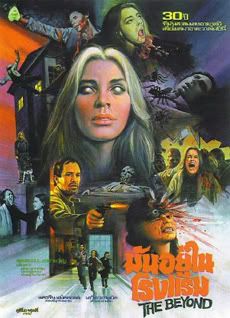
The Beyond
Dir: Lucio Fulci
The third of Italian director Fulci’s zombie quartet, three of which made the DPP list, City of the Living Dead bizarrely escaping censure, The Beyond is one of this erratic auteur’s finest films. Right from the off the film is absolutely in your face in its gore drenched nature, with an astonishingly nasty and convincing chain whipping sequence taking place mere minutes in.
Story and script were never Fulci’s strong suits, and The Beyond, with its cliché plot and clunky English dialogue (“You have carte blanche, but not a blank cheque”), is no exception and not all of the effects work (a spider attack is very obviously fake, though for fun try and spot the shot in that sequence that appears in Sam Raimi’s Spider-Man). However the performances of leads Catriona MacColl and David Warbeck, both favourites of Fulci’s are proficient, and when the effects come together they are among the best of their era.


Fulci was a terrific and much underrated director, and many of The Beyond’s sequences stand as a testament to his visual power; the sepia toned beginning, a blind girl on a deserted highway, a head being impaled on a nail, and the film’s striking ending are just some of the most memorable moments.
Forgive the oddities (Warbeck loading a revolver by putting bullets down the barrel, a sign in a hospital that reads “Do Not Entry”) or revel in them and The Beyond is a haunting and impressively visceral piece of horror.
Get it: The UK DVD is uncut, as is the US version (avoid US versions under alternate title 7 Doors of Death)

Cannibal Holocaust
Dir: Ruggero Deodato
Cannibal Holocaust, with its vile title and a cover depicting copious gut munching, was one of a few titles (along with SS Experiment Camp and the next movie on this list) often singled out by the tabloids as being especially nasty, and it is. The tape that was banned was shorn of several minutes, in an effort by its distributors to save on magnetic tape (a fate that also befell the infamous Faces of Death) and so the current legal version in the UK, cut by 5 minutes and 44 seconds, is actually the most complete we’ve ever had. Uncut though Cannibal Holocaust is a genuine test for even the hardiest horror lover. People are disembowelled, a pregnant woman is beaten, animals are (genuinely) slaughtered and that is the very tip of the iceberg. It would be easy to dismiss Cannibal Holocaust as base, disgusting, filth, except for one tiny problem. It’s a great film.


Ruggero Deodato constructs the film as first a documentary following an expedition to find three missing filmmakers in the jungle, and then as a showing of a selection of the filmmakers’ footage, showing what happened to them. It’s more convincing than any of the ‘found footage films’ that have followed it (and owe it an enormous debt, especially in the case of The Blair Witch Project, which is almost a remake), and this construction, and the strength of the illusion, makes it all the more shocking and frightening. The most recent US DVD comes with an option to see the film with the animal cruelty cut out but, tough as it is, a true horror fan owes it to themselves to, at least once, see this movie in its full version.
Get it: The latest US version is the best, with many extras and the animal cruelty option, but there are several uncut European releases too.

I Spit on Your Grave
Dir: Mier Zarchi

Probably the most reviled of all the nasties, Mier Zarchi’s debut film has been read as the ultimate in misogyny, a film that, for 40 minutes subjects us to the multiple rape of its main character (the extremely brave Camille Keaton, grand-niece of Buster) and then, that seemingly not being enough brutality, has her beaten almost to death. The thing is, I Spit is a vengeance movie, and an extreme one at that, and for a vengeance movie to work the act for which the revenge is being sought has to be terrible. In this regard I Spit delivers in spades. The crime is so utterly repugnant, so disgustingly protracted and so intensely portrayed that no sane person could argue that the vengeance of the film’s last half hour is unjust, or even overly extreme.


Despite the fact that the beautiful Keaton is often exposed the film never, at least in the rape scenes, exploits her nudity, it is never, ever titillating (something one can’t say, at least in intent, for scenes in the likes of Basic Instinct and The Accused, for example). I Spit on Your Grave will make any viewer, particularly a man, feel dirty and ashamed. Which, frankly, is exactly how it should make you feel. The fact that its heroine not only comes through her ordeal, but outwits her assailants and avenges the wrong done her in a way that fits both the crime and the manner of its commission, suggests that I Spit can easily be read as not misogynist but radically, almost militantly, feminist. I Spit on Your Grave is one of the most difficult films ever made. Almost every frame is completely repugnant (to the point that seven minutes have been cut for its UK release), but it is undeniably an incredibly effective film, it puts you through an ordeal just as it does the main character and that overcomes the terrible acting and the thin story to create a film of enormous power.
Get it: The Elite Millenium Edition from the US is the only release to have.

The Last House on the Left
Dir: Wes Craven
I can’t really make any claims for Last House on the Left being a great film, but it is an important one, because it began the careers of several men who have since shaped the horror genre. First there is director Wes Craven, who went on to helm several of the genre’s true classics. That’s not true of Sean Cunningham, who produced Last House, or Steve Miner, who was essentially a production assistant, but both of them have had important careers and contributed to franchises like Friday the 13th and Halloween. Last House is Craven’s take on the themes of Ingmar Bergman’s The Virgin Spring (yes, really) and sees a gang led by an escaped convict kidnap, torture and murder two teenage girls, before their car breaks down and, by coincidence, the end up at the home of the parents of one of their victims, who realise what has happened and extract vengeance. Last House is at its best in the truly disturbing, documentary like, sequences in the woods during which Krug (David Hess) and his ‘family’ torture their captives. The atmosphere on set was apparently very realistic and Sandra Cassell, the actress playing Mari, was apparently genuinely terrified for much of the shooting, it shows in all the performances, which have a truly disquieting reality and give the film a terrible sense of voyeurism.
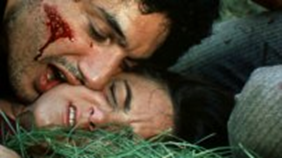

Last House does tail off after this sequence, and suffers from both an abysmal set of songs (composed by David Hess) and a comic subplot that run totally counter to the rest of the movie, but it’s interesting even in its weaker moments to see Craven finding his feet as a filmmaker, and exploring several themes that would come back over and over in his later features (notably the use of booby traps, and the fact that Krug later lent his name to Freddy Kruger). The violence is actually not as explicit, bar a brief shot of viscera, as you might expect, but the atmosphere of terror is strong, and fools you into thinking that you see more than you do. Interestingly Last House has now been remade, and the new version is set for US release soon.
Get it: The new UK release is (finally) uncut, and boasts amazing extras, including a thrid disc with the documentary Going to Pieces: The Rise and Fall of the Slasher Film.

The Witch Who Came From the Sea
Dir: Matt Cimber
‘Bizarre’ hardly begins to describe this dreamlike, almost hallucinatory movie. Movies like this are one reason to be grateful, in a way, for the DPP list; the preceding films on this list would likely have survived anyway, they would have been important or infamous (or both) with or without a ban, but this odd little film, with its shocking theme and its blend of arty drama and extreme violence, would probably have vanished, thanks to ban though, people stayed interested. The Witch Who Came From the Sea boasts an image that, while not explicit, I was shocked to see on screen, and I rank it as one of the most confrontational and difficult things I’ve ever seen. There are more explicit scenes of abuse out there, but this one, brief as it is, ranks as perhaps the most disturbing for me.

Adding to the weirdness is the sight of Millie Perkins, most famous as Anne Frank in the 1959 film, stripping off, playing a lunatic, and mutilating and murdering men. It’s odd, given that the last time I saw her was in English class when we watched The Diary of Anne Frank. Perkins is excellent though, giving comfortably the best performance in these five films and perhaps the best in any of the nasties I’ve seen, and making the often confusing film play all by herself, though her husband and director Matt Cimber also contributes some memorable moments.
Get it: The UK version is only available in Box of the Banned 2, but it’s uncut and you’ll also get Contamination, Dead and Buried, Don’t Go Near the Park, Evilspeak and Tenebrae, all uncut.

Feb 28, 2009

The Top 5… Actors I’d like to see make a comeback

Mickey Rourke is back, and Kerri “Andie from The Goonies” Green (who, incidentally, would otherwise have been on this list) has a film out this year, so here are a few more actors who I’d love to see make a comeback. Some haven’t been on screen for a while, some are still appearing, but desperately need better projects or roles. The list is alphabetical by surname.

Robert DeNiro
In the seventies and eighties DeNiro was, basically, God in the form of an actor. He could do almost no wrong, strike almost no false note on screen. He always threw himself, body and soul, into his roles, and his rabid dedication to both good material and methodically building a character until he became them resulted in some of cinema’s truly indelible performances. Johnny Boy, The young Vito Corleone, Travis Bickle, Jake La Motta, Rupert Pupkin, Al Capone, Jack Walsh, Jimmy Conway. That all these characters are one and the same man is still amazing to me. DeNiro’s quality control began to slip in the nineties, but he still made some brilliant movies and gave some masterful performances, notably in Heat, but also the much-underrated likes of Casino, This Boy’s Life, Wag the Dog and Jackie Brown.

I have a pet theory. I think that DeNiro may actually have died after Jackie Brown, and been quietly replaced with a doppelganger, because only that or a complete and successful talentectomy can really account for the last twelve years. In these dozen years DeNiro has gone from being the electrifying live wire he once was and become a lazy, lazy ham. His charmless forays into comedy are played with comic timing set by a broken metronome and, in Stardust, a lack of subtlety that almost unbalances what is already a rather silly (though fun) film. His drama is even more depressing, in the recent Righteous Kill he appeared near comatose next to Al Pacino (whose career also needs major surgery), and was almost upstaged by 50 Cent - 50 fucking Cent. DeNiro desperately needs to call his old friend Martin Scorsese, and beg him for a part in whatever he’s got going next, though it has to be said that reuniting with Michael Mann for Frankie Machine sounds like a smart move. I really hope we get another performance out of DeNiro that’s worthy of the great man.

Bridget Fonda
Bridget Fonda never quite became a real movie star, it’s hard to account for why, she had the connections (her aunt is Jane, her father Peter), the looks (gorgeous, but characterful) and the talent, but her headlining films never quite took off and it didn’t quite happen. It’s still a great shame that, since marrying composer Danny Elfman in 2003, and having their son Oliver she has seemingly retired from acting, her last credit to date being 2002 TV film The Snow Queen.
I miss Fonda because she would often pop up in supporting roles and threaten to steal a movie out from under the noses of its stars. For instance, if you saw Michael Caton-Jones’ Scandal (and few did), you’d probably be hard pressed to remember Joanne Whalley Kilmer’s leading performance, but I’ll bet you recall Fonda’s deliciously flighty turn, not to mention her striptease. She actually debuted, aged five and uncredited, in Easy Rider, but as an adult Fonda built up an impressive array of roles in films that ranged from excellent to awful. She’s especially good in Single White Female, an exploitation thriller elevated purely by Fonda and Jennifer Jason Leigh, in Cameron Crowe’s Singles as a woman who wants a breast enlargement to satisfy her boyfriend, she helped make the preposterous It Could Happen to You palatable, and her performance in Nikita remake Point of No Return was one of the film’s few strong suits.

It was the 90’s that saw her do much of her best work though, and more specifically the late 90’s. She’s wonderful as aging surfer girl Melanie in Jackie Brown, bringing a great deal to a role that, on the page, was just a girl who sat around in a bikini and smoked dope and gave the performance of her life in Sam Raimi’s A Simple Plan, as the heavily pregnant wife of Bill Paxton, who helps him plot how they can keep a stash of found money. That was one of Fonda’s last cinema releases, which is a crying shame because it revealed what an interesting and excellent character actress she was becoming. I’d love to see her again, at 45 she’s still beautiful and there are too few good actors out there for Bridget Fonda never to work again.


Martha Plimpton
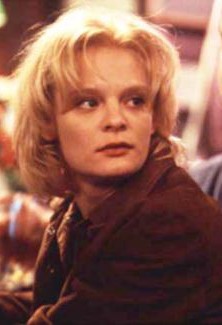
Well, if we can get Andie back, why not Stef? Martha Plimpton is another daughter of a Hollywood family, her dad being Keith Carradine. Martha Plimpton, despite being a distinguished and acclaimed actress, can’t seem to shake The Goonies (apparently an audience member yelled “Goonies” while she was playing Hedda Gabler on stage), which is understandable because that movie is part of so many childhoods, my own included, but does tend to do down Plimpton. She racked up acclaimed roles as a teenager in The Mosquito Coast and Running on Empty, both opposite her sometime boyfriend River Phoenix and impressed as Dianne Weist’s rebellious daughter, married to lunkheaded Keanu Reeves in Parenthood. Most were supporting roles, but with these and The Goonies Plimpton always seemed to give the roles her all, and bring a ring of truth to her characters.

This only became more true as she grew up, prompting some of my favourites of her performances in the nineties. There was a strong supporting role as a hooker in I Shot Andy Warhol, Ted Demme’s wonderful Beautiful Girls, in which Plimpton is hilarious as the very angry Jan, who dumps her long term boyfriend Michael Rappaport for an older man, a butcher, much to Rappaport’s consternation and Tim Blake-Nelson’s directorial debut Eye of God, a quieter, sadder and more introspective piece of work than I’d previously seen from Plimpton, and easily the best performance I’ve seen from her on film.
These days Plimpton is a (two time Tony nominated) stage actress, appears in TV guest roles and the occasional film that even I’ve never heard of, she also sings, and apparently gives acting lessons to street kids through a charity. It would be lovely to see this unusual actress get a featured role in a wide release movie, but it seems unlikely.

Christian Slater
Okay so Christian Slater isn’t the planet’s most varied actor, or its best, but when you give him the right role he eats it up, and even at his worst, he’s got a charisma on screen that makes him watchable - even Alone in the Dark is tolerable, though mainly because it’s hilariously bad. Slater is often talked about, even in his best roles, as little more than a Jack Nicholson impersonator, and while the two sound similar, and both have a certain mad-eyed edge to them I’ve never really thought it was affected in the way some people seem to. It’s a shame that Slater, despite being popular in the early and mid 90’s, never really broke out. It’s easy to forget that Heathers, now a cult favourite, and a film that, miraculously, is funnier and more relevant - Big Fun references apart - every year, wasn’t a hit when it opened. It made Slater and Winona Ryder’s reputations, but it did so organically, being discovered on video. Many follow up films also stiffed; Pump Up the Volume, which gave him a gift of a role as pirate radio DJ ‘Happy Harry Hard On’ and which, for long periods of screen time, he carries in a series of monologues, was terrific, but made no money and while Robin Hood: Prince of Thieves met with blockbusting success it was a supporting role, and followed by a lead in Mobsters, which sank like a torpedoed ship.

1993’s True Romance did work. Slater was brilliant in the lead, essentially playing Quentin Tarantino’s idealised version of himself, and it’s here that his effortless cool really pays dividends, because as awful as some of the things Clarence does are, you’re always with him, always hoping that he and Alabama (Patricia Arquette) will get away, together and in one piece. It’s a shame that since True Romance nothing has really seemed to work for Christian Slater. He was in John Woo’s much underrated Broken Arrow (the director’s best English language effort), but was overshadowed by a hamtastic John Travolta, he was excellent in Very Bad Things, and The Contender, but nobody noticed, and then came the DTV years, which must surely have reached their nadir with Hollow Man 2. A very strong against type performance in He Was a Quiet Man really should have helped, but the film was no match for the performance. Here’s hoping that Steven King adaptation Dolan’s Cadillac can mark the end of the depressing direct to video rubbish, and give Christian Slater the considerably better career he deserves.

Sissy Spacek

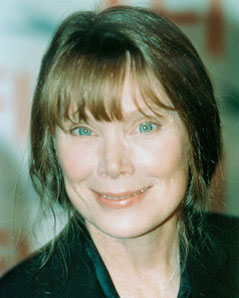
It’s a long held truth that there are no decent roles for women over 50, and a cursory glance at Sissy Spacek’s recent CV would seem to bear that out. It’s a dreadful shame, because Spacek is perhaps the best actor of her generation, and she should be getting offered more than generic ‘someone’s mom’ roles and popping up for longer than ten minutes per film. Though she was an extra in Warhol’s Trash, and had a big part in Prime Cut and guest shots on TV including The Waltons, the first time Spacek really got noticed was at 23, playing 15 year old Holly Sargis in Terence Malick’s peerless Badlands, but I’ll discuss that film (my very favourite) at length another time. She also revealed, in the sadly terrible Ginger in the Morning, a talent for singing that would later serve her well, and be passed on to her daughter Schuyler Fisk, who recently released her first album. The seventies and eighties saw Spacek rack up an array of fine performances, becoming a horror icon and earning an Oscar nomination in Carrie, appearing in Robert Altman’s dreamy Three Women, playing Loretta Lynn from 13 to 30 in The Coalminer’s Daughter - in which she did all her own singing and won an Oscar, and touchingly voicing the brain that Steve Martin falls for in The Man With Two Brains.

After Crimes of the Heart in 1986 Spacek took five years off cinema, but returned as Kevin Costner’s wife in JFK. In the nineties she worked less, perhaps preferring to raise her two daughters, but towards the end of the decade she began to serve notice that there was still a formidable talent here. Supporting turns in the dramas Affliction and The Straight Story were well received, and a warm comic part in Blast From the Past really should have been more widely seen. In The Bedroom was still something of a shock though, as Spacek delivered a performance better than any she’d given since Coalminer’s Daughter. If the mark of a great actor is the ability to listen on screen then her passive, pain filled, performance in In The Bedroom is, as much as any of her seventies and eighties work, Sissy Spacek’s claim as one of the very best there is. Since then though, it’s been depressing, an increased workload, but in colourless parts in awful films. Yes, she’s the best thing about North Country and An American Haunting, but the problem is that that’s like saying ‘the best thing about being punched in the face is…’. Sissy Spacek needs a proper role, and soon, we can’t afford to put great actors out to pasture just because they are getting older.

Feb 19, 2009

Top 5: Actors never nominated for an Oscar

The Oscars are upon us, the hugely predictable, nauseatingly self-congratulatory spectacle of awards season is finally, blessedly, nearing its end, but not before the most anticipated, and yet most frequently, head-slappingly wrong awards body hands out its trinkets.

Just to demonstrate how completely idiotic AMPAS can be here’s five great actors they’ve never even got round to nominating, despite the fact that Julia fucking Roberts has two nominations, one of which she won.
I have restricted the list to actors who are still with us, and who have failed to win a nomination with three or more worthy roles. The list is alphabetical by surname.

Jim Carrey
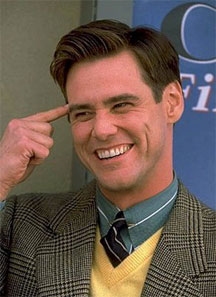
So it’s not just that AMPAS has an anti comedy bias, it has an anti comedian bias. That, surely, is the only explanation for Jim Carrey failing to attract even a nomination for his remarkable dramatic work. The Truman Show was his first serious role, but it revealed a formidable talent, and if Carrey hadn’t been Ace Ventura or The Mask he’d almost certainly have been nominated as Truman. It’s a performance that, while reining in Carrey’s comic persona, uses his comedic skills to make Truman someone we can believe that the world would want to watch for 30 years, but it’s also deeply emotional, particularly at the end of the movie, as Truman waves his last goodbye.
In Milos Forman’s Man on the Moon Carrey not only contributed a spot on Andy Kaufman impression, he humanised Kaufman, warts and all, in a highly acclaimed turn that was, once again, ignored by Oscar. The Truman Show is my favourite, but for most people Carrey’s failure to pick up a nomination as Joel Barish in Michel Gondry’s Eternal Sunshine of the Spotless Mind rankles even more. He’s excellent as the man who is desperate to erase a failed relationship from his memory, but midway through the process realises how precious those memories are. It’s a complex part, and Carrey makes every moment play, in a way that you doubt any other actor could have.

Worthy Roles: Truman Burbank in The Truman Show; Andy Kaufman in The Man in the Moon; Joel Barish in Eternal Sunshine of the Spotless Mind

Hope Davis
Perhaps the problem for Hope Davis is that she’s operating in a crowded area, there are so many great actresses around in their mid 30’s to mid 40’s. She’s up against the Laura Linney’s, the Cate Blanchett’s and the Julianne Moore’s of the world, so perhaps its no great surprise that the Academy hasn’t paid Davis lower key career much mind, but they should.
It’s amazing that American Splendor wasn’t nominated in both Best Actor (for Paul Giamatti) and Best Actress (Davis) categories, because that whole odd enterprise stood or fell on the strength of those performances, and both were absolutely brilliant. Davis brings real warmth to Joyce Brabner, as well as a combination of intelligence and quirkiness that both makes her irresistible and goes some way to explain why she falls for Giamatti’s eminently resistible Harvey. It’s a wonderfully real, three-dimensional piece of work. Elsewhere she did sterling work as Jack Nicholson’s daughter in the overpraised About Schmidt and worked wonders with the seemingly thankless role of Nicolas Cage’s ex-wife in The Weather Man, in which she delivers one of cinema’s finer and more stinging put downs. Then, of course, there’s future Why Haven’t You Seen? entry The Nines, in which she is as brilliant as ever, three times over.
Hope Davis is one of those actresses who pretty much guarantees that, even if the movie she’s in is crap, there will be one great performance to watch.

Worthy Roles: Jeannie Scmidt in About Schmidt; Joyce Brabner in American Splendor; Noreen in The Weather Man; Sarah/Susan/Sierra in The Nines

Isabelle Huppert

One of the best examples of AMPAS’ anti-subtitle bias. Isabelle Huppert, now in her mid 50’s has been impressing in movies with her combination of total authority as a performer and delicate feminine beauty since her early 20’s. I’ve not seen as much of Huppert’s work as I have the other actors named here, but even a small sampling reveals one of the great talents of world cinema, and an actor who Oscar should be on its knees rewarding almost every time she makes a film.
Perhaps the greatest oversight on AMPAS parties the lack of a nomination for her searing work in Michael Haneke’s The Piano Teacher. It’s easy to see why she was passed over; the film is cold, and punishingly dark and Huppert’s character and performance are almost entirely unsympathetic, but she so completely inhabits Erika Kohut that failing to nominate her was almost perverse. Alongside Daniel Auteuil (another fantastic actor with no nominations to his name) in La Seperation she helps craft a completely convincing and terribly sad portrait of a crumbling marriage, while in La Ceremonie she manages to chillingly play an unhinged character without ever overacting.
Like so many actors who have never been nominated for an Oscar Isabelle Huppert has probably been passed over simply because she’s so damn good that nobody notices that she’s acting

Worthy Roles: Nelly in Loulou; Anne in La Seperation; Jeanne in La Ceremonie
Erika Kohut in The Piano Teacher; Gabrielle in Gabrielle

Jennifer Jason Leigh
I’ve previously held forth at length on my love for Jennifer Jason Leigh, who is, should I need to remind you, the single finest actress alive. The fact that she’s never even been nominated for an Oscar still baffles me, particularly given that Renne Zellweger has one. For 30 years Leigh has been one of cinema’s most reliably strong performers. She’s elevated exploitation fare like Single White Female, she’s impressed in small indie roles, as in Todd Solondz’ Palindromes and she’s been passed over for a breathlessly acclaimed lead in Georgia (for which her co-star Mare Winningham was nominated), and those aren’t even the highlights.
How Leigh managed to miss out on at least one nomination for her stunning early 90’s one two punch playing prostitutes Tralala and Susie in Last Exit to Brooklyn and Miami Blues respectively is one of the great mysteries. You couldn’t find two more different roles; one woman seeming to take, at her invitation, all the world’s misery on herself, the other trying desperately to look at the sunny side of everything. Oscar has always liked to reward actors playing real people, and yet they managed to ignore Leigh’s painstakingly crafted Dorothy Parker. They also passed her by for Dolores Claiborne and most recently for Margot at the Wedding, which many thought would finally see AMPAS stop ignoring Leigh, in the end the role (though flawlessly played) was probably too down to earth, and the performance – like her others – not actorly enough for Oscar to notice.

Worthy Roles: Tralala in Last Exit to Brooklyn; Susie in Miami Blues; Dorothy Parker in Mrs Parker and the Vicious Circle; Selena StGeorge in Dolores Claiborne; Pauline in Margot at the Wedding

Steve Martin
I know what you’re thinking, you’re thinking Steve Martin!? Poor Sam, he’s seen one too many movies and he’s finally lost his mind. Clearly I’m not talking about the husk that used to be Steve Martin, the one currently polluting cinemas with The Pink Panther 2. I’m talking about the Steve Martin we all miss, the one who was hilarious every time he appeared on screen, but who also wove a subtle thread of emotion into almost all his comedy. AMPAS has always been sniffy about comedy, but when silliness is elevated to an artform the way it is by Martin in Carl Reiner’s The Man With Two Brains, a film so funny the DVD should come with portable oxygen, that’s as hard as any dramatic performance.
In All of Me and Roxanne Martin combines his wild and crazy guy act with a little more drama. The physical comedy with which, in All of Me he makes us believe Lily Tomlin is inhabiting the left side of his body is deft, hilarious and convincing, but he also makes the process by which his character comes to love this invader work. His wooing of Daryl Hannah in Roxanne is also very touching, but it’s the scene in which he tries to think of 20 better insults than ‘Big Nose’ that should really have sealed both acting and writing nominations.
There are even more overlooked Steve Martin turns: Think of him in Parenthood, in a straight role for Daavid Mamet’s The Spanish Prisoner or even as Ruprecht in Dirty Rotten Scoundrels and tell me this man hasn’t earned a golden baldie.

Worthy Roles: Dr Hfuhruhurr in The Man With Two Brains; Roger Cobb in All of Me; CD Bales in Roxanne