Clemency
Dir: Chinonye Chukwu

The death penalty, as it is practiced in the US, has long been a favoured subject in film. This is one of three death penalty dramas to have done the film festival rounds recently (true stories Trial By Fire and Just Mercy are awaiting UK release, the latter is a late addition to this year's LFF). It’s not hard to see why; the issue raises passions on both sides and the drama is inherently high stakes and emotional for all the characters.
Clemency takes a different angle on the drama than most films, putting Alfre Woodard front and centre as Bernadine Williams, a prison warden in an unspecified state. The last execution she supervised was botched and now Bernadine is having trouble coping: she can’t sleep and seems conflicted about the upcoming execution of Anthony Woods (Aldis Hodge), whose conviction may have a few doubts hanging over it.
In her second feature, writer/director Chinonye Chukwu strips a lot of things back. She knows when to simply let the camera sit, to allow the actors to carry a moment purely in their faces rather than attempt to emphasise things with cutting or dialogue. This is an all too rare quality these days, and it raises Clemency above a fairly run of the mill screenplay and only light engagement with the real world issues that lie behind this fictional story.
Chukwu is aided in her focus on performance by a clutch of fine actors who allow their feelings to rage under the surface while clearly trying to keep it all in check. Most notable among them is Alfre Woodard, a great actor who ought to get more roles that utilise her talents like this one. The somewhat cold control she shows to the outside world on the surface is gradually and credibly cracked, up until a late close up which is a brilliant depiction of someone whose emotions are trying to escape from her every pore, but which can’t be shown in that moment. In many ways, her performance is much like that of Aldis Hodge, whose Anthony Woods is also a person who doesn’t want to show his vulnerability to the wrong person at the wrong time though he, more than her, has a few moments at which the dam simply has to burst. The characterisation of Woods isn’t especially deep, but Hodge plays him effectively, as a man who probably feels the cage he’s in is half of his own making, but that the other half being there is deeply unfair, and fully cognizant that he’s very unlikely to escape it.
The supporting cast is full of talent, with Wendell Pierce the standout as Bernadine’s husband, who seems both concerned and impatient with her struggles. One scene, when they talk at the dinner table about their marriage, quietly brings out the best in both performances.
While the performances make Clemency intermittently powerful, the film as a whole can’t get past the fact that while the angle may have changed somewhat, this is a story we’ve seen many times before. The third act in particular suffers from a thudding inevitability that isn’t helped by Richard Schiff’s stock character and equally stock performance as Anthony’s lawyer. By never exploring what exactly went wrong with the execution the film, while clearly inspired by them, misses the chance to engage with live issues in the death penalty debate like states experimenting with different drug cocktails because companies are refusing to supply the standard execution drugs.
Alfre Woodard will be justly acclaimed for her performance here and the film should also act as an effective calling card for Chinonye Chukwu, but perhaps next time it would be interesting to see what she can bring to someone else’s screenplay, because that’s what lets the side down here.
★★★
Coup 53
Dir: Taghi Amirani
 Politics at the moment is essentially a 24 hour global anxiety attack and it can be difficult to see past that. However, as with anxiety, it is worth trying to look underneath the symptoms for the cause and that, at least to some degree, is what Taghi Amirani is doing with Coup 53.
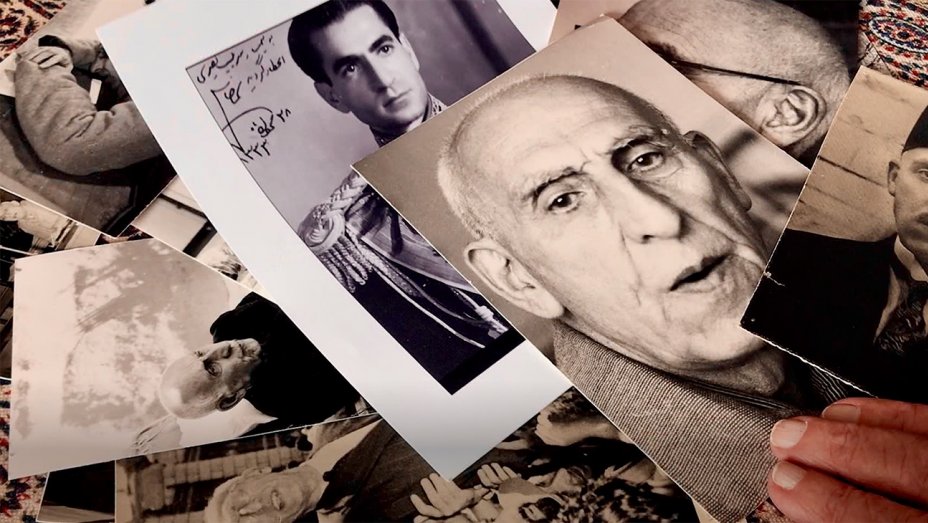
More than a decade in the making, the film explores the 1953 coup, led by MI5 and the CIA, to depose Mohammad Mossadegh, the democratically elected Prime Minister of Iran. In a fairly self-regarding first act, Amirani documents how, as he was working on the film, he discovered the source interviews for one of a series of BBC programmes about the end of empire and, buried within them, the transcript of an interview with an MI5 operative named Norman Darbyshire. This interview forms the backbone of the rest of the film, acting as entry point to the depth of Britain’s still officially unacknowledged participation in the planning and execution of the Operation Ajax—named for the household cleaner. Amirani digs deep, using archive and present day interviews to paint a damning picture of the motives behind the coup (spoilers: Oil), the upheaval of its execution and the far reaching consequences.
As a film, this is one of a handful of documentaries that can truly make the argument for being seen in a cinema. Much of this is likely down to the involvement of Walter Murch, whose peerless control in the editing room is felt not just in the artfulness of some of the transitions but in the precision and sharpness of the timing (at least after that sticky first act). One moment even draws a laugh, as there is an abrupt cut to an unexpected face, filling in for the lost footage of Darbyshire. There is also some beautiful watercolour style animation by Martyn Pick, which is well used and I’d have been pleased to see more of.
As far reaching and deep as its research goes and as much as we learn from the collection of footage that Amirani makes use of, his film also feels something like a jumping off point, so much is the impression driven home that this episode changed our world, with implications we are still feeling. As much as it shows and tells us, Coup 53 left me wanting to know and understand more.
★★★★
Coup 53
Dir: Taghi Amirani
More than a decade in the making, the film explores the 1953 coup, led by MI5 and the CIA, to depose Mohammad Mossadegh, the democratically elected Prime Minister of Iran. In a fairly self-regarding first act, Amirani documents how, as he was working on the film, he discovered the source interviews for one of a series of BBC programmes about the end of empire and, buried within them, the transcript of an interview with an MI5 operative named Norman Darbyshire. This interview forms the backbone of the rest of the film, acting as entry point to the depth of Britain’s still officially unacknowledged participation in the planning and execution of the Operation Ajax—named for the household cleaner. Amirani digs deep, using archive and present day interviews to paint a damning picture of the motives behind the coup (spoilers: Oil), the upheaval of its execution and the far reaching consequences.
As a film, this is one of a handful of documentaries that can truly make the argument for being seen in a cinema. Much of this is likely down to the involvement of Walter Murch, whose peerless control in the editing room is felt not just in the artfulness of some of the transitions but in the precision and sharpness of the timing (at least after that sticky first act). One moment even draws a laugh, as there is an abrupt cut to an unexpected face, filling in for the lost footage of Darbyshire. There is also some beautiful watercolour style animation by Martyn Pick, which is well used and I’d have been pleased to see more of.
As far reaching and deep as its research goes and as much as we learn from the collection of footage that Amirani makes use of, his film also feels something like a jumping off point, so much is the impression driven home that this episode changed our world, with implications we are still feeling. As much as it shows and tells us, Coup 53 left me wanting to know and understand more.
★★★★