
After two and a half weeks I found that even I needed a little breather from watching the same genre of movies at such a high rate. I will be finishing out my list of 28 films for this project, but it may take me into March.
However, I will also be continuing the series with a weekly double bill of coming of age movies and reviews, those films will largely be new to me, but I'll also include a few I've seen but not reviewed here before.
Slap Her She's French
Dir: Melanie Mayron

Slap Her, She's French is actually rather better than its (shit awful) title might imply. Having an unsympathetic protagonist in Jane McGregor's Starla works quite well, because it enables writers Lamar Damon and Robert Lee King to give her some amusingly bitchy dialogue. There are also some fun set pieces, few more amusing than when Genevieve 'helps' Starla with her homework and teaches her sexually suggestive phrases to use in her French oral exam. It also wins points for a big final laugh, with a disclaimer before the end credits.
Melanie Mayron gives the film a bright, brash style that matches the broad style of the screenplay and she directs the cast to similar ends. Perabo and McGregor both put in big performances, but the film is so heightened that it works, at least to some degree. There are two ultimate problems here. First of all, while it has some laughs, the film isn't consistently funny enough and secondly Perabo's deliberately awful accent may be a joke in and of itself, but it's not that funny and makes the film's 'twist' one that seems to have a neon sign flashing above it from the very first second she speaks.
Slap Her, She's French is a perfectly fine time passer if you like high school comedies (and, as I believe we've established, I do), but it's not among the best of its era and there are other lesser known teen films from this time much more worthy of rediscovery.
★★
36 Fillette
Dir: Catherine Breillat

I've enjoyed quite a few of the more controversial French takes on first experiences with love, relationships, and sex and I appreciate the fact that they are unafraid to be confrontational and sometimes explicit in their depictions of these things. I'm not sure what it is, perhaps I simply have a disconnection with Catherine Breillat's style, but like so many of her other films, I found 36 Fillette rather boring.
This is, typically of its director, a very talky film that finds a 14-year-old girl (Delphine Zentout) making a connection with a playboy type (Jean-Pierre Leaud) and becoming more and more determined, over about three nights, to lose her virginity to him. Zentout is good, but I don't especially believe her as a teenager. Like so many of Breillat's characters, she feels more like a mouthpiece for the director, except that here Breillat doesn't even have that much to say.
The relationship at the film's centre is creepy, which is to be expected, it's between a 14-year-old and a 40-year-old, but it's not creepy in any particularly interesting way (as the relationship in, say, Beau Pere is) and for me the film didn't seem to say anything about coming of age or relationships like the one between Zentout and Leaud that hadn't been said much better in any number of other films. 36 Fillette isn't terrible, but it did, for me, seem both bloodless and curiously pointless.
★★
Maske Ku' Vi
Dir: Morten Arnfred
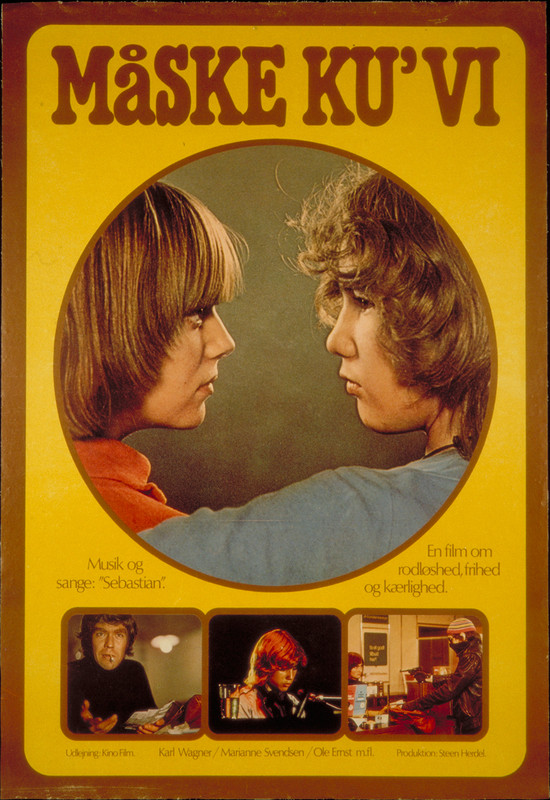
Maske Ku Vi begins with an almost Loachian approach, taking a close up and rather uneventful look at the lives of two young friends. I found this stretch of the film enthralling. It establishes a social realist tone, grounding itself completely in the experience of two 14-year-old boys growing up in Denmark in 1977. Little happens - they go out drinking, they jokingly flirt with prostitutes plying their trade from their windows, they hang out together - but you get a real sense of their friendship and their lives. This changes when Kim (Karl Wagner) is asked to go to the bank for his mother. During his visit, there is a holdup and he and a 14-year-old girl named Marianne (Marianne Berg) are kidnapped by the gang.
This second act, with the kids held captive by the gang but, at least in Kim's case, treating it more as a liberation from home, is where the film goes off the rails a bit. The performances are still as naturalistic and as strong as they have been, especially between Wagner and Berg, but the scrupulously down to earth realism of the first act is thrown out of the window, becoming more and more distant as the film goes on. The change of tone doesn't entirely work. The idea is to see bad events through the kids eyes, the fact that even a kidnapping can, if you don't like your home, feel like an opportunity, but the first act doesn't really suggest that Kim has that sort of disdain of his home life, merely that he's a typically dissatisfied teen, so this doesn't really come off for me.
The third act develops the little romance between Kim and Marianne believably and in typically frank style, but the overarching plot still feels too neat and too fanciful. It's frustrating to not be able to recommend Maske Ku Vi more wholeheartedly because there are wonderful things in it. The whole first act is great and there are some beautifully acted moments between Kim, Marianne, and the bank robbers, not to mention the sweet romance between the kids. However, the mix of realism and more fanciful storytelling never quite meshes. Still, flawed as it may be, this is an obscurity that will hold much enjoyment for anyone who likes these kinds of movies.
★★★
A Little Romance
Dir: George Roy Hill
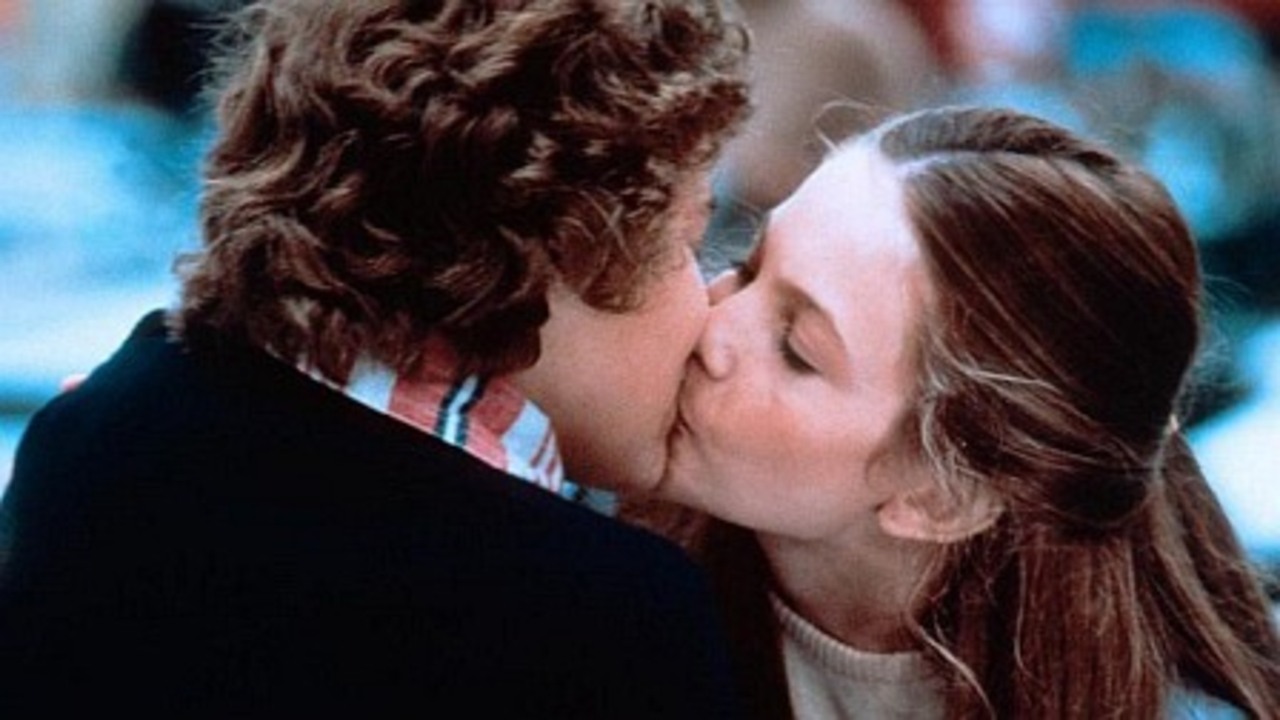 If it is now of any interest at all this film must chiefly be a curio based on the fact that it features the (charming) debut of Diane Lane. With the exception of her fans, I would struggle to recommend A Little Romance to anyone.
Lane plays Lauren the stepdaughter of an American director working in France. She meets a French boy named Daniel (Thelonius Bernard) and... well, you've read the title. The complicating factor is that Lane's mother (Sally Kellerman) doesn't like her new boyfriend (not entirely unreasonable of her; he can be a smug little shit) so they have to sneak around. One day while they're out, Lauren and Daniel meet Julius (Laurence Olivier), who enchants Lauren with romantic stories about his days as a young man with his wife. When Lauren and Daniel determine to run away together they enlist Julius' help.
One thing you can tell from this film (and from another early role in Ladies and Gentlemen, The Fabulous Stains) is that Diane Lane was meant to be in movies. She's hardly stretched here; her character is supposed to be extremely smart, but it's a pretty typical teenage role, but she is just glowing and has a presence that completely eludes her co-star Thelonius Bernard. Some of their scenes have charm, particularly when they're joined by their less intelligent but somehow nerdier friends (Ashby Semple and Graham Fletcher-Cook), but I don't quite buy their discussions about Nietzsche, even smart 14-year-olds don't often talk that way. The familiarity of the whole thing is also a problem, there's little to distinguish A Little Romance from a hundred other similarly themed films, aside from Laurence Olivier.
I confess I've not seen much of Laurence Olivier's work from when he was a leading man (though I thought he was great in Hitchcock's Rebecca), so I have to take his reputation as one of the greatest screen actors somewhat on trust, but he is terrible here. Olivier hams outrageously through a completely stereotypical and pretty awful Franch accent. His presence completely unbalances the film, which is reasonably well played until he turns up, immediately alerting us to the fact that we're watching a movie because there is no sense when watching Julius that we are seeing anything other than an actor chomping all the scenery he can lay his hands on.
The plot grinds on, chugging through predictable twists with broadly written adult characters and Olivier always on the sidelines, undermining the moments of sincerity the film does have. Lane and Bernard try hard, but the love story never caught light for me. A Little Romance is perhaps worth a look for Diane Lane fans, but I found it rather irritating.
★★
Kundskabens Træ
Dir: Nils Malmros
 Until I began doing the research for this series I had never even heard of this 1981 Danish film, apparently it is regarded as something of a classic in Denmark, and it isn't difficult to see why.
In common with many Scandinavian coming of age films, Kundskabens Træ (Tree of Knowledge) has a more downbeat take on the process of growing up than is generally common in mainstream teen and coming of age films, especially those from the US. In this case, the film follows a whole class of roughly 13-year-old students over a few weeks. We see the cliques that they form, but what writer/director Nils Malmros is especially perceptive about is how young people's friendships and relationships can shift almost day by day for the tiniest of reasons. The focus is most frequently turned on the popular Elin (Eva Gram Schjoldager), who is slowly and systematically frozen out by her friends after she refuses the advances of Helge (Marin Lysholm Jepsen).
While it is strong on the drama Kundskabens Træ also has a great feeling for the playfulness of its characters, whether they are sneaking around in a boring lesson to play tricks on their teacher or getting involved in a game on a school trip (in a scene that feels heavily improvised). It is perhaps best when it combines these two aspects, showing the kids being kids and having fun, but also what they are doing to Elin. On the school trip there is a beautifully observed scene where an acronym, PTH, starts to be used to refer to Elin and the way it is passed in whispers from kid to kid is perfectly realised, it's something we all saw and heard during our own school days and is relatable whether you were 13 in 1953, when the film is set, or in 2013.
Eva Gram Schjoldager, who only ever made one other film, also for Malmros, is brilliant as Elin. You can see her lack of comprehension about what she's done wrong to be frozen out by her friends, but also her determination to be strong in the face of that and of her awful, awful parents and their 'advice' (which, in the only poor piece of writing in the film, feels almost abusive at times). She's most moving though the few times that she cracks; you can see the hurt behind her stoic face when her friends blow off her party to attend another, to which she's not invited. It's a sad story, but one that is all too real.
The other kids are equally excellent. While they are all playing in a particular period there is still a feeling of easy naturalism to the performances and though there are a lot of characters to keep track of most of the actors manage to give their roles enough personality that their characters and their relationships are clearly defined.
If you were ever 13 then you will find something in Kundskabens Træ that will prick at your memories of that time in a relatable way. It may make you laugh, it may make you cry, but either way, it's well worth taking the time to track this rare little gem down. For my part, I'm going to try to find some more of Nils Malmros' films.
★★★★
Lane plays Lauren the stepdaughter of an American director working in France. She meets a French boy named Daniel (Thelonius Bernard) and... well, you've read the title. The complicating factor is that Lane's mother (Sally Kellerman) doesn't like her new boyfriend (not entirely unreasonable of her; he can be a smug little shit) so they have to sneak around. One day while they're out, Lauren and Daniel meet Julius (Laurence Olivier), who enchants Lauren with romantic stories about his days as a young man with his wife. When Lauren and Daniel determine to run away together they enlist Julius' help.
One thing you can tell from this film (and from another early role in Ladies and Gentlemen, The Fabulous Stains) is that Diane Lane was meant to be in movies. She's hardly stretched here; her character is supposed to be extremely smart, but it's a pretty typical teenage role, but she is just glowing and has a presence that completely eludes her co-star Thelonius Bernard. Some of their scenes have charm, particularly when they're joined by their less intelligent but somehow nerdier friends (Ashby Semple and Graham Fletcher-Cook), but I don't quite buy their discussions about Nietzsche, even smart 14-year-olds don't often talk that way. The familiarity of the whole thing is also a problem, there's little to distinguish A Little Romance from a hundred other similarly themed films, aside from Laurence Olivier.
I confess I've not seen much of Laurence Olivier's work from when he was a leading man (though I thought he was great in Hitchcock's Rebecca), so I have to take his reputation as one of the greatest screen actors somewhat on trust, but he is terrible here. Olivier hams outrageously through a completely stereotypical and pretty awful Franch accent. His presence completely unbalances the film, which is reasonably well played until he turns up, immediately alerting us to the fact that we're watching a movie because there is no sense when watching Julius that we are seeing anything other than an actor chomping all the scenery he can lay his hands on.
The plot grinds on, chugging through predictable twists with broadly written adult characters and Olivier always on the sidelines, undermining the moments of sincerity the film does have. Lane and Bernard try hard, but the love story never caught light for me. A Little Romance is perhaps worth a look for Diane Lane fans, but I found it rather irritating.
★★
Kundskabens Træ
Dir: Nils Malmros
In common with many Scandinavian coming of age films, Kundskabens Træ (Tree of Knowledge) has a more downbeat take on the process of growing up than is generally common in mainstream teen and coming of age films, especially those from the US. In this case, the film follows a whole class of roughly 13-year-old students over a few weeks. We see the cliques that they form, but what writer/director Nils Malmros is especially perceptive about is how young people's friendships and relationships can shift almost day by day for the tiniest of reasons. The focus is most frequently turned on the popular Elin (Eva Gram Schjoldager), who is slowly and systematically frozen out by her friends after she refuses the advances of Helge (Marin Lysholm Jepsen).
While it is strong on the drama Kundskabens Træ also has a great feeling for the playfulness of its characters, whether they are sneaking around in a boring lesson to play tricks on their teacher or getting involved in a game on a school trip (in a scene that feels heavily improvised). It is perhaps best when it combines these two aspects, showing the kids being kids and having fun, but also what they are doing to Elin. On the school trip there is a beautifully observed scene where an acronym, PTH, starts to be used to refer to Elin and the way it is passed in whispers from kid to kid is perfectly realised, it's something we all saw and heard during our own school days and is relatable whether you were 13 in 1953, when the film is set, or in 2013.
Eva Gram Schjoldager, who only ever made one other film, also for Malmros, is brilliant as Elin. You can see her lack of comprehension about what she's done wrong to be frozen out by her friends, but also her determination to be strong in the face of that and of her awful, awful parents and their 'advice' (which, in the only poor piece of writing in the film, feels almost abusive at times). She's most moving though the few times that she cracks; you can see the hurt behind her stoic face when her friends blow off her party to attend another, to which she's not invited. It's a sad story, but one that is all too real.
The other kids are equally excellent. While they are all playing in a particular period there is still a feeling of easy naturalism to the performances and though there are a lot of characters to keep track of most of the actors manage to give their roles enough personality that their characters and their relationships are clearly defined.
If you were ever 13 then you will find something in Kundskabens Træ that will prick at your memories of that time in a relatable way. It may make you laugh, it may make you cry, but either way, it's well worth taking the time to track this rare little gem down. For my part, I'm going to try to find some more of Nils Malmros' films.


