
Teen and coming of age movies seem to me to be the most universal of cinematic genres. Few of us fight monsters, few of us rob banks, but we all grow up, we all go to school, we all fall in love for the the first time, in short we can all relate to the experiences that characters go through in coming of age movies.
The teen movie has a long history, stretching from Andy Hardy's innocent dates with Judy Garland through to last year's wonderful The Spectacular Now. But that's just the US, rich veins of coming of age cinema have also come from all over the world, with especially rich histories in the genre coming from France, Scandinavia and Japan. The teen movie isn't, perhaps, so much a genre in itself as an iteration of various sub-genres. There are romances, sex comedies, family dramas, crime movies, coming out stories, war films, all of which sometimes pivot around coming of age themes. It's fitting, then, that the BFI has decided to devote a season (somewhat inevitably called Teenage Kicks) to the teen movie but while, like last month's selection of martial arts films, it provides a good primer on the genre and features many fine films the selection isn't as far reaching as it could be.
In this article I'll be taking key films from the BFI season as a jumping off point, then suggesting films that you can move on to, further exploring that element of the coming of age movie.
Carrie: High School Horror
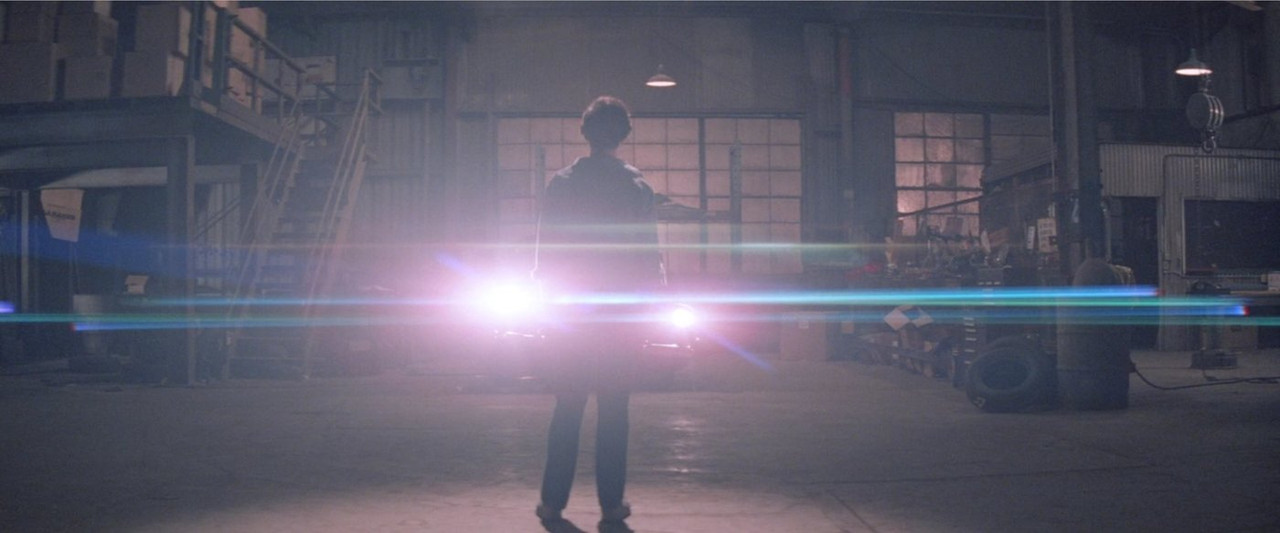 |
| John Carpenter's Christine |
Throw a dart at a list of slasher films and you'll probably hit something with some relevance to a coming of age narrative, whether it's in the main body of the film or simply the grounding for the killer's motive, but there are also horror films that deal more directly with coming of age movie ideas. Carrie may be the obvious choice, but it's also one of the best horror films ever made and one of the best high school films ever made, so it's the perfect choice for the BFI season.
Delving further into this sub-genre brings us immediately back to Stephen King, with John Carpenter's Christine, which channels key teen movie themes of first love through geeky Arnie Cunningham's (Keith Gordon) obsessive relationship with a car he repairs. It's a film with great insight into the importance, as a teenager, of being cool and of being seen to be independent from your parents and, like Carrie but unusually for King, it has a decent ending. Keith Gordon is great in the lead, credibly evolving from geek to dude and Carpenter does an especially fine job giving Christine (the car) a personality, certainly more so than Michael Bay has managed with any of the Transformers.
When, in kickstarting the 90's slasher revival, Scream skewered the rules of the slasher it was inevitable that films that sought to break those rules would follow in its wake. One of the notable things Scream did was to crystallise in the public imagination the idea that only a virgin could be a final girl in a horror film, so of course a film came along to subvert that rule. Cherry Falls isn't a great film, but it has a killer conceit at its heart. The killer in this film ONLY pursues virgins, so the way to survive is to lose your virginity. It's less explicit than it could be and the eventual reveal is kind of stupid, but while it's no classic Cherry Falls is fun. The cast is game and the concept intelligently subverts both horror and teen movie concepts. More than most of the 90's slasher cycle this is ripe for a remake, but it's still interesting.
Valerie and Her Week of Wonders, like Carrie and the later, also recommended, Ginger Snaps, triggers its horror through the onset of its protagonist's first period. In Jaromil Jires' surreal, dreamlike, fairytale this key coming of age moment seems to plunge 14 year old Valerie (Jaroslava Schallerova) into a world where her grandmother has become a witch, her father is a weasally vampire (the look is part Max Schreck, part rat) and the town she lives in seems to have fallen under a strange spell. The great thing about Valerie is that you can turn your focus to different aspects, different characters and have a different experience every time because these 72 minutes are so rich and strange.
More grounded than notions of possessed cars and fantasy worlds is another slasher that deals with a common coming of age experience, that of having a new parent in your life. The Stepfather could easily have been a grotty little B-Movie (and by all accounts became one when it was remade a few years back), but the screenplay by Donald E. Westlake and performances of Terry O' Quinn and underrated scream queen Jill Schoelen lift it. Schoelen's character arc is better drawn than most final girls and her performance, set against O'Quinn's, makes her conviction that there's something off about her new stepfather convincing as a teenager's typical reaction to a new person in the house. Of course she's right, he's actually a serial killer. Overall though it's great to see a final girl who is smart and thinks things through rather than simply playing a reactive role. For all that teens have big parts to play in slashers they're not often that complex. This is an exception.
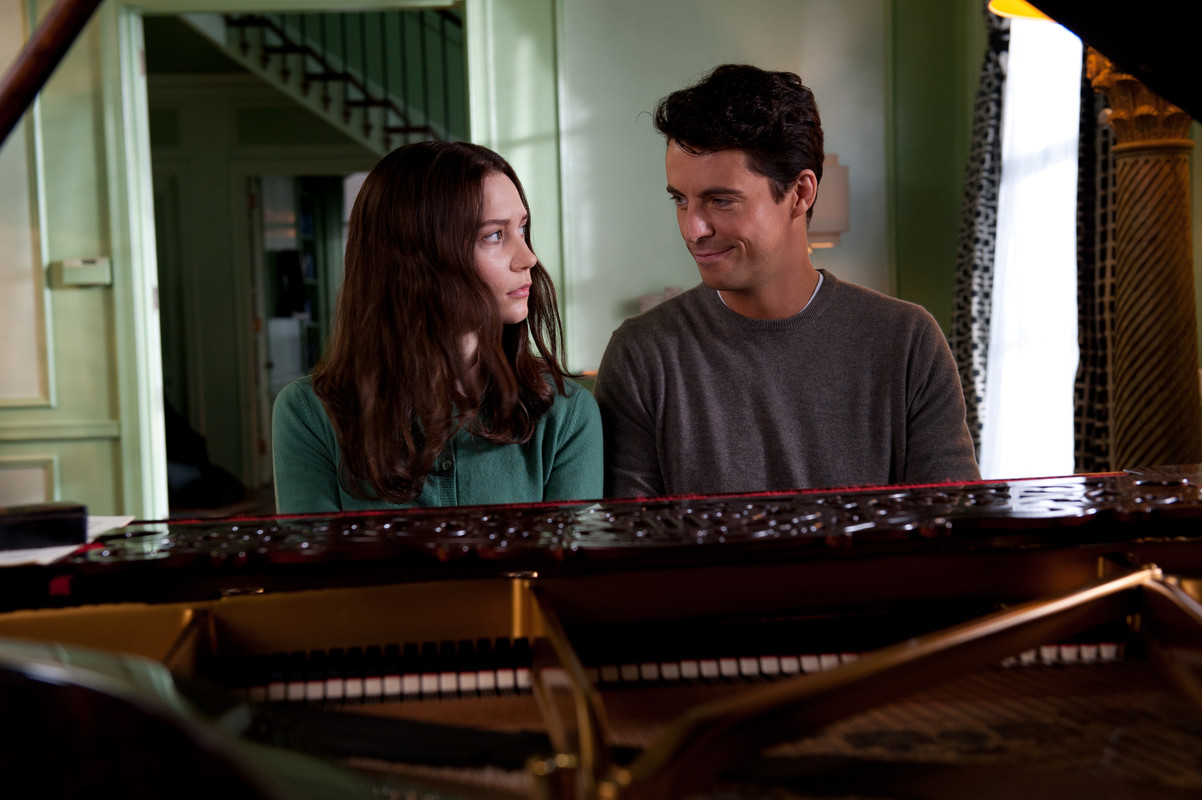 |
| Mia Waskiowska and Matthew Goode in Stoker |
2013 brought us what, for my money, may be the finest teen horror film since Carrie: Park Chan-wook's English language debut, Stoker. Of all of these films it is perhaps the one that squares the coming of age and horror sides of its story best. It has elements that are redolent of The Stepfather (the unsettling presence of Matthew Goode's Uncle Charlie) and further all the way back to Hitchcock's Shadow of a Doubt. The coming of age element centres around the many awakenings that Mia Wasikowska's India has during the film, all pivoting around her 18th birthday. There is the expected sexual awakening, seen in her interactions with a boy from school, with Charlie and, once, with herself. There is also another kind of awakening; one of a darker connection she seems to have with Charlie, seeded in the film's first image but only clarified in its final scenes. Stoker is also explicitly about growing up, which Park and DP Chung Chung-hoon graphically represent through a motif of shoes; first the same pair in increasing sizes, then a new pair, signaling India's transition to adulthood. Stoker is a major work, whether viewed through the prism of horror, thriller or coming of age film and it's one you should see immediately spinning off this season.
Fast Times and Heathers: The first golden age of American teen movies
The first golden age of the American teen movie began in 1982 with the release of three pivotal films. Within five months Porky's, The Last American Virgin and Fast Times At Ridgemont High. Of these Fast Times, written by a young Cameron Crowe and based on a book he returned to high school for a year to research, is the right one for the BFI to show; it's easily the best and has an amazing cast, almost all of whom went on to bigger things.
The Last American Virgin is a film that has long deserved more attention. Part ribald sex comedy, part hard hitting drama, it doesn't always combine those elements perfectly and spends too little time on the drama, but much of it works brilliantly. There are some great comic set pieces (the American Pie franchise owes the first 15 minutes a huge debt) and the drama, while rushed, does punch above its weight, especially in its final moments. While the cast of Fast Times went on to bigger things this film's excellent cast largely faded into undeserved obscurity. Lawrence Monoson is great as the geek with a crush on Diane Franklin, the new girl at school and there's a lovely, if small, role for Kimmy Robertson, who has her own crush on Monoson. For both Monoson and Robertson's characters this is a film that, uncharacteristically for an American teen movie, deals with the harsher realities of being a teenager and admits that the hero doesn't always get the girl.
Of course there were teen movies being made and released in the 80's before these three films came along, and one of the more interesting is 1980's Little Darlings. It's an odd film; a summer camp set comedy drama that seems to straddle American and European influences. Its story sets Tatum O'Neal and Kristy McNichol against each other as teenage girls who have a bet on which of them will lose their virginity first during the summer. This clearly anticipates the sex comedies that would come to dominate the genre in the 80's, but it also has silly slapstick sequences, like a mass food fight, which feel more out of a mid 70's Disney movie. The European influence comes through in the more dramatic side of the film, especially O'Neal's crush on a camp counselor played by Armand Assante and McNichol's relationship with a local boy played by a very young Matt Dillon. It's interesting to see a sex comedy that both approaches its genre from the perspective of two female characters and treats their relationships with a degree of seriousness. It's schizophrenic at times, but engagingly played by O'Neal and McNichol.
The 80's teen movie had its share of oddities. 'Savage' Steve Holland carved a niche of his own with three absurdist comedies that have gone on to cult success. The middle entry in this trio of films, One Crazy Summer, is a good laugh, but it has nothing on the films Holland made either side of it; Better Off Dead and How I Got Into College. Better Off Dead is one of the strangest films of the 80's teen movie cycle. The central story of Lane (John Cusack) deciding to kill himself after he's dumped by his girlfriend sounds depressing, but Holland filters it through a madcap surrealist comedy full of absurd characters, barmy running gags and offbeat punchlines. The film features alumni of many other teen movie classics. Curtis Armstrong, of Revenge of the Nerds, is hilarious as Lane's friend, who is constantly trying to find ways to get high and whose ski coaching amounts to "Go that way, really fast. If something gets in your way, turn. Diane Franklin is charm itself as French exchange student who falls for Lane and Cusack has perhaps the best track record in this genre in the 80's. We'll come back to that. Better Off Dead's greatest strength is its breathless inventiveness, the way it finds bizarre ways to approach situations that, even by this stage, were cliché. For instance, Lane's crappy job in a burger bar eventually leads to a stop motion animated sequence featuring one of the burgers and a series of challenges to drag race is enlivened by the fact that the challengers talk like Howard Cossell. It would be a crime to spoil more of the jokes. This one of the best comedies of the 80's. Just watch it.
Holland hasn't released a film since 1989's How I Got Into College (he's working on a new one as I type though). This is criminal. How I Got Into College is another brilliant slice of madness, revolving around a guy who is desperate to get into the same college as the girl he's had crush on all through high school, thinking this will make her take him seriously. Again, it's simply jam packed with gags, my favourite being a recurring one anthropomorphising the multiple choice answers on the college entrance exam as two guys discussing how Marlon (Corey Parker) is going to answer the question they are trapped in. Steve Holland is a talent that the film industry let slip through its fingers once, let's hope they don't make the same mistake when Multiplexing finally happens.
John Cusack, inexplicably, isn't a fan of Better Off Dead. However, he did have an incredible run in teen movies. Hot Pursuit didn't work, but otherwise his filmography is full of classics from all corners of the genre, be it his small part in established classic Stand By Me, his lead in Cameron Crowe's Say Anything or Rob Reiner's often forgotten second film. The Sure Thing has, over the years, been swallowed by the reputation of the two films that Reiner made either side of it; This is Spinal Tap and The Princess Bride, but it more than holds its own in their company. The Sure Thing is essentially an 80's teen movie take on It Happened One Night with Cusack as a college student on a cross country trip in pursuit of a girl he has been promised is the sure thing of the title. He makes the trip with a nerdy and uptight fellow student played by Daphne Zuniga and, well, you know what happens. It's a smart, engagingly played and very funny updating of a classic template, with Cusack and Zuniga bouncing off each other beautifully. There are also some lovely throwaway lines, like Tim Robbins introducing himself as "Gary Cooper, but not the Gary Cooper that's dead". I'm amazed that this isn't considered a classic romantic comedy, a classic teen movie or a more important part of Reiner's incredible early run as a director.
Clearly not all of the teen movies of the 80's that you've never heard of are classics, but there are still a lot of interesting films among them. If 1985's Mischief is remembered at all today it is largely for Kelly Preston's full frontal nude scene (which, to be fair, is memorable) but despite the fact that it's cool guy teaches geek how to get the girl story is pretty generic it has one moment that really sets it apart; a line that defines the problem with every romantic comedy that doesn't work. Late in the film, the relationship with Kelly Preston's character having broken down, the geeky lead says "I was so busy trying to fuck her that I never got to know her". It's an insightful piece of criticism; a moment sees the film, surely accidentally, turn inwards and analyse itself and its genre. It makes an otherwise unmemorable film one that sticks in the mind, if only for the implications that criticism has.
Some other oddities also stand out, such as the Keanu Reeves starring The Night Before, which has the feel of After Hours filtered through a teen comedy as Reeves looks for the prom date it turns out he accidentally sold and Three O' Clock High, which transplants High Noon to high school. It's a bit clunky at times, but certainly an original idea. More a rarity than an oddity is the film that Cameron Crowe wrote between Fast Times and Say Anything. The Wild Life is rarely seen these days, but like Fast Times it's well observed and has an excellent cast, including Back To The Future's Lea Thompson, who had fantastic career in teen movies with those two, a fine performance in the more dramatic All The Right Moves and a supporting part as the 'perfect girl' in my favourite John Hughes penned film, Some Kind of Wonderful.
There are so many that I've yet to mention... early roles for Heathers star Winona Ryder in Square Dance (affecting, but for Rob Lowe's awful hamming as a mentally handicapped character) and Lucas... Goofy comedy Real Genius; a college set flick which has Val Kilmer, as a scientific genius, being more fun than in anything else he did before Kiss Kiss, Bang Bang... Ladies and Gentlemen, The Fabulous Stains; a hard to find punk movie with a young Diane Lane... Mask; a heartfelt (if sometimes slightly cloying) romance from Peter Bogdanovich, who made the greatest coming of age movie of them all: The Last Picture Show... These aren't all great films, but none of them is boring, all are, at some level worth seeing and they all contribute to a picture of a sub-genre that ruled the 80's, pulling in every genre under the sun.
Fast Times and Heathers: The first golden age of American teen movies
The first golden age of the American teen movie began in 1982 with the release of three pivotal films. Within five months Porky's, The Last American Virgin and Fast Times At Ridgemont High. Of these Fast Times, written by a young Cameron Crowe and based on a book he returned to high school for a year to research, is the right one for the BFI to show; it's easily the best and has an amazing cast, almost all of whom went on to bigger things.
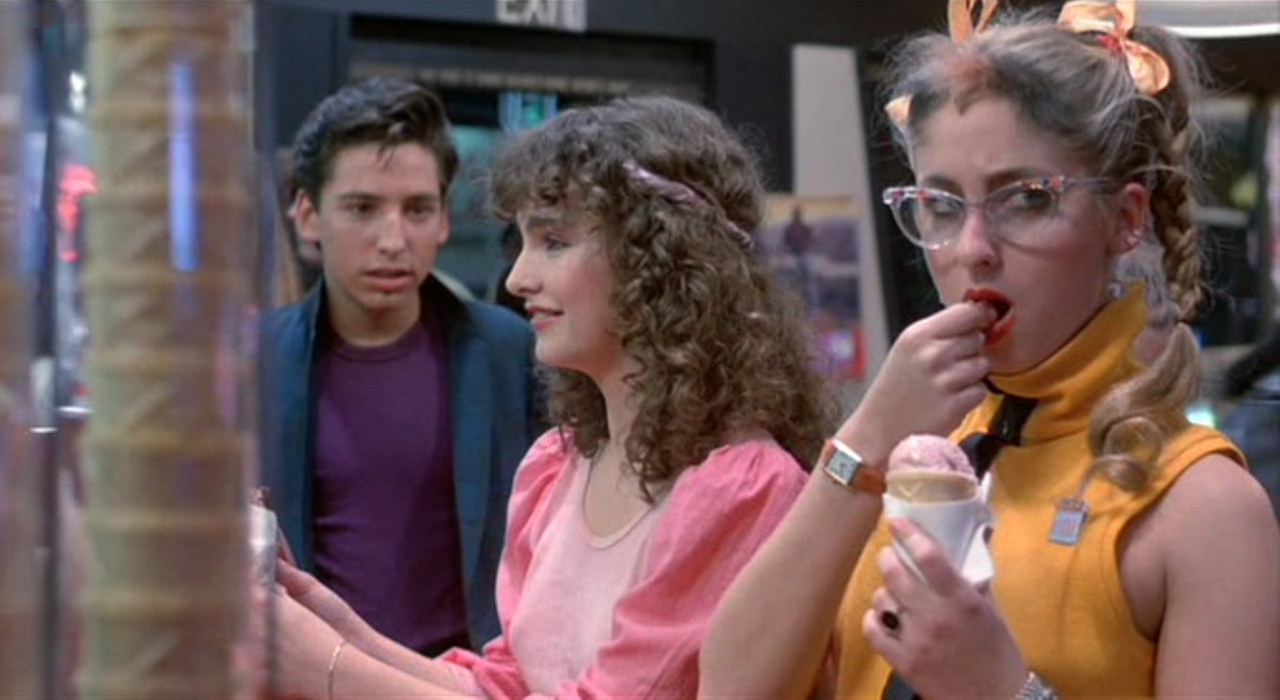 |
| Lawrence Monoson, Diane Franklin and Kimmy Robertson in The Last American Virgin |
Of course there were teen movies being made and released in the 80's before these three films came along, and one of the more interesting is 1980's Little Darlings. It's an odd film; a summer camp set comedy drama that seems to straddle American and European influences. Its story sets Tatum O'Neal and Kristy McNichol against each other as teenage girls who have a bet on which of them will lose their virginity first during the summer. This clearly anticipates the sex comedies that would come to dominate the genre in the 80's, but it also has silly slapstick sequences, like a mass food fight, which feel more out of a mid 70's Disney movie. The European influence comes through in the more dramatic side of the film, especially O'Neal's crush on a camp counselor played by Armand Assante and McNichol's relationship with a local boy played by a very young Matt Dillon. It's interesting to see a sex comedy that both approaches its genre from the perspective of two female characters and treats their relationships with a degree of seriousness. It's schizophrenic at times, but engagingly played by O'Neal and McNichol.
The 80's teen movie had its share of oddities. 'Savage' Steve Holland carved a niche of his own with three absurdist comedies that have gone on to cult success. The middle entry in this trio of films, One Crazy Summer, is a good laugh, but it has nothing on the films Holland made either side of it; Better Off Dead and How I Got Into College. Better Off Dead is one of the strangest films of the 80's teen movie cycle. The central story of Lane (John Cusack) deciding to kill himself after he's dumped by his girlfriend sounds depressing, but Holland filters it through a madcap surrealist comedy full of absurd characters, barmy running gags and offbeat punchlines. The film features alumni of many other teen movie classics. Curtis Armstrong, of Revenge of the Nerds, is hilarious as Lane's friend, who is constantly trying to find ways to get high and whose ski coaching amounts to "Go that way, really fast. If something gets in your way, turn. Diane Franklin is charm itself as French exchange student who falls for Lane and Cusack has perhaps the best track record in this genre in the 80's. We'll come back to that. Better Off Dead's greatest strength is its breathless inventiveness, the way it finds bizarre ways to approach situations that, even by this stage, were cliché. For instance, Lane's crappy job in a burger bar eventually leads to a stop motion animated sequence featuring one of the burgers and a series of challenges to drag race is enlivened by the fact that the challengers talk like Howard Cossell. It would be a crime to spoil more of the jokes. This one of the best comedies of the 80's. Just watch it.
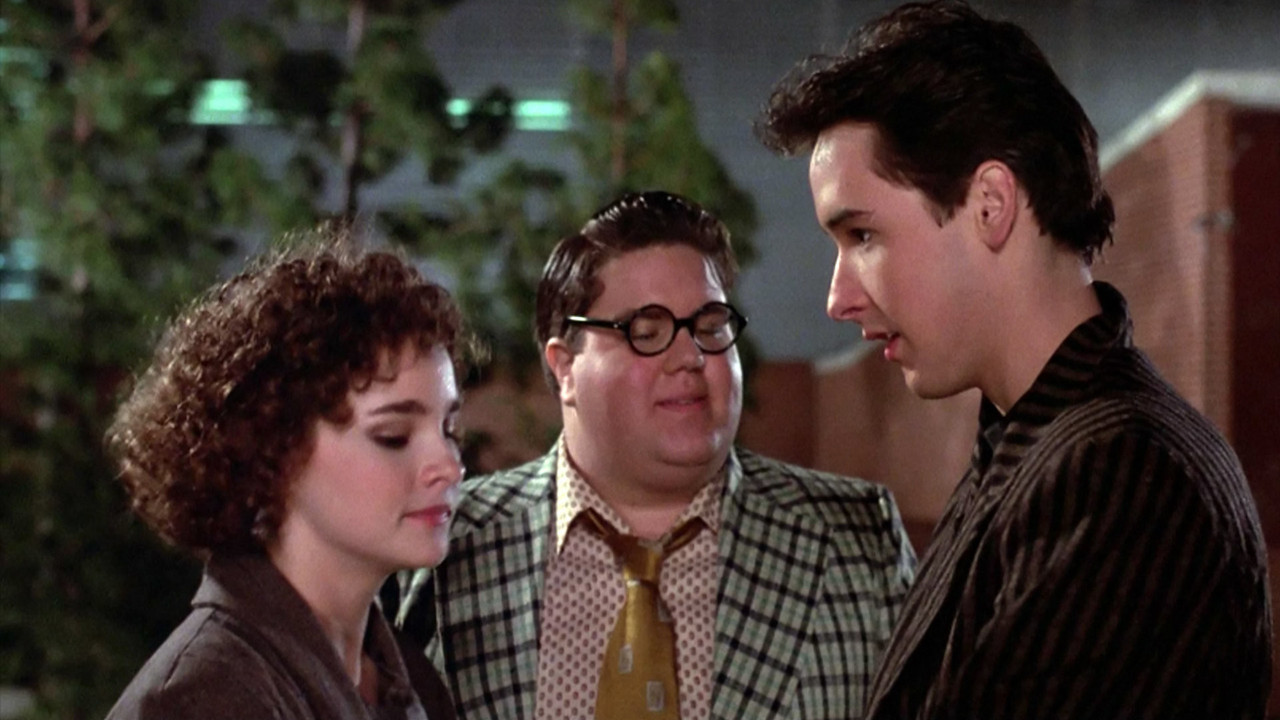 |
| Diane Franklin, Dan Schneider and John Cusack in Better Off Dead |
John Cusack, inexplicably, isn't a fan of Better Off Dead. However, he did have an incredible run in teen movies. Hot Pursuit didn't work, but otherwise his filmography is full of classics from all corners of the genre, be it his small part in established classic Stand By Me, his lead in Cameron Crowe's Say Anything or Rob Reiner's often forgotten second film. The Sure Thing has, over the years, been swallowed by the reputation of the two films that Reiner made either side of it; This is Spinal Tap and The Princess Bride, but it more than holds its own in their company. The Sure Thing is essentially an 80's teen movie take on It Happened One Night with Cusack as a college student on a cross country trip in pursuit of a girl he has been promised is the sure thing of the title. He makes the trip with a nerdy and uptight fellow student played by Daphne Zuniga and, well, you know what happens. It's a smart, engagingly played and very funny updating of a classic template, with Cusack and Zuniga bouncing off each other beautifully. There are also some lovely throwaway lines, like Tim Robbins introducing himself as "Gary Cooper, but not the Gary Cooper that's dead". I'm amazed that this isn't considered a classic romantic comedy, a classic teen movie or a more important part of Reiner's incredible early run as a director.
Clearly not all of the teen movies of the 80's that you've never heard of are classics, but there are still a lot of interesting films among them. If 1985's Mischief is remembered at all today it is largely for Kelly Preston's full frontal nude scene (which, to be fair, is memorable) but despite the fact that it's cool guy teaches geek how to get the girl story is pretty generic it has one moment that really sets it apart; a line that defines the problem with every romantic comedy that doesn't work. Late in the film, the relationship with Kelly Preston's character having broken down, the geeky lead says "I was so busy trying to fuck her that I never got to know her". It's an insightful piece of criticism; a moment sees the film, surely accidentally, turn inwards and analyse itself and its genre. It makes an otherwise unmemorable film one that sticks in the mind, if only for the implications that criticism has.
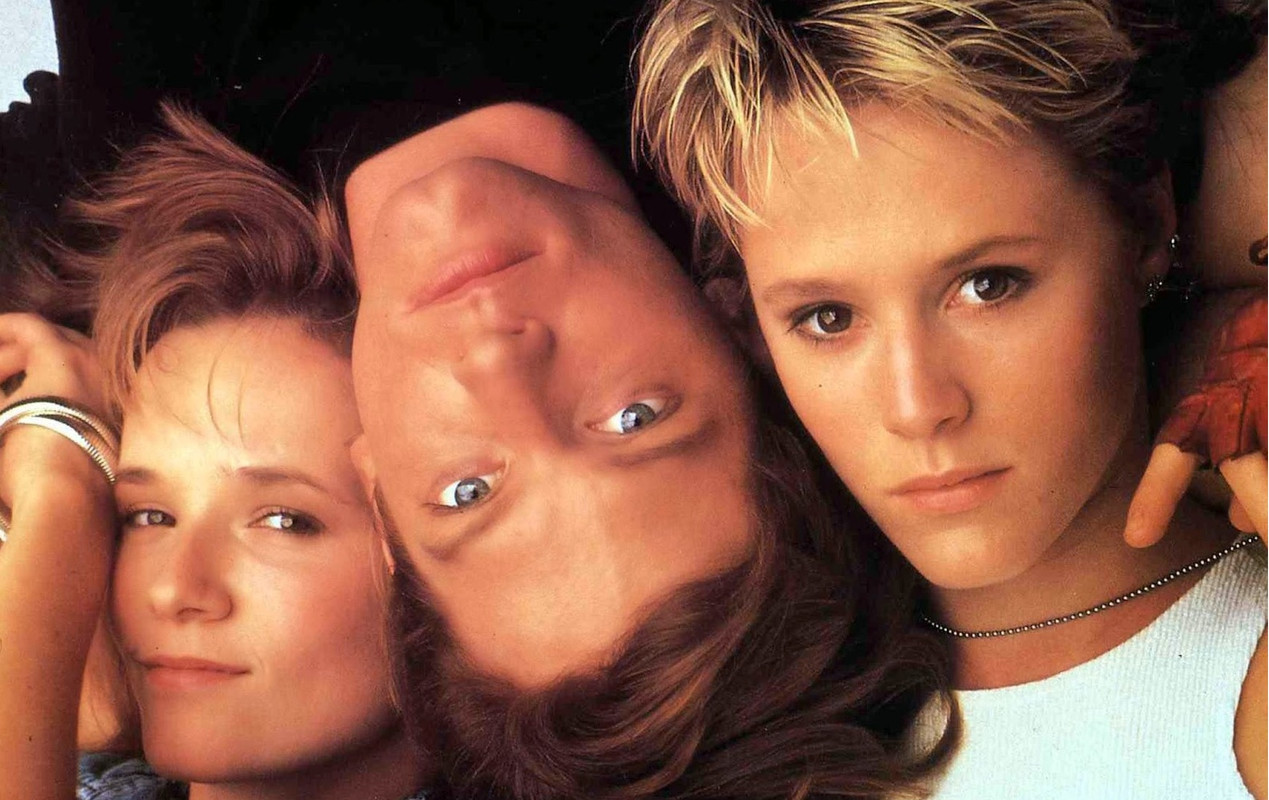 |
| Lea Thompson, Eric Stoltz and Mary Stuart Masterson in Some Kind Of Wonderful |
There are so many that I've yet to mention... early roles for Heathers star Winona Ryder in Square Dance (affecting, but for Rob Lowe's awful hamming as a mentally handicapped character) and Lucas... Goofy comedy Real Genius; a college set flick which has Val Kilmer, as a scientific genius, being more fun than in anything else he did before Kiss Kiss, Bang Bang... Ladies and Gentlemen, The Fabulous Stains; a hard to find punk movie with a young Diane Lane... Mask; a heartfelt (if sometimes slightly cloying) romance from Peter Bogdanovich, who made the greatest coming of age movie of them all: The Last Picture Show... These aren't all great films, but none of them is boring, all are, at some level worth seeing and they all contribute to a picture of a sub-genre that ruled the 80's, pulling in every genre under the sun.


