The Screening Room is the podcast I present, along with Michael Ewins, over at www.multimediamouth.com
This week we talk Bridesmaids, 'Chick Flicks' and Incendies.

Jun 29, 2011


Jun 28, 2011
DVD Review: Szindbád [15]
Dir: Zoltán Huszárik
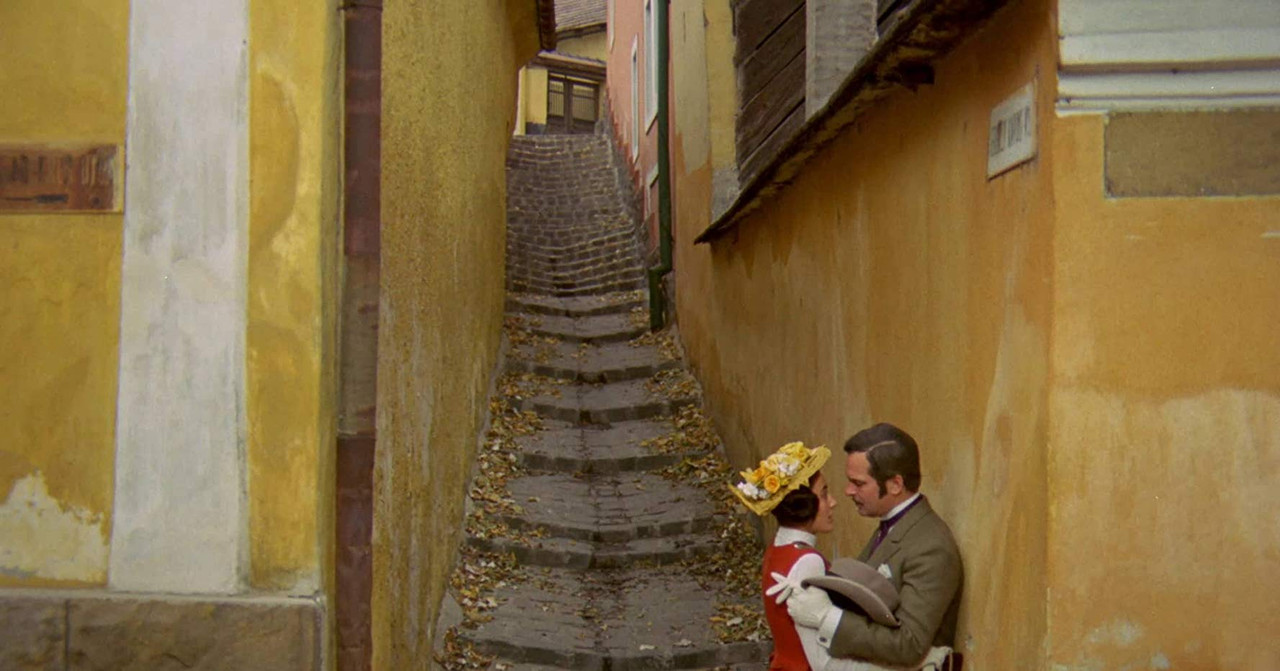
Szindbád is a visual marvel. It's essential that the film be beautiful, because its eponymous central character - who seems to be an aristocrat of some sort, but not to have any settled job or residence - is clearly captivated by beauty, and particularly by the beauty of nature. This natural beauty is the film's focus, it is a sensual film, it delights in nature (the near microscopically close up shots of flora and fauna put me in mind of certain sequences in I Am Love), in food and perhaps most notably in women. As far as it has any structure, the film is a dossier of memories of the various beautiful women who have drifted through Szindbád's life. Huszárik, and by extension Szindbád, see beauty in women old an young, from every class and of diverse appearence. There is relatively little nudity, and no sex to speak of, but the film is in thrall to the beauty of women, and Huszárik's soft lighting and his focus on detail in all things (be it a flowers petal, chilli seeds in soup or a woman's breast) draws us into a sensual experience.
For me, Szindbád felt like a series of beautiful digressions, but the frustration of it is that I'm not sure that it is anything more than that. This is a surrealist work, so going in expecting a traditional narrative would be foolish, but the film gives us very little to hang on to. Szindbád himself (Zoltán Latinovits) is so studiedly unemotional - he tells us that the secret of his success with women is not telling them that he loves them - that he always remains distant, and he's so prone to spouting pretentious (and largely irrelevant) philosophies that he's often a chore to follow. None of the women are really around long enough to develop any character, and there is no sense of even the most subtle narrative through line (even films like Valerie and Her Week of Wonders have a central thread, which is then disrupted by the surrealist telling). Engagement is further complicated by a timeline which seems to skip back and forward through time, without giving us any clue to - or real reason to care about - chronology. What I was left with was a film I admire a great deal for its visual splendour, but the frustrating feeling that I'm going to need to do some serious reading to understand it enough to truly appreciate it.
Szindbád is hard work, but right from the start it is rewarding, because it is so beautifully shot and edited (the combination of very fast cutting with other scenes that unfold in long held shots is striking and means that the film always remains visually unpredictable). I'd like to be able to recommend it in more glowing terms. This one is probably for long standing fans and students of surrealist cinema, as a starting point I'd suggest Valerie, or some Bunuel, but if you are already interested in the movement then I suspect that Szindbád will delight and fascinate you.
★★★☆☆
★★★☆☆
Jun 26, 2011
Will 24FPS review Transformers: Dark of the Moon?

The answer to that question is up to you. I'll level with you; I don't want to see Dark of the Moon. Why, you ask? Allow me to refer you to my review of the last instalment; Transformers: Revenge of the Fallen. I loathed it, perhaps even more than I loathed Michael Bay's awful, awful, awful Bad Boys II. That said... I saw Avatar because you guys demanded it (gee, thanks)and since you all, if my inbox is anything to go by, seem to like to see me suffer I thought I'd extend a challenge to you all...
If enough of you want me to then I will see Transformers: Dark of the Moon and review it, both here on the site and on a special episode of The Screening Room. So, if I get 30 or more requests for the review before Friday July 1st, then I'll go and see it that day. If not... I dodge the bullet and am absolved of responsibility. So, over to you guys. Drop me a line at sam@24fps.org.uk tweet me @24FPSUK or register your interest by commenting on this post.
Jun 23, 2011
Early Review: Tomboy
Dir: Celine Sciamma
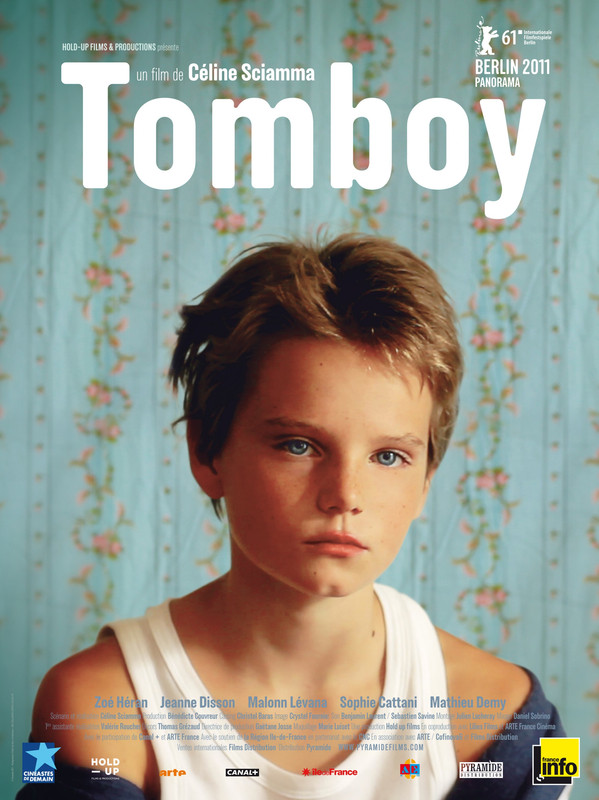
Like Water Lilies, Tomboy concerns itself with a girl's coming of age. Here Sciamma follows Laure (Zoe Heran), a tomboyish ten year old who, on being asked her name by her new neighbour Lisa (Jeanne Disson), introduces herself as Mikael. 'Mikael' and Lisa become friends, and even share a first kiss, but Laure struggles to keep her secret from her new friend and from her family.
It's refreshing to see a movie these days which, while its focus is on young people, is truly adult, not in terms of having loads of swearing, sex and violence, but in that it deals with complex and challenging issues of identity, sexuality and the process of growing up in a way that never talks down to the audience or moralises about its characters thoughts, feelings or choices. Sciamma approaches Laure/Mikael's gender identity with sensitivity, other viewers might feel differently, but to me it felt like she never quite made an absolute determination about whether Laure is engaging in youthful experimentation here (tied with the confusion that comes with the first engagement with a sexual identity) or is truly transsexual, and for me the film's openness on this issue is a key strength, as it keeps it from being anything as trite as a cry for acceptance. Tomboy doesn't feel, to me, like a film with a heavy political message, rather its strength is as an intimate and insightful drama about a young person trying to define themselves.
As befits a film so focused on issues of the body and identity, Tomboy often lingers in close ups. Shooting on an adapted digital stills camera, with a very shallow depth of field, Sciamma gets right in to the personal space of her characters, especially that of Laure, her six year old sister Jeanne, and her, entirely male, bar Lisa, new group of friends (cast from Zoe Hernan's own real life group of friends). This brings us right in to the characters and experiences being portrayed here, and makes the film feel at times almost voyeuristic in its intimacy and reality. At the same time it's an intelligently composed and often rather beautiful film. It's a difficult circle that Sciamma squares here; making a film that feels designed and directed, without allowing any of it to ring false.
As in Water Lilies, Sciamma's insight into her characters is spot on, now 30, she still knows how to write kids who seem like kids. Even Laure's intelligent and somewhat wily sister (she exploits Laure's lie so that she can hang out with older kids) is written as a smart six year old, not as the miniature adult we have seen in films like (500) Days of Summer. This carries through into the performances. There is never any sense of acting here, especially from the outstanding Zoe Hernan and Malon Levana. Hernan deals assuredly with a complex role, it would be interesting to discover how Sciamma told her about the character, and how she understood Laure/Mikael's identity but what's really impressive here is the ease with which she shifts gears, going from unselfconciously playing with her little sister and her parents, to being more outwardly controlled when she has to fit in with a group of boys. There is a great ease to the way the actors relate, a very real sense of family created between Hernan, Levana and Sophie Cattani and Mathieu Demy as their parents, and this also applies to the scenes between the children, be it the innocent first stirrings of attraction between Lisa and Mikael, or the games that the larger group of kids play, there is just a sense here of Sciamma observing children being children.
Tomboy is full of memorable scenes and moments, from the way that Jeanne visibly considers the decision of whether to expose her Sister's lie when Lisa comes looking for Mikael, to the lovely scene when Jeanne cuts her sister's hair. There is also much to admire in the way the relationship between Mikael and Lisa is drawn, the friendship grows very organically, and there is both charm and thematic interest in a scene in which Lisa puts make up on Mikael. Of course the course of the film can not run entirely smooth, and for me Celine Sciamma's sole - minor - stumble, is having the only confrontational scene with the children, after they discover Mikael's true identity, be an almost line by line quote of a notable sequence in the similarly themed Boys Don't Cry. Is it Sciamma's homage? Is it just that there aren't many other ways to deal with that moment, especially considering the age and level of maturity of the characters? It's hard to say, but it works as a scene in and of itself, even if it is over familliar.
There is real emotional punch to Tomboy. Like Water Lilies it deals in real and raw emotion, and though the performances are never overly demonstrative, you feel it all. I may like Water Lilies more, but this film, for me, confirms Celine Sciamma as a major, major talent to watch and is one of the best of 2011 to date. I'd like to see Sciamma branch out a bit more next time, but if she keeps making coming of age movies this insightful, and this well acted, then that's just fine by me.
★★★★☆
The Screening Room Episodes 14 and 15
The Screening Room is the podcast that Me and Mike Ewins present over at www.multimediamouth.com
It's been a while, but we're back. Sorry about the delay with Episode 14, but I'm by no means a professional sound producer and editor, and it was, for various boring reasons, a real pig to get right. I think I managed it though.
Anyway, here's what you can expect in these shows...
Episode 14: Reviews of Mother's Day and Kaboom and a discussion of the best and worst horror remakes.
Episode 15: A review only special featuring The Messenger, The Beaver, Stake Land, Green Lantern, Potiche and Bad Teacher.
Enjoy the shows, and if you've any comments (or any suggestions for list topics for future episodes) then drop me a line at sam@multimediamouth.com or tweet me @24FPSUK
It's been a while, but we're back. Sorry about the delay with Episode 14, but I'm by no means a professional sound producer and editor, and it was, for various boring reasons, a real pig to get right. I think I managed it though.
Anyway, here's what you can expect in these shows...
Episode 14: Reviews of Mother's Day and Kaboom and a discussion of the best and worst horror remakes.
Episode 15: A review only special featuring The Messenger, The Beaver, Stake Land, Green Lantern, Potiche and Bad Teacher.
Enjoy the shows, and if you've any comments (or any suggestions for list topics for future episodes) then drop me a line at sam@multimediamouth.com or tweet me @24FPSUK
Jun 21, 2011
The Last American Virgin
DIR: Boaz Davidson
 Director Boaz Davidson's original film Lemon Popsicle (made in his native Israel), became popular in a dubbed version on the American and British markets in the late 70's and early 80's as one of the original video hits (it also spawned a whole series of films). It was then somewhat inevitable that some enterprising producer would get around to remaking the film for an English speaking audience, but it is perhaps something of a surprise that they hired Davidson himself to write and direct. I haven't seen Lemon Popsicle, so I don't know how closely this film sticks to it predecessor, but I do know that The Last American Virgin is an interesting film in its own right, and certainly deserves to be better known.
The film really falls into two quite different parts. The first hour of the film combines a knockabout sex comedy about three high schoolers attempting to lose their virginity with a slightly bittersweet twist; Gary (Lawrence Monoson) has fallen for Karen (Diane Franklin), the new girl at school, but she's started going out with his jock friend Rick (Steve Antin, more recently the director of Burlesque). It's the last forty minutes of the film that really pay off this very relateable emotional content, as Gary steps up to the plate to help Karen when Rick won't. The film becomes darker and more dramatic, and has a real emotional punch towards the end.
It's not perfect; the parts don't always mesh, and while the sex comedy is pretty funny the tone of the film as a whole often seems ill at ease. In addition, Monoson doesn't quite have the dramatic chops for the heavier lifting of the second half. That said, it's tough not to be swept along with the film's breezier first hour. The first fifteen minutes are largely given over to Gary, Rick and their friend David (Joe Rubbo) picking up three girls (you'll recognise one of them; she's the girl who was having a driving lesson in that scene in The Naked Gun) they think will be 'easy' and the comic complications they run into with Gary's parents. It's all a bit familiar after countless imitators like the American Pie films, but still, it's funny stuff, and it also sets up the characters quite well. There are plenty of amusing set pieces too, from an awkward conversation with a pharmacist to an hilarious moment in which Gary comes home drunk and proceeds to flirt with one of his Mother's friends.
The Last American Virgin is definitely raunchy - and there's plenty of nudity, though frankly I could have gone without looking at Louisa Mortiz's terrible boob job - and yet, thanks to the naivete of most of the characters there is also a strange innocence to it (established, surely, so Davidson can shatter it with his unexpected third act).
The performances aren't what you'd call brilliant, but they serve the material well enough for the most part. Antin is a perfect asshole, Rubbo amusing as the accident prone one of the group, and the supporting cast generally do nice work, with particular kudos due Kimmy Robertson, who is very funny as Karen's friend Rose, who has designs on David. Monoson may not be any great shakes dramatically, but he handles the comedy better, and is at least convincing mooning over Diane Franklin. Franklin makes her debut here, and though she's not asked to do a great deal, at least in terms of dialogue, until the last third of the film, her presence is effective in and of itself. It's not hard, really, to buy into a geeky 17 year old kid instantly falling head over heels for her; she's basically the dictionary definition of 'unfeasibly cute'. Come the last act she's solid too, handling the pivotal scene well, wringing emotion from it that you wouldn't expect after watching the film's first fifteen minutes.
The Last American Virgin isn't quite a lost classic, and it loses some shine when compared to the real classic teen movie of 1982; Fast Times at Ridgemont High, which mixes tones more organically, boasts an all star cast and has a better soundtrack (Somebody's Baby notwithstanding), but certainly this film deserves better than its current status in the UK; as a virtually unknown film that hasn't seen a release since 1987, there is plenty to enjoy here, and at the very least it is refreshing to see an American teen movie with such a bittersweet ending. If you are, as I am, fond of teen movies then this one is definitely recommended.

The film really falls into two quite different parts. The first hour of the film combines a knockabout sex comedy about three high schoolers attempting to lose their virginity with a slightly bittersweet twist; Gary (Lawrence Monoson) has fallen for Karen (Diane Franklin), the new girl at school, but she's started going out with his jock friend Rick (Steve Antin, more recently the director of Burlesque). It's the last forty minutes of the film that really pay off this very relateable emotional content, as Gary steps up to the plate to help Karen when Rick won't. The film becomes darker and more dramatic, and has a real emotional punch towards the end.
It's not perfect; the parts don't always mesh, and while the sex comedy is pretty funny the tone of the film as a whole often seems ill at ease. In addition, Monoson doesn't quite have the dramatic chops for the heavier lifting of the second half. That said, it's tough not to be swept along with the film's breezier first hour. The first fifteen minutes are largely given over to Gary, Rick and their friend David (Joe Rubbo) picking up three girls (you'll recognise one of them; she's the girl who was having a driving lesson in that scene in The Naked Gun) they think will be 'easy' and the comic complications they run into with Gary's parents. It's all a bit familiar after countless imitators like the American Pie films, but still, it's funny stuff, and it also sets up the characters quite well. There are plenty of amusing set pieces too, from an awkward conversation with a pharmacist to an hilarious moment in which Gary comes home drunk and proceeds to flirt with one of his Mother's friends.
The Last American Virgin is definitely raunchy - and there's plenty of nudity, though frankly I could have gone without looking at Louisa Mortiz's terrible boob job - and yet, thanks to the naivete of most of the characters there is also a strange innocence to it (established, surely, so Davidson can shatter it with his unexpected third act).
The performances aren't what you'd call brilliant, but they serve the material well enough for the most part. Antin is a perfect asshole, Rubbo amusing as the accident prone one of the group, and the supporting cast generally do nice work, with particular kudos due Kimmy Robertson, who is very funny as Karen's friend Rose, who has designs on David. Monoson may not be any great shakes dramatically, but he handles the comedy better, and is at least convincing mooning over Diane Franklin. Franklin makes her debut here, and though she's not asked to do a great deal, at least in terms of dialogue, until the last third of the film, her presence is effective in and of itself. It's not hard, really, to buy into a geeky 17 year old kid instantly falling head over heels for her; she's basically the dictionary definition of 'unfeasibly cute'. Come the last act she's solid too, handling the pivotal scene well, wringing emotion from it that you wouldn't expect after watching the film's first fifteen minutes.
The Last American Virgin isn't quite a lost classic, and it loses some shine when compared to the real classic teen movie of 1982; Fast Times at Ridgemont High, which mixes tones more organically, boasts an all star cast and has a better soundtrack (Somebody's Baby notwithstanding), but certainly this film deserves better than its current status in the UK; as a virtually unknown film that hasn't seen a release since 1987, there is plenty to enjoy here, and at the very least it is refreshing to see an American teen movie with such a bittersweet ending. If you are, as I am, fond of teen movies then this one is definitely recommended.
Jun 19, 2011
Green Lantern [3D] [12A]
Dir: Martin Campbell
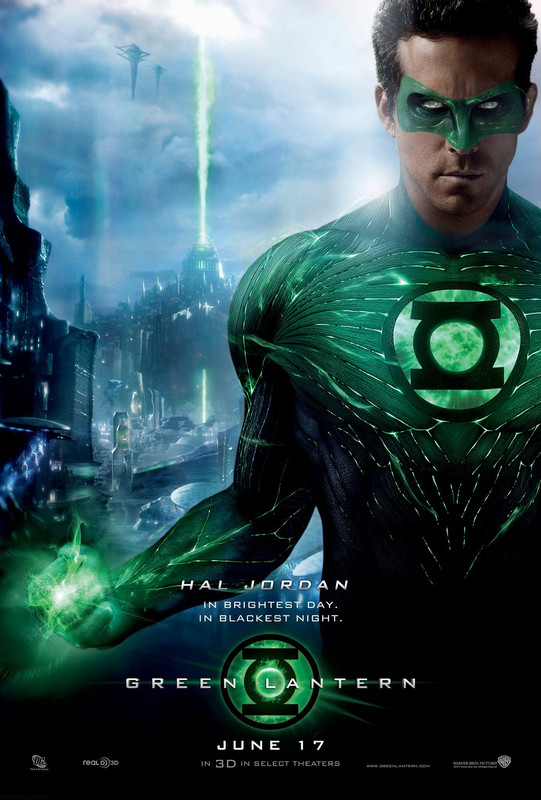
Based on the DC Comics series, Green Lantern spins a complex mythology (through laughably po-faced narration from Geoffrey Rush) of a universe split into about 3600 sectors, each protected by a superhero who uses the power of a green lantern and ring to harness his will and fight evil. Will was chosen because, apparently, its green energy is the most powerful (safe) power source in the universe. But there is an enemy coming; Parallax, whose yellow fear energy (I swear, this is really the plot) is endangering the universe. When one Green Lantern dies, their ring chooses another, so, obviously, when purple alien Temura Morrison shuffles off, the ring picks military test pilot and (un)professional asshole Hal Jordan (Ryan Reynolds) to save the world. Stupid ring.
Where to begin with this movie? Perhaps the film's weakest link (though, gosh, it's a close run thing) is its look. This is a pig ugly movie, and that's before we get to discuss the 3D. CGI has advanced to a point where it can do almost anything, but Green Lantern leans so heavily on it that it becomes a serious problem. The opening scenes, with the narration, are rendered almost entirely in CGI, and despite the fact that the technical side of things is reasonable (not great, but reasonable), the feeling of watching the opening cut scene for a console game is unshakeable. The problems, however, really become clear once the film becomes Earthbound. The first shot of a human is of some nameless conquest of Hal Jordan's, she is a gorgeous girl, blonde, about 25, and there's just something off about her, she doesn't quite look real. It's a problem that persists in the film; there is a sheen of unreality to it. I wonder if director Martin Campbell and DP Dion Beebe used a lot of CGI in post production to augment the film's lighting, because even the light in this movie just feels... wrong. It's hard to explain, and I don't think it's the 3D, but if you see the film (don't) you'll know what I mean the first time human appears.
That's not the only problem with the film's look. The colour scheme is pretty ugly; glowing neon green dominates, and this too is primarily realised with CGI. I'm beginning to think that every time a filmmaker wants to do a CG shot they should be made to justify in writing why they can't do it practially, and what purpose the CG will serve the storytelling. I can see why Campbell had to realise the various things that Hal calls forth from the ring with his will (a race car track, guns, etc, etc) in CG, but his suit and mask? Really? Okay, so it glows, and gives off green static, and this adds what exactly? Certainly it doesn't add enough to make up for the fact that it looks so hilariously stupid. The mask is especially terrible; the look, the texture, the feel of it, it just doesn't work, and that also applies to the rest of the suit. It's a problem, in a superhero movie, when the hero appears in costume and your first reaction is barely stifled laughter.
The script is awful; cliché in the extreme (the flashback to fill in Jordan's daddy issues may actually be from another film it's so hackneyed) and so riddled with half-finished ideas, characters and scenes that one suspects that the studio saw an early cut of this trainwreck and ordered an editor to come in with a machete in each hand and set about a 150 minute film until it only ran to 100 minutes. The arc of Peter Sarsgaard's villainous Hector Hammond (infected by yellow fear energy of Parallax, again, really) suffers most. He goes from nerdy scientist to world-destroying large brained maniac in the space of perhaps 12 minutes of screen time, something that even an actor as good as Sarsgaard is (and, bless him, he's even trying to give a performance here) just can't sell without motivation and character development that goes beyond a two minute infodump. Also compromised by the writing are the smaller supporting characters, like Tim Robbins as Sarsgaard's senator father, Reynolds' friends and family (there is a heartfelt talk with a nephew who is then totally forgotten) and Mark Strong as Lantern leader Sinestro (oh, I wonder if he's a villain in the sequels).
The script is also an issue when it comes to Blake Lively's thin role as love interest / endangered prop Carol Ferris, but more of an issue is Lively's fundamental miscasting. Carol is a fighter pilot, and one of the high ranking executives in her Dad's aviation company. Now, I've got a lot of time for Blake Lively, she's clearly very talented and I think she'll go far in the future, but COME ON she's 22. A crack fighter pilot? A VP of an aviation company? Blake Lively? Total miscasting aside, Lively works hard and is actually much better than the film deserves, but still, when Reynolds says to her "You're a fighter pilot Carol" you'll have to struggle to restrain yourself from bellowing 'no she's not' at the screen.
While Sarsgaard and Lively at least try, Ryan Reynolds barely shows up (not that he needs to, with the CGI doing so much of the work for him). He's on autopilot throughout and, for the first time, a charisma-free zone. Part of the problem is, again, the writing, which makes Hal more than a bit of a dick, and never lets him enjoy his powers. He's not an easy hero to get behind, and that robs the films (brief and perfunctory) climax of any real investment or import.
Other little things annoy, but most of all the sheer familiarity of it all, from the Top Gun rip off action scene to an off the peg training montage (featuring Michael Clarke Duncan voicing, again I'm not making this up, Kilowog - yeah, stay classy movie) is what really kills the movie, because it renders it boring as well as poorly put together. It's not even bad in a way insane or notable enough to be fun. Right down to its rubbish 3D conversion (splice in a paragraph from any 3D review I've done here), Green Lantern is lazy filmmaking for undemanding herds of moviegoers. I think we deserve better, don't you?
★☆☆☆☆
★☆☆☆☆
Bad Teacher [15]
Dir: Jake Kasdan
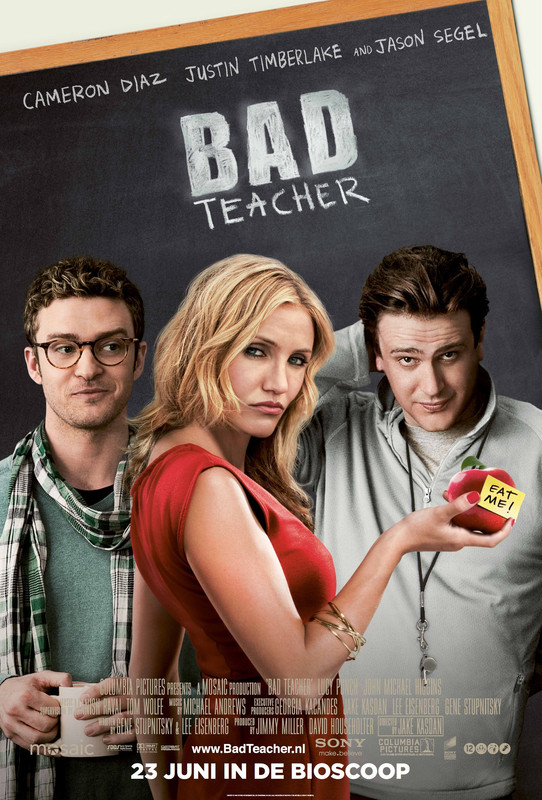
Cameron Diaz plays Elizabeth Halsey, who returns to teaching after her rich fiancé breaks up with her, with a plan to snare herself another guy to take care of her. She's a terrible teacher, and instead of doing anything with her kids shows them inspirational teacher movies while she sleeps. When she meets rich kid supply teacher Scott (Timberlake) she decides he's the man for her, and that she has to get a boob job to snag him. Cue all manner of moneymaking scams to help her get the $10,000 she needs for her new rack.
There are talented people involved at every level of Bad Teacher. Diaz' kooky charm and dazzling smile have served her well, but she's also a capable actress (see Being John Malkovich and tell me otherwise), Timberlake is, surprisingly, becoming an unpredictable but often engaging actor, and the supporting cast is packed with funny people from Jason Segel, to John Michael Higgins, to British actress Lucy Punch (as a super perky teacher who is Elizabeth's rival for Scott's attention). Behind the camera is Jake Kasdan, who made the very funny Orange County. Every time I see something like this happen; a collection of people who seem talented and intelligent uniting for an idea so utterly misconceived as that of Bad Teacher, I really wonder how it happened. Is there some sort of Hollywood party where entire production teams go and ingest a hallucinogen that makes them think that what they're about to work on is "THE BEST FUCKING IDEA IN THE HISTORY OF THE FUCKING WORLD"? It would explain a lot.
Alfred Hitchcock was a great man, and right about many things, but mostly he was right when he said that the three most important elements of a good movie are "the script, the script, and the script". Guess where Bad Teacher begins to go wrong.
One of the major difficulties is with Cameron Diaz' character. Yes, she's supposed to be a bad teacher (and that's actually something that's worked in the past, Kindergarten Cop is no masterpiece, but the incongruity of Arnie as an out of his depth teacher is funny), the problem is that there is nothing even a tiny bit likeable about Diaz' Elizabeth. Elizabeth is shallow, drug addled, an alcoholic, she not only doesn't care about her students, she hates them (and in one scene throws basketballs at the heads of several of them, which is pretty dangerous and would get her immediately fired), on top of that she's a lying, manipulative, thieving bitch who is incapable of a polite interaction that doesn't serve her in some way. And this movie wants us to like her. Worst of all, she's not funny, because Gene Stupnitsky and Lee Eisenberg (who have written Ghostbusters 3, Lord help us) seem to think that being an awful person is the same thing as being amusing. It's not. It actually actively works against the film, because you're so alienated by the character that you start thinking about the huge logic gaps. For instance; do none of Elizabeth's students talk to their parents? Does she only have one class a day? Does no other teacher ever observe one of her classes? I shouldn't be thinking about these plot holes, and if the film were funny, if Elizabeth were more than just an inappropriately sweary bitch, I wouldn't be.
The other huge problem with the writing of Elizabeth is that she (like all of the characters) has no arc. If anything by the end of the film she's worse, MORE of a bitch, prepared to potentially ruin the lives of two nice people for her own ends (and again, we're expected to cheer). If you want to make a film about an unlikeable character, fine, but you have to move them on. Again, look at Kindergarten Cop; Arnie starts out as a very inappropriate teacher, you could even say he bullies the kids in some early scenes, but the screenplay allows him to learn, to become a better person, so we get to like him and feel comfortable with laughing along with the movie (again, it's not like I'm holding it up as some masterpiece, it just does the basics quite well). There is a brief moment where it seems that Bad Teacher might go that way, as Elizabeth discovers a cash prize for the teacher with the best test scores, and begins to actually teach her class, but the film abandons this idea almost as soon as it has it, and goes down a different road - one that makes Elizabeth EVEN WORSE.
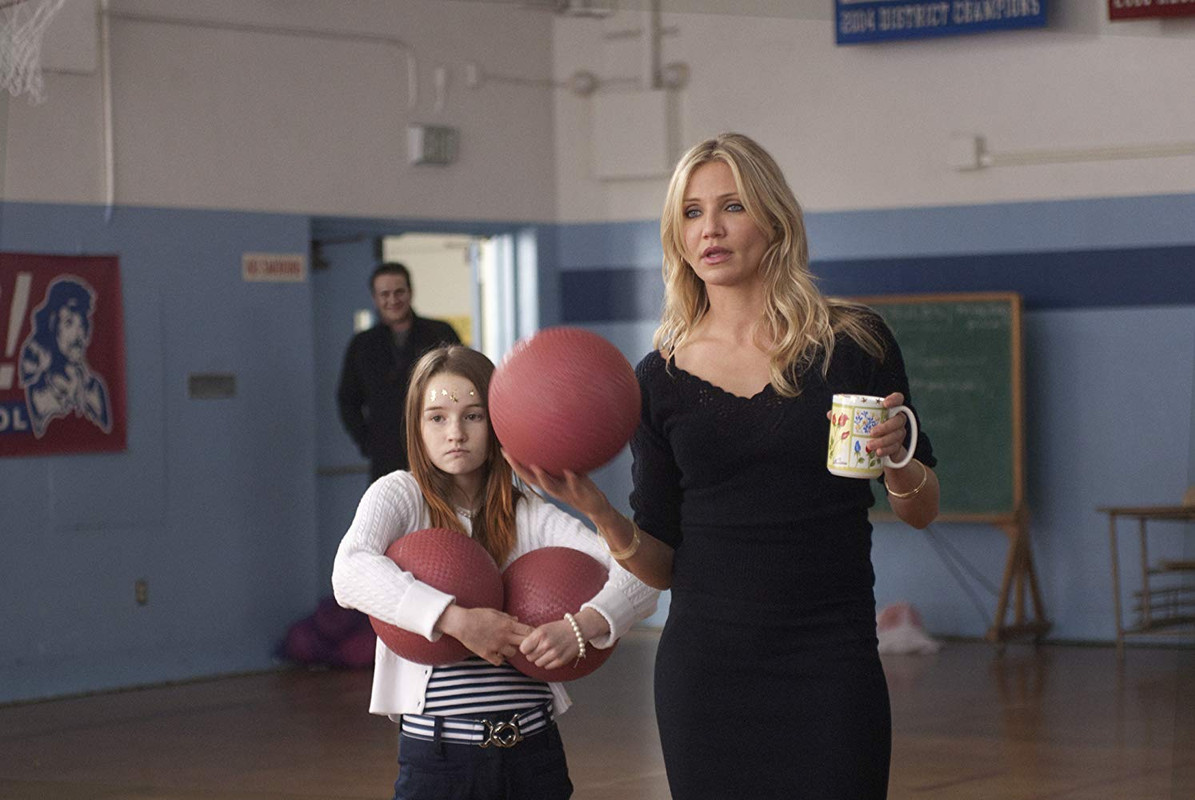
Jason Segel blandly dude's his way through his handful of scenes, and seems to make no attempt to play an actual character. The same can't be said of Justin Timberlake as Scott, but, again, the writing is just broken. Scott, too, is insufferable; a new man so desperate to please everyone that he'll agree with whatever the last statement made was. He's also set up as being naive and nice to a fault, which makes the film's pivotal scene, in which he dry humps Diaz, cheating on his girlfriend, nonsensical. That scene is just one of many which feels half finished. Scott has thus far been a very nice man, so why is he suddenly cheating on his girlfriend with Elizabeth? There needs to be another scene, maybe one where Elizabeth convinces him that the rulebook (it could even be an actual rulebook, in another incongruity he's stupid enough to buy that) says it's not cheating if they keep their clothes on.
This tossed off, unfinished, who gives a fuck attitude pervades the film, from Kasdan's flat visuals to the lack of actual jokes (what is the joke when Elizabeth show her class movies over and over? That's not a joke, it's a setup). But the real blame has to fall on the awful, awful writing, on a screenplay that is broken at the most fundamental levels, that is written by people who appear to have no idea how to write an evolving character, or simply don't care enough to bother. Bad Teacher is a terrible, terrible film. It's boring as all hell, packed with unlikeable characters and about as funny as stepping in dog shit on your way to a friend's wedding.
★☆☆☆☆
Jun 16, 2011
DVD Review: Sea Purple [15]
Dir: Donatella Maiorca

I wonder just how closely Sea Purple (an unwieldy title, explained only in a caption just before the end credits) is inspired by a true story. Certainly its main character seems to be based on a real person, and the central conceit seems to be true, but I would be surprised if some of the peripheral details are true.
The film is set in the mid to late 1800's and is about Angela (Valeria Solarino), whose childhood friend Sara (Isabella Ragonese) returns to their small Island off the Italian coast after a fifteen year absence. Soon after Sara returns, Angela confesses her love for her old friend, who reciprocates. Angela's Father (Ennio Fantastichini) wants her to marry a local boy, but Angela refuses, and tells him she loves Sara. In order to allow her daughter to live how she wants, Angela's Mother (Giselda Volodi) convinces the local priest that there was a mistake when Angela was born, and Angela returns to the village, as her Father's son Angelo.
Sea Purple is a beautiful film. There likely wasn't a great challenge involved in making it look good; the scenery is stunning and frankly so are the cast - to a fault actually, the otherwise excellent Solarino coming a little unstuck in the 'looking like a boy' stakes - but director Donatella Maiorca also deserves credit for finding some striking shots (Angela's Father, rendered as a silhouetted monster, as he beats her) and for exploiting the natural beauty of the film's environments and of her cast quite so effectively. Maiorca also draws strong performances from her leads. Though there is little setup provided by the screenplay for the devotion that Angela and Sara have to one another, Solarino and Ragonese sell the relationship at both an emotional and a physical level. There is also an excellent supporting performance from Giselda Volodi, as Angela's Mother, in limited screentime Volodi gives a rounded portrait of a woman long cowed by her husband, coming out of her shell when her daughter needs her most. Unfortunately the same can't be said for Angela's Father, who is written and played as a cartoon bastard.
The strength of most of the performances and the visually arresting quality of the film allows Sea Purple to hold the attention despite its other problems. The script, as mentioned above, often feels a little thin, and Angela and Sara's relationship in particular could do with a few more conversational scenes to really solidify it. More problematic is the fact that much of what happens after Angela becomes Angelo doesn't feel all that believable the way that the village only quietly bristles about her marriage to Sara, and that there is little in the way of confrontation for the couple to deal with (actually this is true throughout, despite the amount of time they spend making out in broad daylight in island beauty spots). None of this really seems to fit with what you'd expect in an insular, religious, island community in the 19th century. There is also the problem of Angela's Father, who is basically a caricature of a misogynist (and, in keeping with the film's contemporary resonance about gay marriage and conservative opposition to it, which is largely subtly advanced, he says "remember, I only care about myself". That line may as well be replaced with him waving a sign saying 'contemporary right wing bastard').
The last major issue with the film is its score, which is far too contemporary (electric guitars, really?) and used in a manner best described as instructional, especially in the scenes that have Angela's Father being abusive to his family. For the most part the film doesn't need this coating of aural schmaltz / menace, because Maicora and her actors are doing their jobs effectively and communicating to us exactly how we should be feeling.
Sea Purple may be flawed, but there is a lot going on in it, the contemporary resonance is subtle but strongly felt, the performances are largely strong and the story itself is both different and interesting. It's not entirely satisfying, but it has plenty to recommend it, not least Valeria Solarino and Isabella Ragonese.

Jun 15, 2011
VHS Memories: Natural Born Killers
Dir: Oliver Stone
The Memories

Like every movie lover who was in his teens in the mid 1990's, I wanted to see ALL OF Quentin Tarantino's films. One small problem... I'm British, and Jamie Bulger had recently been murdered, precipitating a second moral panic about violent films being available on video. This led to BBFC bowing to pressure and delaying certification decisions on True Romance and Reservoir Dogs (among others) for well over a year and to Warner Brothers canceling the video release of Natural Born Killers - though it is still falsely reported as having been a banned title the uncut 18 certificate was always in place and it was purely a decision of Warner to leave the film unreleased in the UK market until 2001.
Obviously, whatever the reasons, when you tell a film fan he can't see something, that immediately means he wants to see it. So, I managed to obtain a second generation VHS, copied, I believe, from an American release. There was one small issue... It had been recorded on long play, and I, at this time - probably somewhere around '96 or '97 - didn't own a long play VCR. I watched it anyway.
My abiding memory of my first viewing of NBK is trying desperately to get the tracking to come in watchably, and trying to discern some of the dialogue through the double speed, suddenly helium voiced, performances. It's a strangely appropriate way, I think, to have first experienced it, firstly because, even at normal speed, NBK is a weird movie and also because that amount of effort feels appropriate for what was, for me at the time, one of the great forbidden holy grails of home viewing. So, how does it hold up? Let's find out...
The Movie
It is easy to see why, in 1994, Natural Born Killers caused a storm of controversy, and why some people still hate the film, because it's still shocking, still feels dangerous, seventeen years on. It is satire, but it is also very easy to see where the people who decried this film as no more than an orgy of violence that makes heroes of two serial killers were coming from, because Oliver Stone manipulates every shot of the film in order to manipulate us into seeing these psychopaths the way that the mainstream media (personified by Robert Downey, Jr as TV tabloid journalist Wayne Gale) are portraying them. The film, however, does much that subverts and comments on that surface reading.
 Early in Quentin Tarantino's career we got to see how his ideas looked filtered through a selection of other filmmakers, Jackie Brown notwithstanding, these films; True Romance, From Dusk Till Dawn and NBK are my favourites of his now 20 year career. NBK, despite its basic story having a very Tarantinoesque feel, is an Oliver Stone film through and through. Stone can be an infuriating filmmaker, he often slaps his audience in the face with his films messages, and his tendency to make digressions and indulge in his own obsessions can become wearing - and NBK is not immune on that score - but when Stone is visibly engaged in a project there are few filmmakers more interesting or more exciting. Though it seems to be anomaly in his filmography, NBK is actually the perfect film for Oliver Stone to have made, he runs wild here, his every crazy idea rampaging through the film like a bull in a china shop, as if he's trying to see just how much he can fuck with the medium. It doesn't always work, but it's never, ever, boring.
The film starts as it means to go on, with a scene that is brutally violent, inventively shot and cut, seductively stylish and unexpectedly funny. This diner set prologue, in which the films protagonists; serial killer couple Mickey (Woody Harrelson) and Mallory (Juliette Lewis) Knox gleefully murder a selection of truckers and a waitress over breakfast is the film's most Tarantinoesque, but shot through with the blitzkrieg style filmmaking that Stone is about to immerse us in for the next two hours. The use - at seemingly random intervals - of colour and black and white, 35 and 16mm stock, and the incredible pace of the cutting is difficult to adjust to to begin with, but it is impossible not to become caught up in the violent action that erupts when Mallory attacks the trucker who has been flirting with her, and L7's Shitlist begins blaring away on the soundtrack. Like Michael Haneke did with Funny Games a few years later, Stone asks us to revel in this violence, and later he'll (more subtly than Haneke) ask why we do.
Beyond the sheer verve of the filmmaking, the reason that NBK really grabs you is in the performances. They are all of a type; overblown, but the film is so over the top, so relentless, that if the acting was smaller or more subtle it would get swamped. Harrelson and Lewis are particularly good, he as a detached, sometimes thoughtful, psychopath, her as a more gleeful and impulsive one. Their Mickey and Mallory may be despicable murderers, but they are incredibly charismatic; Lewis in particular is so unpredictable, such a coiled spring of dangerous energy, that she is fascinating to watch here (it's a crying shame that she doesn't work much, and certainly not in roles this good, anymore). Also helpful in drawing us in is that, however overblown the film, and despite the fact that it is founded in seconds through a bizarre sitcom parody that provides Mallory's backstory, Mickey and Mallory's relationship does convince. Harrelson and Lewis reportedly didn't get along, but their chemistry works brilliantly, powering the film's epic prison escape sequence, and allowing us, perhaps, the tiniest morsel of identification.
Around those central performances are a set of grotesques, caricatures of a tabloid journalist (Downey's aforementioned Wayne Gale, who he plays with an exaggerated Australian accent, for no readily apparent reason), a tough as nails prison warden (Tommy Lee Jones, having a ball in his third film for Stone) and a seriously disturbed cop who is hunting Mickey and Mallory, but is a rapist and killer himself (Tom Sizemore as Jack Scagnetti, about whom it would have been fascinating to see a whole - more serious - film). You have to be on board with the tone by the time these even more outlandish characters become a large presence in the film about an hour in, or they are just going to annoy you, but in the context of the film they're all brilliantly engaging, and often hilariously funny.
 Natural Born Killers has some incredibly striking sequences. From the diner to the sitcom sequence which ends in the murder of Mallory's parents (played by Rodney Dangerfield and Ferris Bueller's Edie McClurg), to the sickly green tinted Drug Zone confrontation which leads to Mickey and Mallory's capture, right through to the monumental, roughly 30 minute, prison riot / breakout which forms the film's third act and, in keeping with the lunatic tone, was filmed in a real maximum security prison, with real lifers as extras. That riot is an incredibly visceral sequence, there's a palpable feeling of chaos and danger in it both in the situation and sometimes in the performances themselves.
The satire of the film, which so many people seemed to miss at the time, lies in its extreme content, and in the way it sees Mickey and Mallory as both products of and commodities to be exploited by pop culture. It implicitly asks (without shouting at us for watching the movie the way Haneke did) whether this is healthy. It's an interesting question too, because we can see echoes of things like the vox pops of Mickey and Mallory fans in day to day life now - consider the Facebook group that declared Raoul Moat a 'legend' or the way that one British newspaper ran a story from a satirical site suggesting that there was to be a Grand Theft Auto game based on the crimes of mass murderer Derrick Bird as fact. It can't obviously, have been the intention, but NBK has only become more relevant as time has gone on.
It's not a perfect film. It's really less a story than a series of connected scenes and, as I said before, Stone's obsessions crop up, giving us the movie's one major misstep; a desert set sequence in which Mickey and Mallory encounter a wise old Indian and are attacked by snakes. Yes, it leads into the great Drug Zone sequence, but the ten minutes we spend in the desert seem to have been teleported in from some other movie; one that's not as good as Natural Born Killers.
For the most part though, this is a relentlessly engaging, intriguing and entertaining film. Few movies have such a freewheeling feeling about them, and few filmmakers could combine that with social commentary as effectively as Oliver Stone does here. I was surprised how well it still played long after my last viewing, but this remains truly exciting cinema.

Jun 13, 2011
Blu Ray review: Cold Fish [18]
Dir: Sion Sono

I've now seen four of Sion Sono's films, and from the thematically linked Suicide Club and Noriko's Dinner Table to his insane Love Exposure (a four hour epic about original sin, romance and upskirt photography) and this offbeat serial killer movie, each one marks him out as one of the most original, daring, and downright odd filmmakers in the world.
Cold Fish is very loosely based on a real case in which a rare dog breeder and his wife were hanged for at least four murders by poisoning, and one of their employees was jailed for three years for helping them dispose of the bodies. From this starting point Sono weaves an operatically over the top (and appropriately lengthy) tale of milqetoast rare fish breeder Shamoto (Mitsuru Kukikoshi) who is befriended and then made an accomplice by psychotic competitor Murata (Denden) who, along with his pretty young wife Aiko (Asuka Kurosawa) turns out to be a serial murderer (by the end of the film he has ammassed something like 60 victims, taking into account those he boasts of killing before meeting Shamoto). Murata uses threats against Shamoto's own young wife (Megumi Kagurazaka) and teenage daughter (Hikari Kajiwara) to make him help in making his victims bodies 'invisible'.
Cold Fish is not a reserved or a subtle film. The performances are loud and demonstrative, dialogue is often bellowed, violence is gross and bloody and humour is slapsticky. In short you have to make a decision to surrender to the film, to sink into this heightened and extreme world. I highly recommend that you do so, because once you do you're likely to find, as I did, that Cold Fish is tremendously entertaining as it mixes horror and humour, often in a single moment.
The central performances of Denden and Mitsuru Kukikoshi work for most of the film as yin and yang. Denden is all gleeful malice, doing exactly what he wants with near manic energy from one moment to the next. To begin with he comes across as the fun uncle (certainly that's how Shamoto's daughter Mitsuko is encouraged to see him), but his true colours emerge in a disturbing and well performed single take scene in which he molests Shamoto's wife Taeko with the cool detachment of somebody completely corrupt. Though he's in his late 50's, Denden plays Murata almost as a sugar high ten year old, only rather than candy his pleasure is murder. It's a creepy turn, and a paradoxically amusing one. If Murata is the rampaging id, Shamoto is the terrified part of the brain that processes consequence. He's shown as emasculated at home, repressed and fawning in his interaction with others, a weak man. However, Kukikoshi does demonstrate how Shamoto's association with Murata pushes him closer and closer to the very edge of sanity. When, in the film's deliriously overblown and spectacularly violent last half hour, he finally snaps, Kukikoshi does a spectacular 180, turning Shamoto into a more outwardly cruel version of his recent mentor, with none of the humour or pretence.
Another tremendously entertaining performance comes from Asuka Kurosawa, provocative and sexy at first glance as Murata's young wife, but emerging as probably the most dangerous character when the film shows its hand. Murata seems to kill largely for money or revenge. Aiko kills because, it seems, it turns her on. In fact the whole process of murder seems to turn her on, in one notable scene she makes out with a female co-worker just before going into a meeting where her husband and Shamoto are attempting to cover up a recent killing. Kurosawa convinces on all the levels the film asks of her; she's seductive, and can play the sweet, dutiful wife, but she's also mercenary and dangerous (see the moment when she beats another character to death with a TV).
Sono clearly has a dark sense of humour, and one that tends towards the absurd. It's best summed up in an image from the final scenes, as one character hugs the disembowelled corpse of another in a moment of truly perverse (and rather belated) tenderness. The sheer level of blood and violence on display can also be funny, often taking on the feel of an insanely brutal Looney Tunes cartoon (aided by a bombastic, drum driven, score). And yet, Sono also attempts to ground the action in reality, making use of a grainy aesthetic which gives a slightly dirty, homemade, feel to the film, emphasising even more the extremities it indulges in.
What I found so thrilling about Love Exposure was the dizzying invention on display, and that hasn't changed with Cold Fish. Sono keeps you on your toes for the whole of the film's 146 minute running time, and nothing ever quite happens as you expect it to. I can't say that this film or its director will be to all tastes, but so far I'm enjoying being in the hands of this particular madman.
The DVD

Third Window are releasing Cold Fish in a double disc special edition, with the film getting the Blu Ray disc all to itself, and extras on a bonus DVD.
The film looks great, with easily readable and well placed subs, and a faithful rendition of the films visuals, emphasising film grain in all the right places, but with quality sharp enough to render landscape shots as if we are looking out of a window. Colours (including, happily, blood red) are faithfully reproduced and blacks look deep and true. Towards the end of the film I saw slight blocking in a fight scene, but this may well be an issue confined to the screener. On the whole this is a beautiful HD transfer, and it's sure to make the DVD look dull in comparison.
The Extras
The extras on this special edition are not numerous, but they are in depth and interesting. First up is an interview with the film's screenwriter, Yoshiki Takahashi which last 50 minutes. It's a chummy chat in English, covering a lot of bases in detail, and is particularly interesting on the differences between the draft screenplay and the film, the amount of detail in the scrrenplay and the collaboration with director Sion Sono.
Next is a 39 minute interview with Jake Adelstein, an American journalist working a crime beat in Japan, who talks about the real case that Cold Fish is based on. Again this goes into impressive and fascinating detail, and it benefits from Adelstein's first hand knowledge (he actually met the guy on whom Murata is based). Writer Yoshiki Takahashi comes back for the final featurette, which is about the film's Japanese poster, which he designed. He discusses the influence of Straw Dogs, on the design, his philosophy behind the image and poster design in general. It's another interesting eight minutes. The extras package is completed by trailers for Cold Fish and other Third Window releases.
This is an unusual extras package, well matched to an unusual film, and it adds up to an exemplary DVD and Blu Ray release, which you should be rushing out (or clicking below) to buy.
Jun 11, 2011
Mother's Day [2011] [18]
Dir: Darren Lynn Bousman
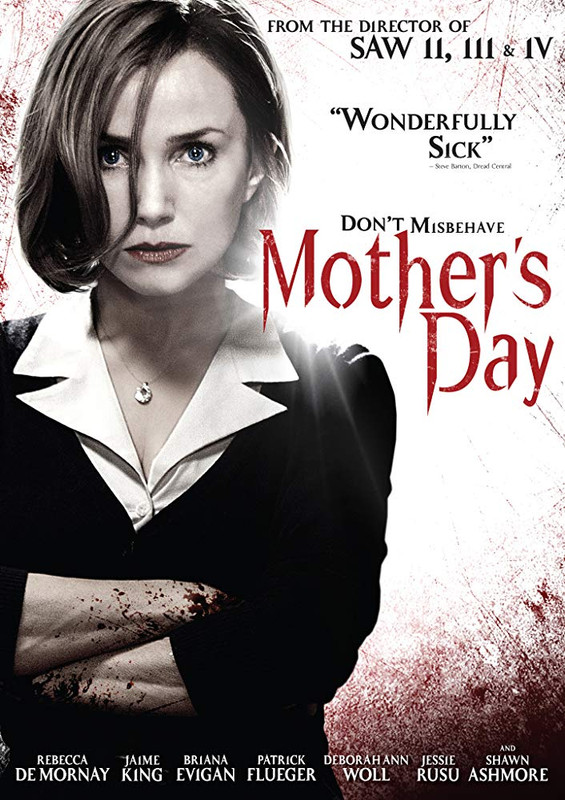
The setup is pretty straightforward home invasion horror. A band of brothers (Patrick Flueger, Warren Kole and Matt O'Leary) who have just robbed a bank, one of them getting shot in the process, roll up to their Mother's house, but soon discover that she has moved, and that the new owners (Jaime King and Frank Grillo) are having a party in the basement. Desperate to find the money they have been sending their mother, so they have a fee to enable themselves to cross into Mexico, they take the partygoers hostage, and call their Mother (Rebecca DeMornay) and Sister (Deborah Ann Woll) to the house.
So far, so standard then, but there are a couple of elements at work here that enable Mother's Day to stand out. Chief among them is Rebecca DeMornay's performance as the titular criminal matriarch. It has been years since she did anything of note, and she's little short of revelatory here, giving a complex and engaging performance that powers every scene she's in. While there is always an undertone of threat in DeMornay's performance it is the outward friendliness with which she greets her son's hostages, and the way she seems to want them to be comfortable – without doing anything to help them – that is most disturbing. In many ways she's like the perverted nightmare vision of a perfect sitcom mom, even making a cake for the hostages. DeMornay takes the character credibly through several stages, from the outwardly friendly parent who just wants to get her boys out of these nice people's way to a brutal monster who will do just about anything if she is crossed, it's chilling and layered work, and makes Mother's Day worth seeing all by itself.
However, that's not the only interesting thing in the film. The rest of the bad guy performances are all pretty good, with Flueger, Cole and O'Leary giving each of the boys their own distinct personalities, and making each of them a different kind of threat, and True Blood's Deborah Ann Woll giving a performance that almost matches DeMornay's in its subtle complexities. The screenplay also works quite well, okay some dialogue is fairly perfunctory, but the characters are well-developed and there is an impressively uncompromising tone, a bleakness that gives the film a bit more punch than your average horror picture. This is especially true of the film's emphasis on punishment, which reaches its ultimate expression in a very tough scene in which two innocents are given the chance to live if they will pick up a knife and stab the other to death.
Darren Lynn Bousman does a solid, if not massively personal feeling, job behind the camera. There's a nice Carpenteresque cold open, and a tendency to keep much of the worst violence just off-screen, or just out of focus, which allows the imagination to go to work, but overall it's not as distinctive as the barmy and underrated Repo: The Genetic Opera.
On the downside, 112 minutes is long - too long - for a pretty basic home invasion horror, and outside of Shawn Ashmore as the Doctor trying help the injured bank robber the performances from the film's good guys (especially the wooden Jaime King) are less impressive than those of the bad guys. The film does slip into standard slasher silliness towards the end (a moment with a nailgun is laughable), but finds its feet again in the last moments with a great coda. On the whole, Mother's Day isn't perfect, but it's much better than I expected it to be, much better than it has any right to be, and if you're looking to see a nasty little horror movie, it's well worth a look.
★★★☆☆
Jun 9, 2011
VHS Memories: Pump Up the Volume
Maybe it's the fact that I'm coming up to my 30th birthday, maybe it's just that there seems to be a 90's nostalgia coming around, but I've been thinking back, recently, on my teenage years, and on my formative years as a movie fan. 1989 was the year I discovered cinema, but it was in the 90's that I became an obsessive, helped along by the tedium of a prolonged hospitalisation in 1992, when I had two liver transplants.
This being the 90's, and me being young and with little disposable income, the way I ended up seeing movies for the first time was often on VHS (most of them rented from an independent store called Upfront Video). So, in this new series I'll be looking back on, and then re-reviewing, some of the titles that made an impression on me through my VCR in those formative years. I'd welcome any of your VHS memories in the comments, whether they're about the film up for review or not, or you could drop me a line at sam@24fps.org.uk.
First up...
Pump Up The Volume
Dir: Allan Moyle
The Memories

I was an impressionable 11 years old in 1992 when I first saw this movie (I think it was my first 15 certificate). I was a fan of Christian Slater's on the back of Robin Hood: Prince of Thieves and so I wanted to see this when it came out, despite its forbidden status. It was rented for me when I was in hospital after my transplants, at a time when I was decimating the local video shop at a rate of about 3 titles a day because I was in isolation and had nothing else to do besides talk to doctors and have blood tests.
I remember being rather embarrassed by the film's frequent droppings of the F Bomb but thinking that it (largely thanks to Slater's character; rebellious pirate radio DJ 'Hard Harry' / wallflower high school student Mark) was incredibly cool. There were a lot of sexual references that I didn't get, but one thing... well, two things, did make an impression. BOOBS! I do believe that Samantha Mathis' nude scene marked the first time I had ever seen breasts. I remain a fan. I also remember liking Mathis' performance, and the film's eclectic soundtrack. A few years later I took it to show to my friend Guy, and it became a big favourite of ours . I haven't seen Pump Up the Volume for about five years. How will it hold up? Let's find out...
The Movie
I imagine that the reason I was allowed to finish watching Pump Up the Volume the first time I saw it was that a lot of it was going over my eleven year old head. Harry's references in his radio monologues to cock rings, the 'eat me beat me' lady, and homosexuality (in a call with a listener) and his simulated masturbation on air, these were all things that I just didn't understand at the time.
One of the great, and sometimes infuriating, things about cinema is that your relationship with every film you see is always in flux. Movies are never the same twice, they change as you do, and I have to say that's especially true of Pump Up the Volume and, sadly, not in a good way. When I was fifteen Hard Harry was cool, because he was rebelling against his clearly evil school and its principal (who is basically depicted as Satan) and because he was on the radio, and that seemed like a cool thing to do (still does, hence The Screening Room). Fifteen years on though, Allan Moyle's screenplay often feels facile; dealing in cheap declamatory statements and shallow characterisations, especially of the film's authority figures. I don't believe in much of what goes on at the film's Hubert Humphrey High (especially the laughable twist which has them setting up a 24 hour helpline in response to Harry's show, how the hell is that funded or staffed?) and its staff are a collection of high school movie clichés from the milquetoast guidance counselor to the evil principal to the cool young English teacher.
The students scarcely fare better. Most of the film's teenagers (including Seth Green, at the start of his roughly fifteen year career playing a high schooler) get very short shrift; a couple of scenes each, and little personality. Outside of Mark (Harry) and Samantha Mathis – amateurish in her first film - as his love interest Nora the only character with a real arc is Paige; the school's star pupil who, listening to Harry, decides to blow up all her nice things in the microwave. It's a transformation we don't believe, because we don't see it from her point of view, there's no sense of the journey between Daddy's princess and BOOM! (Cheryl Pollak's performance does little to help, to be fair).

However, there are still things I like about this film, things that do work. Chief among them is Christian Slater's performance. Slater has always been a better actor than he's credited as, much more than the mini Jack Nicholson he's often dismissed as, and this is actually one of his best roles. During his extended monologues as Harry (though less so during the film opening horseplay which has him pretending to wank. Twice.) you can see why his audience listens to him, he's a voice much like theirs; a bit lost, a bit confused, often very immature, but eloquent in how he sums up what he sees around him, and passionate about denouncing it (even if he doesn't really know what else to do). Slater is forceful and charismatic in these scenes, and all the more impressive given that he's really got nothing to act against for most of the time, and it is in the film's two main radio shows (after the suicide of a listener and after a school meeting discussing Harry and his influence respectively) that Moyle's dialogue is at its best and feels the least like it is smacking you around the face with its message. As with Avatar's 'trees good, war bad' message it's not so much that I'm not on board with Moyle's 'free speech is awesome' moral as it is that he sometimes spoonfeeds us that message with such force that we choke on it.
The other great thing here is the film's soundtrack. From Pixies' awesome UK Surf mix of Wave of Mutilation to the repeated use of Everybody Knows (which introduced both me and Guy to Leonard Cohen) and from an ultra rare Beastie Boys track to Cowboy Junkies, the film is packed with an original and eclectic mix of music which feels much less dated than the rest of the fashions on display here (okay, Ice T's Girls LGBNAF notwithstanding). Moyle uses the music well, never letting it speak for the film or instruct us how to feel, rather its part of the fabric of the society his teenage characters create for themselves; perhaps the film's most realistic touch.
Overall, Pump Up the Volume is probably a film best watched when you're fifteen and angry with your school, your dad and the girl who just refused to go out with you, but it still has more ideas than you're likely to find in any three recent American teen movies, even if it sometimes articulates them with a 2x4. It's deeply flawed, and would work better if it were more clearly satirical, but it remains interesting if only for Slater's charismatic performance.
Screening Room Episode 13
The Screening Room is the podcast I present, along with my friend and colleague Michael Ewins, over at www.multimediamouth.com. In this latest episode Mike and I review Rio Breaks, Last Night, X-Men: First Class and talk superhero movies and DVD and Blu Ray releases. It's a varied 90 odd minutes of movie chat. Enjoy.
Comments on the show would be welcomed at either sam@multimediamouth.com or sam@24fps.org.uk
Comments on the show would be welcomed at either sam@multimediamouth.com or sam@24fps.org.uk
Jun 8, 2011
24FPS Top 100: No. 59
59: THE DESCENT (2005)
DIR: Neil Marshall
 Why is it on the List?
For horror fans, Neil Marshall's second movie (after soldiers vs werewolves debut Dog Soldiers) offers fantastic value for money. It is essentially two knuckle whitening horror movies for the price of one, served up in just 95 minutes of your time.
After twenty minutes of setup, acquainting us with the all female cast of characters, with whom we are about to spend the next hour in the dark of an unexplored system of caves, the first of these horror movies begins in earnest; a tense journey through the caves, during which Marshall continually raises the stakes with claustrophobic scare sequences, injuries and the revelation that the girls are not in the cave system they thought they were in.
After about 40 minutes of that, the film explodes into high gear as it becomes a terrifying and brutal monster movie, featuring truly scary creature design, splashy violence and some truly iconic final girl imagery. Okay, so it's not the most original horror film you'll ever see, but Marshall arranges the elements so well that the jump scares work every time (even on subsequent viewings). In fact, one scare in this film, for me, is just about as good a jump scare as there has ever been in a movie. It happens the first time you really see a 'crawler', and it makes me have to catch my breath even now (you can see it below in Standout Scenes).
However, The Descent isn't just a scare machine. The characters are broadly written, but well played by Marshall's all female cast, with Shauna MacDonald standing out as the initially nervous and frightened woman who finds unexpected reserves of strength (and gets a final girl shot so cool it deserves to rank with Sissy Spacek covered in pigs blood, in a film we'll discuss later in this list), but while the performances are good, it is the photography that really impresses here.
The Descent was shot on a set, but Marshall and DP Sam McCurdy make the environment feel very real (and very threatening) through their use of camera and lighting. There is little cheating the light here, most of the cave sequences are lit with torches, infra red cameras, lighters, glowsticks or some other available source of light. Obviously as well as adding to the verisimilitude, this allows Marshall to have his monsters use the shadows effectively, and means that the dark itself, even when there's nothing in it, becomes scary.
It's not the smartest film on this list, but The Descent is a fun, frightening ride, with something for every horror fan from creepy 'what's that in the background' moments to unbelievable tension (the collapsing tunnel) to good old fashioned ultraviolence. What's not to like?

Standout Scenes
"What the Fuck was that?"
Our first proper look at a 'crawler', and it's fucking scary.
The Tunnel
I'm claustrophobic, so this sequence in which a tunnel collapses, threatening to trap one of the girls inside, is one of my worst nightmares.
If you would like to buy The Descent, and help 24FPS out at the same time, please use the link below. Thanks.
DIR: Neil Marshall

For horror fans, Neil Marshall's second movie (after soldiers vs werewolves debut Dog Soldiers) offers fantastic value for money. It is essentially two knuckle whitening horror movies for the price of one, served up in just 95 minutes of your time.
After twenty minutes of setup, acquainting us with the all female cast of characters, with whom we are about to spend the next hour in the dark of an unexplored system of caves, the first of these horror movies begins in earnest; a tense journey through the caves, during which Marshall continually raises the stakes with claustrophobic scare sequences, injuries and the revelation that the girls are not in the cave system they thought they were in.
After about 40 minutes of that, the film explodes into high gear as it becomes a terrifying and brutal monster movie, featuring truly scary creature design, splashy violence and some truly iconic final girl imagery. Okay, so it's not the most original horror film you'll ever see, but Marshall arranges the elements so well that the jump scares work every time (even on subsequent viewings). In fact, one scare in this film, for me, is just about as good a jump scare as there has ever been in a movie. It happens the first time you really see a 'crawler', and it makes me have to catch my breath even now (you can see it below in Standout Scenes).
However, The Descent isn't just a scare machine. The characters are broadly written, but well played by Marshall's all female cast, with Shauna MacDonald standing out as the initially nervous and frightened woman who finds unexpected reserves of strength (and gets a final girl shot so cool it deserves to rank with Sissy Spacek covered in pigs blood, in a film we'll discuss later in this list), but while the performances are good, it is the photography that really impresses here.
The Descent was shot on a set, but Marshall and DP Sam McCurdy make the environment feel very real (and very threatening) through their use of camera and lighting. There is little cheating the light here, most of the cave sequences are lit with torches, infra red cameras, lighters, glowsticks or some other available source of light. Obviously as well as adding to the verisimilitude, this allows Marshall to have his monsters use the shadows effectively, and means that the dark itself, even when there's nothing in it, becomes scary.
It's not the smartest film on this list, but The Descent is a fun, frightening ride, with something for every horror fan from creepy 'what's that in the background' moments to unbelievable tension (the collapsing tunnel) to good old fashioned ultraviolence. What's not to like?
Standout Scenes
"What the Fuck was that?"
Our first proper look at a 'crawler', and it's fucking scary.
The Tunnel
I'm claustrophobic, so this sequence in which a tunnel collapses, threatening to trap one of the girls inside, is one of my worst nightmares.
If you would like to buy The Descent, and help 24FPS out at the same time, please use the link below. Thanks.
Subscribe to:
Comments (Atom)